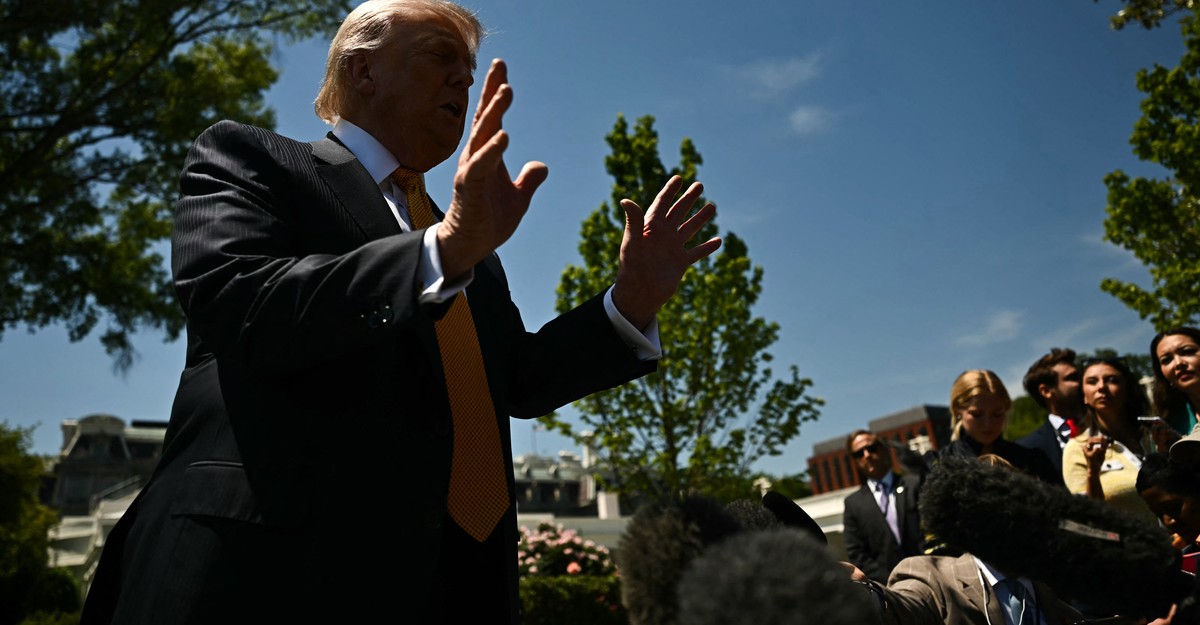
Trump’s comments on inflation and the Iran conflict are politically damaging for Republican midterm candidates, especially as he says he does not think about Americans’ financial situation. The article highlights ongoing inflation concerns, disruption around the Strait of Hormuz, and higher gas prices tied to the war rhetoric. While the piece is mainly political commentary, it suggests a modest negative backdrop for GOP election prospects and energy-market sentiment.
The immediate market read is not about the rhetoric itself; it is about policy credibility degradation. When an administration that is already tied to higher inflation and geopolitical disruption appears indifferent to both, the second-order effect is a higher premium on political risk across rates, energy, and consumer-sensitive equities. That typically widens the dispersion between firms with hard pricing power and those relying on stable real-income growth, while also making the market more sensitive to any fresh spike in crude or freight costs.
The more important catalyst is the midterm window. Republicans now have a message-control problem: every unforced comment from the White House increases the probability of defensive distancing, intra-party blame, and lower enthusiasm among marginal voters. In market terms, that raises the odds of a policy-lag narrative where fiscal/energy headlines stay noisy into the election period, which is usually bearish for domestically exposed small caps, regional banks, housing-adjacent names, and discretionary retailers over the next 3-6 months.
The geopolitical overlay is the real tail risk. If the administration is seen as improvising around Iran and the Strait of Hormuz, the market will start pricing a higher probability of an oil shock that is not fully offset by demand weakness. That creates a skewed setup: energy and defense can rally on any escalation, while transports, airlines, chemicals, and lower-income consumer baskets get hit immediately; the latter tends to lag the initial move by 1-2 quarters as margins compress.
Contrarian view: the consensus may be overestimating the electoral impact of rhetoric and underestimating how desensitized voters already are. If the underlying economy stabilizes and gasoline rolls over, the political damage can fade quickly. The tradable signal is therefore not the headline cadence itself, but whether crude, inflation breakevens, and approval polls all move together for several weeks; if only one leg moves, the trade is likely noise rather than regime change.
AI-powered research, real-time alerts, and portfolio analytics for institutional investors.
Request DemoOverall Sentiment
moderately negative
Sentiment Score
-0.35
