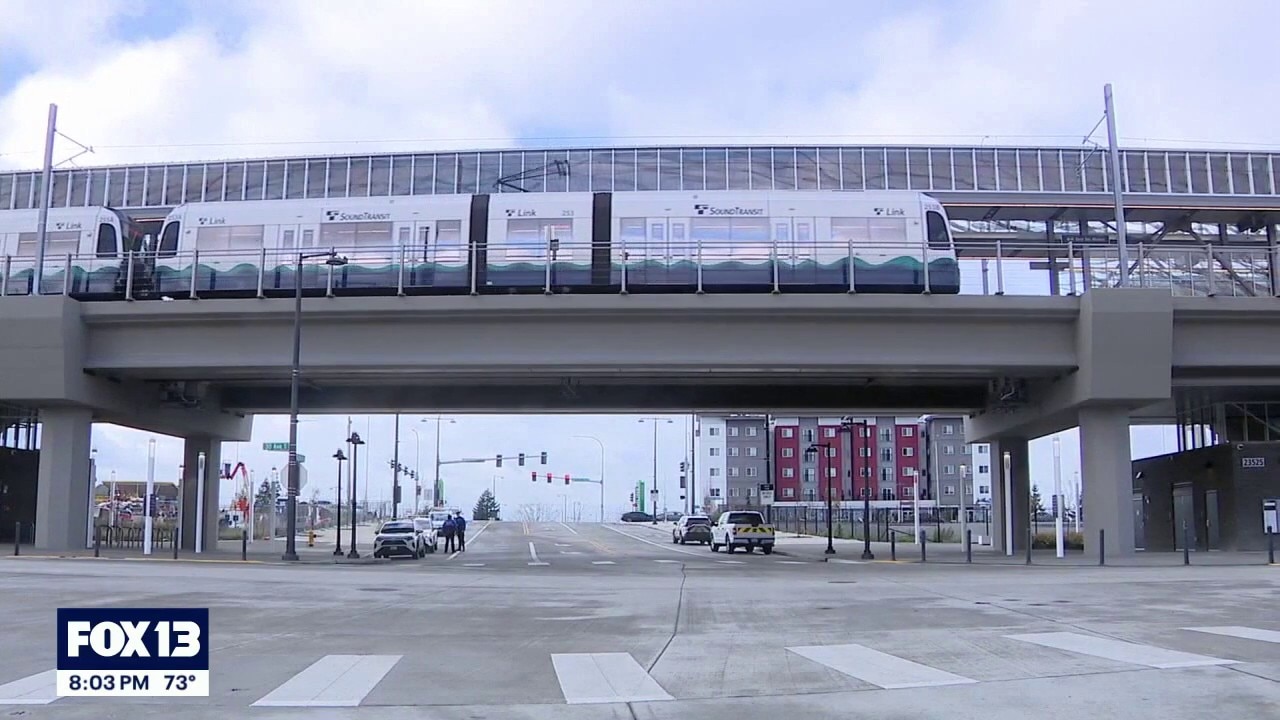
Sound Transit approved the $194.7 billion ST3 expansion plan, moving forward with light rail projects to West Seattle, Tacoma Dome, and Everett while leaving Ballard’s Market Street extension unfunded for now. The Tacoma Dome Link is targeted for 2035, West Seattle for around 2032, and Everett in phases through 2041. The decision is material for regional infrastructure planning but is unlikely to have broad market impact.
The market should view this as a long-duration capital allocation signal, not a near-term construction story. Once a project gets pushed into the “not currently affordable” bucket, the optionality value drops sharply because later phases tend to compete with cost inflation, permitting friction, and political turnover; in practice, deferred transit projects often re-emerge years later at meaningfully worse economics. The second-order effect is that land-value accrual and redevelopment expectations will bifurcate: areas tied to lines with firmer funding get a cleaner uplift, while the marginalized corridor risks a slower repricing even if the project is not formally dead.
The bigger winner is the broader Seattle-area infrastructure ecosystem rather than any one neighborhood. Civil contractors, tunneling specialists, rail systems integrators, and engineering firms benefit from an expanded multi-phase backlog because it supports pricing power and utilization across a decade, but the mix matters: projects with earlier in-service dates and simpler rights-of-way are likely to consume capital first, leaving more complex urban segments to absorb inflation risk. That creates a subtle negative for firms exposed to the deferred corridor if they were counting on volume in the near term.
Politically, this is a classic “approved but delayed” setup where the headline outcome is stability but the implementation risk remains high. The hidden catalyst is future funding rebalancing: any improvement in local tax receipts, higher-than-expected farebox assumptions, or state/federal infrastructure grants could bring back the sidelined segment sooner than consensus expects. Conversely, if cost inflation stays sticky, the deferred piece becomes a perpetual ballot-box issue and a source of recurring disappointment, which is usually worse for sentiment than an outright cancellation because it keeps the overhang alive.
The contrarian take is that the negative reaction may be overstated for the region’s real estate because the market tends to price rail access as if it arrives on schedule, while renters and employers care more about the credible path of the network than the exact opening date of any one station. The broader opportunity is to buy assets or equities that benefit from network certainty while fading the most speculative land positions that depended on the highest-order connectivity assumptions.
AI-powered research, real-time alerts, and portfolio analytics for institutional investors.
Request TrialOverall Sentiment
neutral
Sentiment Score
0.05
