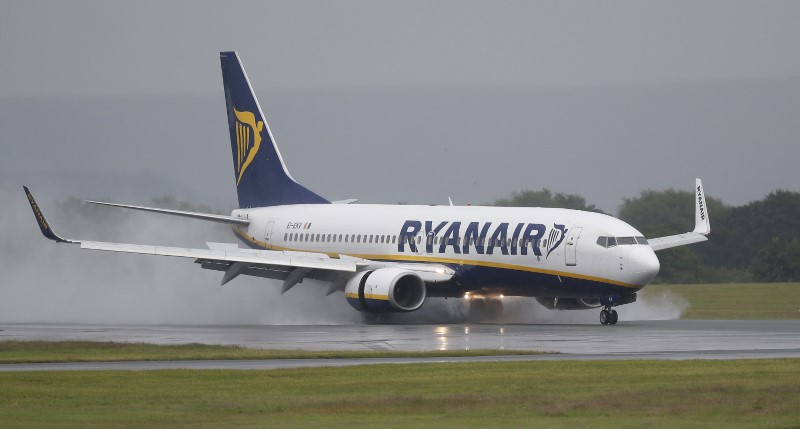
Bernstein says European jet fuel has surged to $1,500-$2,000 per ton, more than double pre-attack levels, putting airlines under pressure as fuel typically represents 20%-40% of revenue. The report warns the industry may face operating losses unless fares rise materially or hedging offsets the shock, with Ryanair and Lufthansa better protected by 2026 hedge ratios of about 80% and 77% versus roughly 62% for IAG and Air France-KLM. Capacity cuts are already emerging, including United's 5% reduction in growth plans, Delta's 3.5% cut, and Lufthansa's 1% cut, which should help support fares but signals margin stress across the sector.
The market’s first-order read is “higher jet fuel = worse airline margins,” but the second-order effect is a supply purge that benefits the most disciplined capacity allocators. Carriers with stronger balance sheets and higher hedge coverage can keep flying while weaker peers are forced to trim growth or abandon marginal routes, which mechanically tightens seat supply and supports fare realization with a lag of one to two quarters. That means the relative winner is not the airline that can sell the most tickets today, but the one that can withstand a prolonged period of subpar unit economics without diluting the network.
The biggest underappreciated pressure point is leverage. For airlines already carrying significant debt, the combination of higher fuel and slower fare pass-through can turn an earnings hit into a financing event: covenant stress, reduced flexibility for fleet renewal, and a higher probability of equity issuance or sale-leaseback activity at unfavorable terms. That creates a widening valuation gap versus cash-rich operators, because the market will likely start pricing survival optionality rather than normalized margins.
The catalyst path is asymmetric over the next 30-90 days. If fuel stays elevated, management teams will be forced to guide down capacity, which should eventually stabilize yield; if fuel retraces quickly, the whole thesis becomes a short-lived margin scare rather than a structural re-rating. The contrarian angle is that the consensus may be overestimating how much airlines can offset with pricing in a commoditized revenue system—input inflation usually shows up in profits before it shows up in fares, so near-term estimates are still at risk of another round of downward revisions.
AI-powered research, real-time alerts, and portfolio analytics for institutional investors.
Request DemoOverall Sentiment
moderately negative
Sentiment Score
-0.35
Ticker Sentiment
