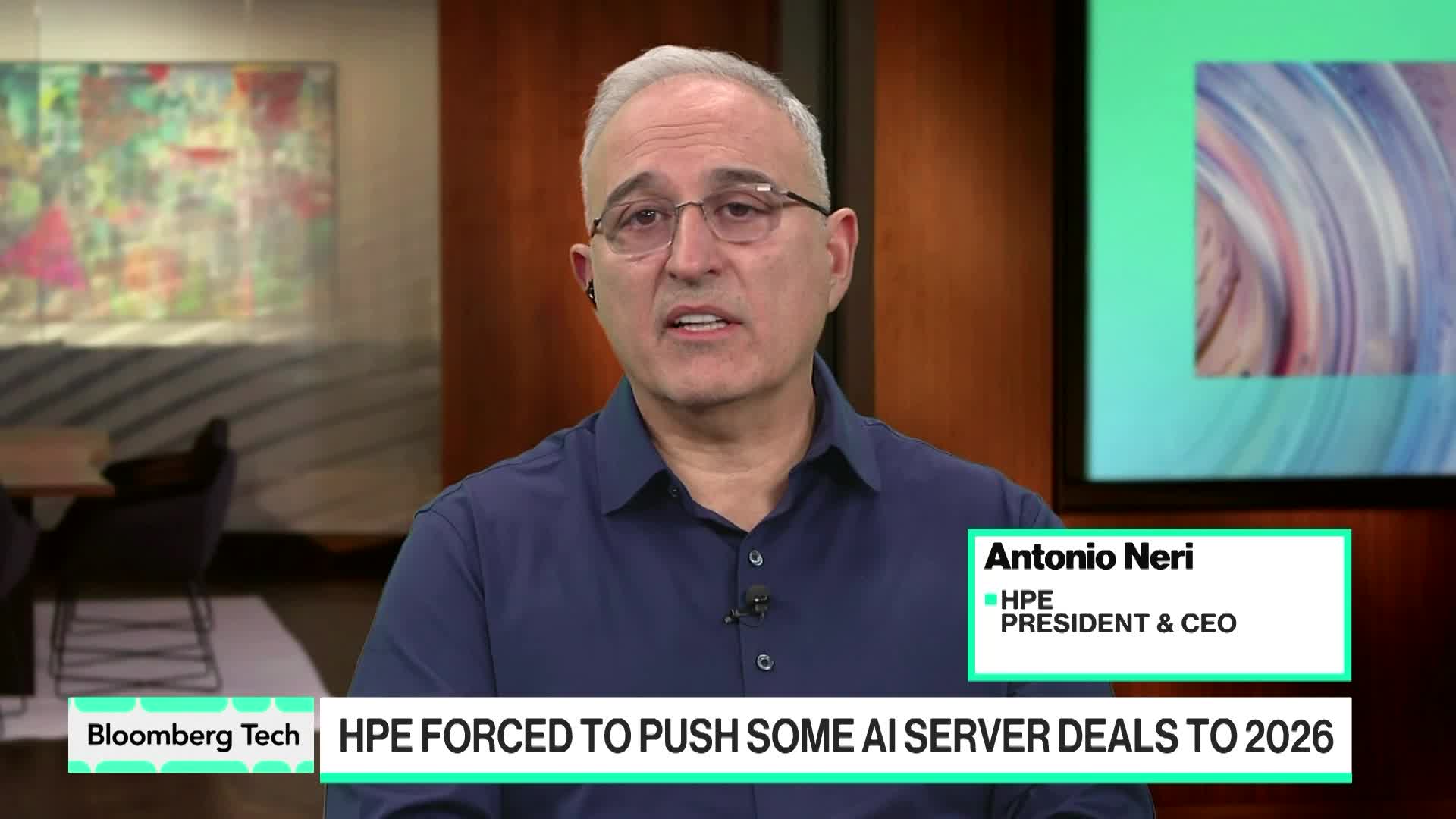
HP reported a record profitable quarter with revenue up ~14% and profit rising ~26%, exceeding EPS and free cash flow guidance, and returned the server segment (including AI) to roughly 10% operating profit in Q4. The company booked approximately $2 billion in AI orders (over 60% sovereign enterprise) and carries a backlog north of $4.7 billion, while affirming 17%–22% revenue growth guidance and raising non-GAAP EPS and FCF outlook after enacting November price increases. Management flagged datacenter buildout timing, power/cooling and supply-chain constraints (including memory/NAND shortages expected later) as causes of some revenue slips into 2026, and highlighted product/networking additions (Juniper, Helios/Gallop, Vera Rubin) as strategic differentiation. Overall this is constructive for demand and margins but tempered by execution and component-supply risks that investors should monitor.
Market structure: HPQ’s commentary implies winners will be networking and AI-infrastructure suppliers (NVIDIA NVDA for GPUs, Micron MU/Western Digital WDC for memory/NAND, and networking vendors) as operators prioritize scale and sovereign/hybrid designs. Datacenter owners face longer cash-conversion cycles (HP backlog $4.7B, $2B new AI orders) which creates lumpiness in OEM revenue but increases pricing power for scarce components through H2 2026; expect vendor-level gross margin tailwinds if shortages materialize.
Risk assessment: Tail risks include prolonged permitting/power delays, sovereign/regulatory holds, or a macro slowdown that defers projects — any of which could push revenue recognition into 2027. Short-term (days–weeks) volatility will track earnings and guidance cadence; medium (3–9 months) risks center on supply (memory/turbines) and H2 2026 inventory troughs; long-term (≥12 months) outcomes hinge on sustained AI workload commercialization and sovereign cloud policy adoption.
Trade implications: Favor long exposure to selective suppliers that gain from price-tightness (MU, NVDA, HPQ) while hedging execution risk with spreads; overweight networking and semiconductor hardware, underweight pure-play hyperscaler-levered services and REITs until build cadence normalizes. Cross-asset: higher capex and commodity tightness lifts cyclicals and memory prices (positive for commodity equities), while bond duration risk rises modestly if capex drives higher yields.
Contrarian angles: Consensus focuses on lumpiness as a setback; underappreciated is that backlog + rising memory/NAND prices can materially lift near-term OEM margins (HP already back to ~10% server op profit). Conversely, market could be underpricing sovereign/legal complications and multi-quarter acceptances — trade with defined-risk option structures and time horizons tied to H2 2026 memory signals or two consecutive backlog-conversion quarters.
AI-powered research, real-time alerts, and portfolio analytics for institutional investors.
Request DemoOverall Sentiment
moderately positive
Sentiment Score
0.45
Ticker Sentiment
