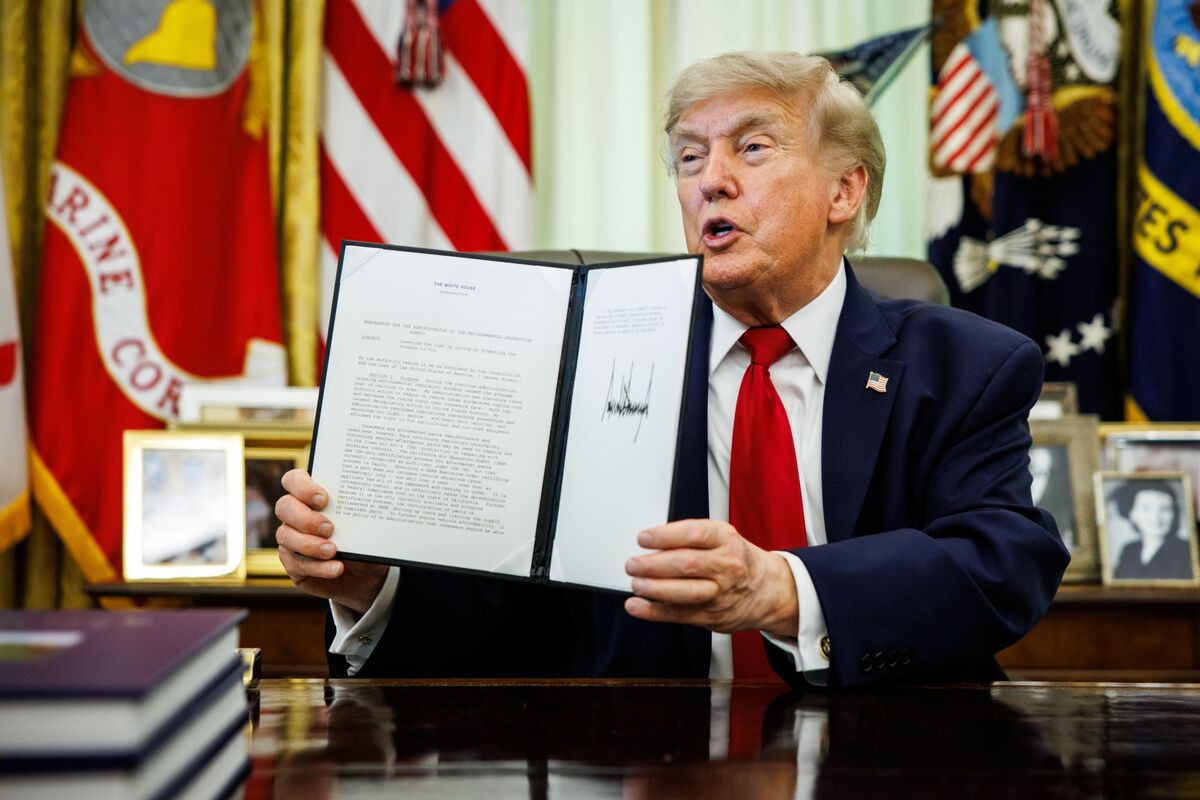
Trump pardoned six people he said were pursued and sentenced for “fixing their car,” without identifying them or their offenses. Separately, an executive order directs the EPA to explore options to make it legally less risky for US consumers to repair their own vehicles. The measures are politically salient but unlikely to materially move markets beyond potential small impacts to auto repair/regulatory compliance expectations.
Near term, this is more a signaling event than a cash-flow event. The first-order market impact is likely limited because the bottlenecks in car repair are not just legal permission but access to OEM diagnostics, software resets, telematics, and parts distribution. That means the immediate winners are the non-OEM repair ecosystem — parts distributors, independent service chains, and tool/software providers — while dealership service departments face the most potential margin pressure if rulemaking meaningfully lowers franchise lock-in.
Over 1-3 months, the tradeable catalyst is not the pardon itself but whether EPA starts a broader rulemaking that makes access to repair data cheaper and less risky. If that happens, aftermarket names such as AZO, ORLY, GPC, and LKQ could see incremental share gains versus dealer-affiliated service, but the move would likely be gradual because consumers only switch after warranty expiration, tool availability, and repair complexity line up. The bigger second-order effect is on vehicle longevity: easier repairs can extend the life of older cars, which is modestly negative for new-vehicle replacement demand and positive for used-car and aftermarket monetization.
The contrarian view is that the market may be overpricing the policy as a structural shake-up when it may remain narrow and state-dependent. OEMs can respond by bundling software subscriptions, limiting parts availability, or redesigning diagnostics, which preserves pricing power even if DIY risk falls. For EVs, the effect is mixed: simpler mechanical repair helps, but software-defined architectures are the real moat, so the policy is more relevant to legacy ICE fleets than to TSLA-like platforms. Falsify the thesis if EPA action stays rhetorical only, or if dealer service margins and aftermarket sell-through show no inflection over the next two reporting cycles.
AI-powered research, real-time alerts, and portfolio analytics for institutional investors.
Request DemoOverall Sentiment
neutral
Sentiment Score
0.05
