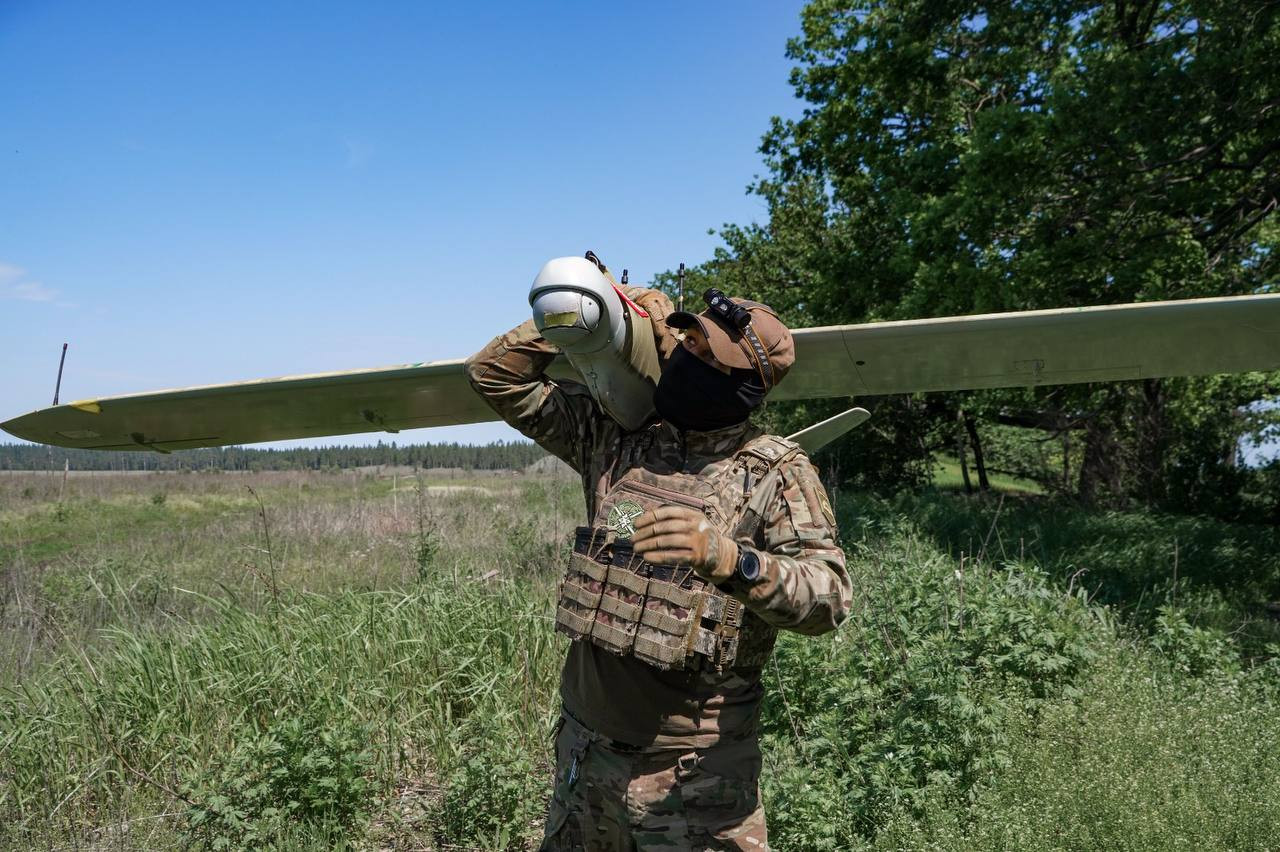
Ukraine’s 21st Unmanned Systems Regiment "Lava" is using Leleka reconnaissance drones and Bulava loitering munitions for surveillance, artillery correction, and deep strikes against Russian rear-area targets. The article highlights autonomous evasive features, relay-drone support, and ranges of up to 100 km for Leleka and 110 km for Bulava with relay support. The piece is operationally significant for the war effort and defense technology trends, but it is descriptive rather than event-driven for markets.
The investable signal is not the drone hardware itself but the institutionalization of a fast-cycle targeting stack: ISR, relay, strike, and battle-damage assessment are being fused into a shorter kill chain. That tends to favor suppliers of resilient components, autonomous navigation software, RF/EO sensors, and distributed battlefield communications over legacy platform makers whose value depends on a stable rear area. The second-order effect is that counter-UAS becomes an arms race inside an arms race, which should keep spending on interceptors, electronic warfare, and hardened comms elevated even if headline strike footage becomes more frequent.
The market is likely underestimating how quickly this changes procurement priorities. Systems that can survive jamming, lose-link conditions, and interceptor pressure will take share from cheaper but fragile drones, meaning the premium segment of defense electronics gets richer mix and higher replacement cadence. A less obvious winner is tactical edge-compute and secure mesh networking: once a small unit can self-coordinate with live oversight, command-and-control software becomes as important as airframes, and that is a multi-year budgeting shift rather than a one-off wartime spike.
The main risk is that the current operating model is being stress-tested in real time by adaptation on both sides; a step-change in interceptors, passive RF detection, or shorter attrition cycles could compress the useful life of any single drone architecture within months. That argues against chasing pure-play Ukraine exposure and toward diversified picks-and-shovels exposure. Contrarian view: the higher the reported survivability, the faster adversaries will harden, so the real upside is in the next layer of response — not the platform that is winning today, but the system that can detect, route, and re-task tomorrow.
From a portfolio perspective, this is a thematic tailwind for defense electronics, secure communications, and counter-drone names, but only if entry is staged because the market will front-run any headline escalation. The cleaner trade is to own the enabling layer and hedge the platform layer, since airframe commoditization is likely once battlefield learning propagates.
AI-powered research, real-time alerts, and portfolio analytics for institutional investors.
Request DemoOverall Sentiment
neutral
Sentiment Score
0.05
