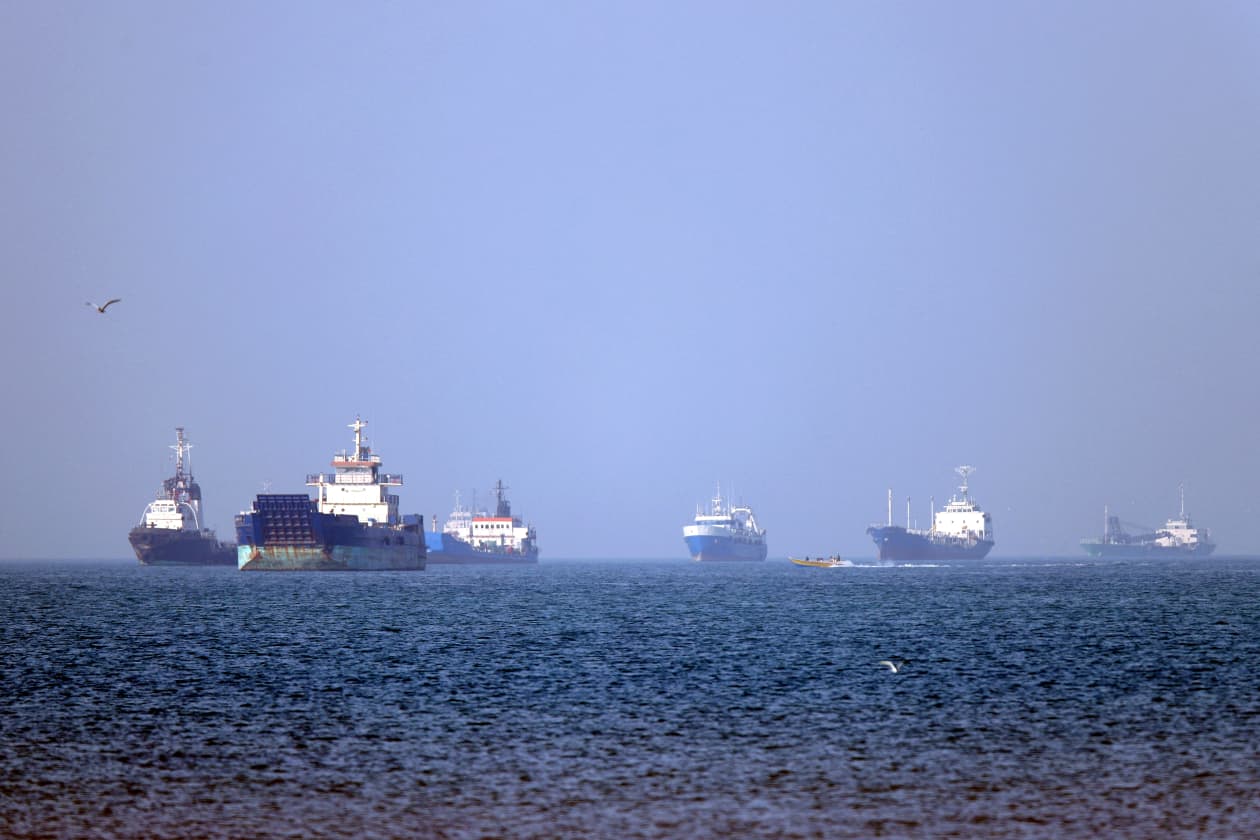
Crude-oil futures fell late Tuesday after President Trump said his effort to partially reopen the Strait of Hormuz would be paused, leaving the blockade in place while negotiations with Iran continue. The delay keeps a key shipping chokepoint constrained and extends uncertainty around near-term oil supply and tanker traffic. The announcement is geopolitically negative for risk assets and likely to keep energy markets volatile.
The market is reacting to an option on supply normalization being pulled back, not to a full outage scenario. That matters because crude’s next leg is likely to be driven more by implied-volatility repricing than by spot fundamentals: front-month oil can fade if the pause is interpreted as diplomacy, while the curve should stay bid in the front few contracts as traders pay up for near-term interruption risk. The sharper second-order winner is the volatility complex and anything levered to tanker rerouting, insurance premia, and time-charter rates.
The biggest misconception is that “paused” means de-escalation. In practice, it extends the period where market participants must hedge against a low-probability, high-impact blockage outcome, which keeps refining margins and physical differentials unstable even if headline crude retraces. That tends to hurt airlines, chemical producers, and other fuel-intensive end users more than the broad index would suggest, because they face immediate input-cost uncertainty while the macro economy only feels the effect after several weeks.
A clean reversal would require credible evidence of maritime passage normalization, not just rhetoric. Until then, the asymmetric risk is for a volatility spike if the pause breaks down: oil could gap meaningfully higher on a single incident, while downside is more gradual because risk premium can persist without actual barrels being lost. The contrarian view is that the market may be underpricing how long sanctions-style disruption can be maintained without a full closure, which would keep a structural premium embedded in crude and shipping costs for months rather than days.
AI-powered research, real-time alerts, and portfolio analytics for institutional investors.
Overall Sentiment
moderately negative
Sentiment Score
-0.35
