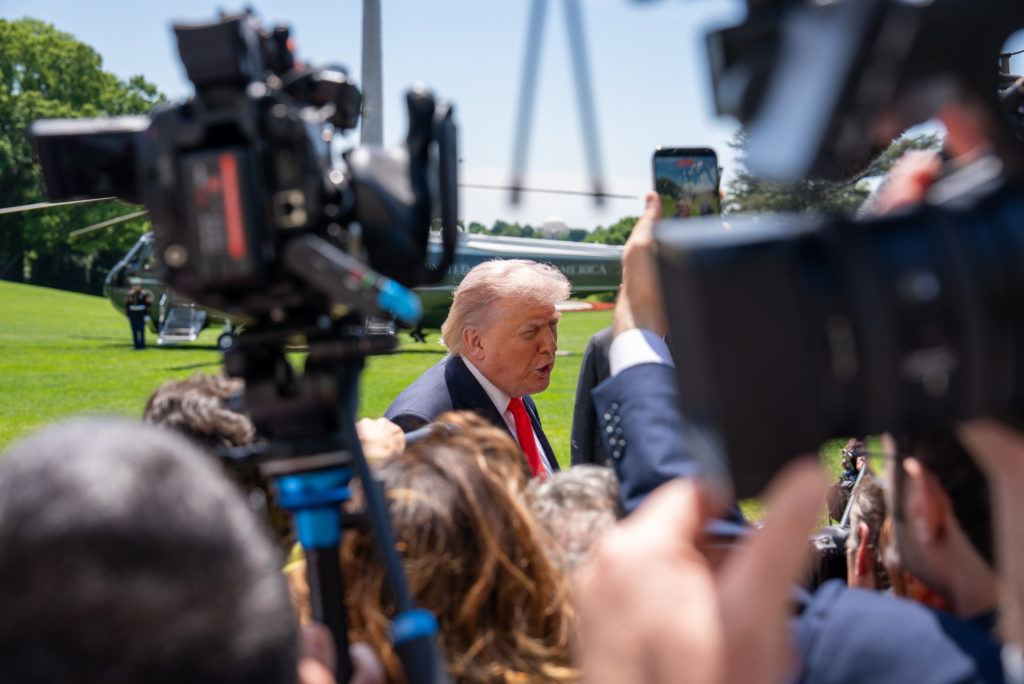
President Trump said he will raise tariffs on cars and trucks from the European Union to 25% next week, after previously agreeing to a 15% ceiling under the Turnberry trade framework. The move threatens a major transatlantic trade relationship worth 1.7 trillion euros ($2 trillion) in goods and services in 2024 and could raise costs for European automakers by an estimated 500 million to 600 million euros per month. Markets are already facing added pressure from war-driven energy inflation and slower global growth, making this a potentially sector- and market-moving escalation.
This is less about the direct tariff rate and more about the collapse of policy credibility as a discounting anchor. When a sector-specific tariff can be reintroduced after a “deal,” the market should stop valuing trade agreements as durable cash-flow protections and start pricing them as short-duration political options; that widens the risk premium on European cyclicals and any U.S. companies that relied on stable transatlantic sourcing. The immediate winner is any domestic North American producer with limited EU import exposure and enough pricing power to pass through a second-round inflation shock.
The second-order effect is margin compression, not just on European automakers, but on the U.S. suppliers that sell into them and on logistics/port infrastructure names that benefit from rerouting and inventory front-loading. A 25% tariff on autos is typically larger than the gross margin of many OEM import programs, which means the adjustment path is likely mix-shift, production relocation, and dealer inventory drawdowns before full substitution occurs. That creates a near-term earnings air pocket for Germany-heavy autos and a false-positive for some U.S. labor/materials beneficiaries if unit volumes fall faster than domestic localization ramps.
The more interesting macro link is inflation persistence. Auto prices are a large basket component with long pass-through lags; if this hits into an already oil-sensitive tape, it raises the probability that the market re-prices a “higher-for-longer” rate path despite slower growth. Politically, the move may be aimed at forcing factory announcements, but the realistic horizon for meaningful production migration is 12-24 months, not weeks, so the first-order market reaction is likely underreacting to the duration of the disruption while overreacting to any headline exemption chatter.
The contrarian view: this may be less of a broad EU trade war and more of a negotiating lever that eventually gets carved back through exemptions, timing relief, or partial offsets. If so, the cleanest expression is not outright bearish Europe forever, but short-dated volatility around the most exposed names and a relative-value trade versus beneficiaries with domestic capacity. The key risk to the bearish thesis is a rapid legal or diplomatic rollback, which would crush implied vol and force a sharp squeeze in the most crowded auto shorts.
AI-powered research, real-time alerts, and portfolio analytics for institutional investors.
Request DemoOverall Sentiment
strongly negative
Sentiment Score
-0.65
