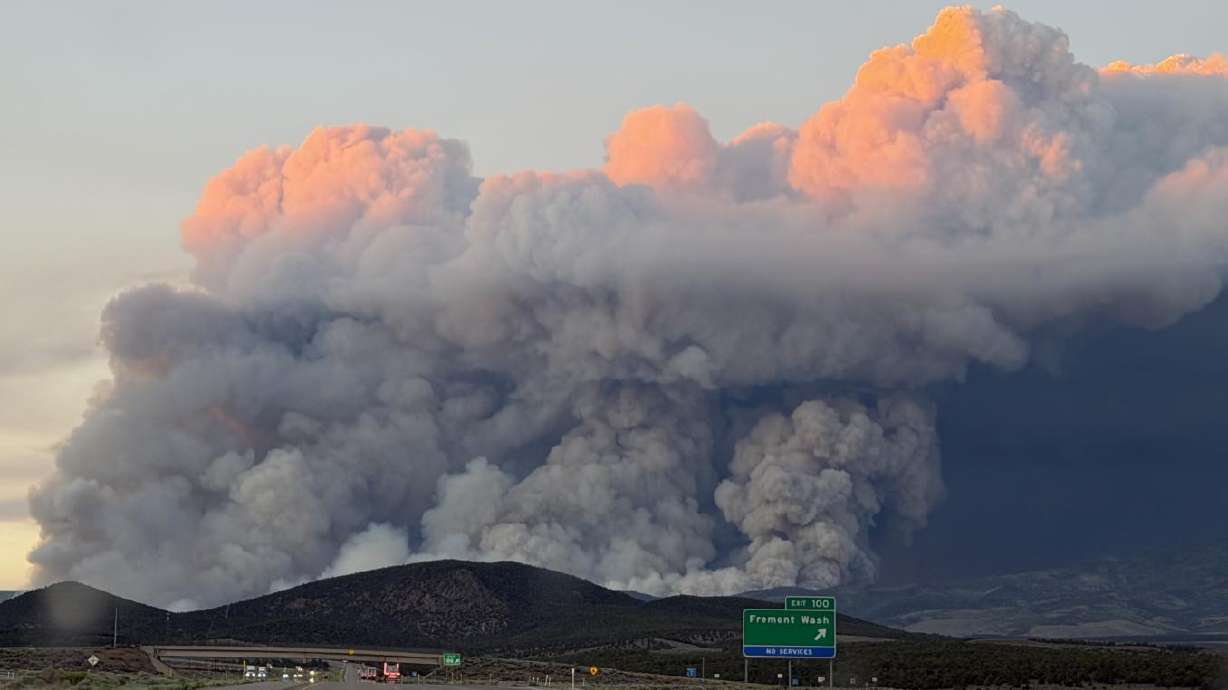
Utah issued its first-ever PDS red flag warning as the Cottonwood Fire burned nearly 71,000 acres, signaling extreme fire conditions with humidity as low as 8% and wind gusts up to 50 mph. Officials said there has been no loss of life or significant injury, but dozens of homes have been destroyed and roughly a dozen families displaced. The situation remains highly dangerous with firefighters still working active lines and contingency lines.
This is less a single-event wildfire headline than a stress test for the entire western housing-and-infrastructure complex. The immediate economic hit is local and obvious, but the second-order effect is tighter insurance availability and higher renewal pricing across the Intermountain West, especially for exurban, WUI-heavy properties that are already most vulnerable and least protected. That creates a slow-burn negative for regional homebuilders, mortgage originators with rural exposure, and landlords whose portfolio quality depends on stable property insurance economics.
The larger medium-term implication is for rebuilding inflation and municipal balance sheets. In fire-prone counties, reconstruction tends to pull forward demand for labor, timber, drywall, roofing, and electrical work, but it does so into a capacity-constrained market where insurer claim adjusters, contractors, and materials vendors can all become bottlenecks. That can support select beneficiaries in building products and disaster-recovery services, while simultaneously pressuring local governments through emergency spending, utility hardening costs, and a higher probability of future bond issuance for mitigation infrastructure.
The market is probably underpricing the persistence of this risk because the catalyst is not the blaze itself but the repricing of insurability and the potential for this episode to become a precedent-setting underwriting event. If carriers use this as justification to non-renew or sharply reprice Utah/WY/ID mountain exposure over the next 1-2 renewal cycles, the damage to transaction volumes and home affordability could outlast the fire by quarters. A reversal would require a rapid containment plus an unusually benign fire season finish, but even then the structural trend is toward higher embedded wildfire premium and more selective capital allocation in at-risk ZIP codes.
AI-powered research, real-time alerts, and portfolio analytics for institutional investors.
Request DemoOverall Sentiment
strongly negative
Sentiment Score
-0.55
