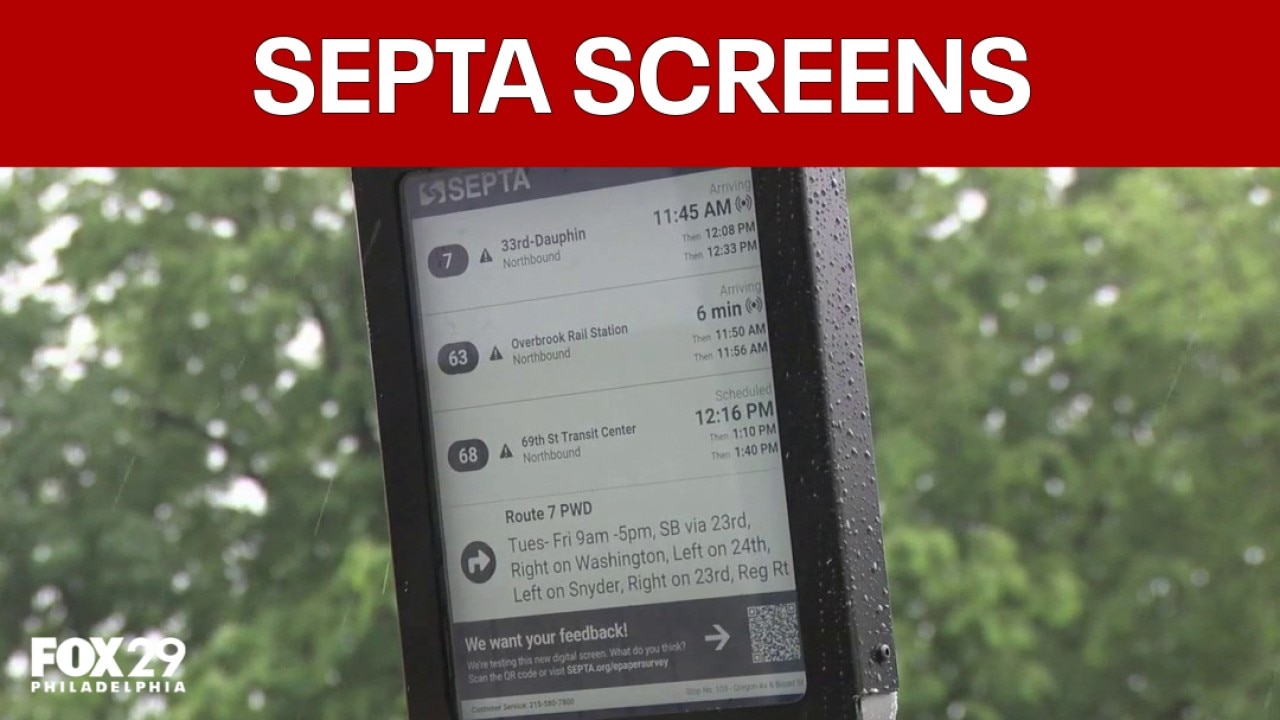
SEPTA launched a pilot with $5,000 solar-powered digital arrival screens at select bus stops, starting at Broad Street and Oregon Avenue, with nine more devices planned across bus stops and metro stations. The displays provide real-time bus arrivals, text-to-speech support, and service alerts for detours or cancellations. If successful, SEPTA plans to expand the program to 90 additional bus stops starting this fall.
This is a small capex item, but the economic value is not in the hardware; it is in shrinking the friction premium on low-information transit. That tends to lift perceived service quality more than ridership in the near term, which matters because transit systems usually lose the most marginal users to uncertainty, not price. The second-order benefit is operational: better real-time visibility can reduce customer-service load and complaints, and even modestly improve on-time perception without changing schedule reliability.
For vendors, the winner is not obvious from the article but is likely the local integrator/installer and any backend transit-software provider that can upsell a broader digital signage rollout. If this pilot scales, the addressable spend is still de minimis in absolute dollars, but it creates a template for recurring software, maintenance, and data-integration contracts; the strategic value is in becoming the default vendor across multiple city agencies. The loser is the status quo analog information stack, plus any app-only assumption that excludes non-smartphone riders; this is a reminder that transit UX is still a physical-world distribution problem, not just a mobile app problem.
The main risk is execution, not demand. Solar-powered public-facing devices face vandalism, weather, network downtime, and maintenance friction, and if uptime slips in the first few months the pilot can backfire by amplifying trust issues. The time horizon for any measurable business impact is months, not days: if the rollout expands, the signal would be in follow-on procurement, service contracts, and maybe higher rider satisfaction scores rather than immediate financial uplift.
The contrarian view is that this is actually a modestly bullish sign for municipal tech adoption, but the market will likely ignore it because the dollar size is tiny. That creates an opportunity only if you view this as a proof point for broader smart-infrastructure spending by city agencies ahead of major events. The real catalyst is not the current pilot; it is whether SEPTA can standardize the platform and convert one-off screens into a system-wide digital layer.
AI-powered research, real-time alerts, and portfolio analytics for institutional investors.
Request DemoOverall Sentiment
neutral
Sentiment Score
0.15
