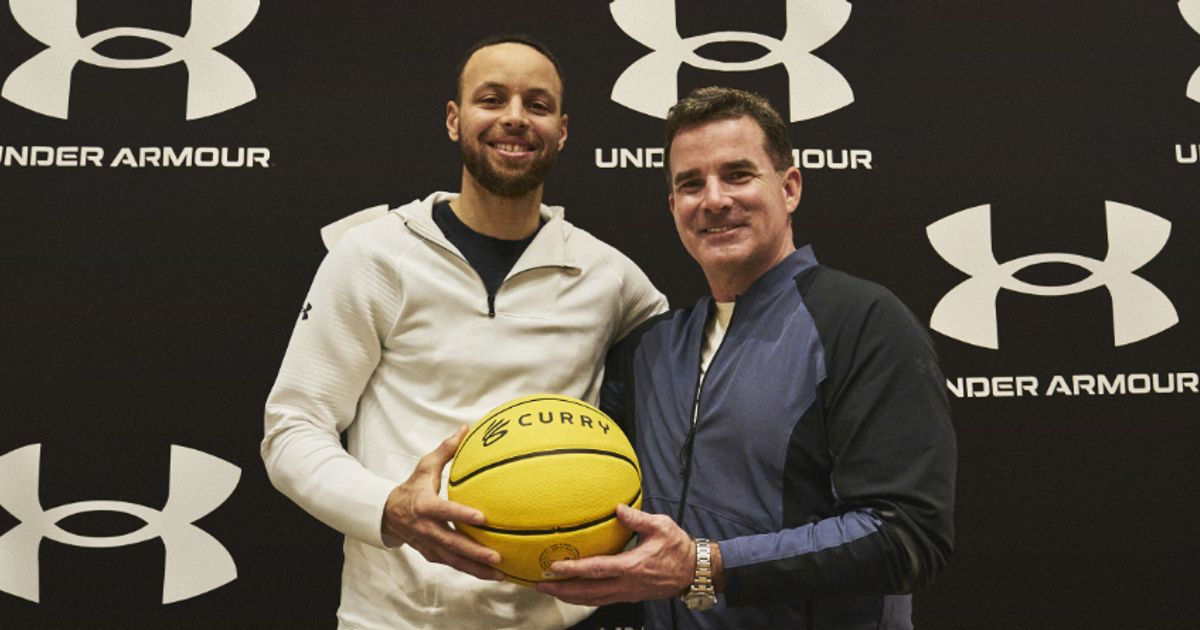
Under Armour reported Q3 revenue of $1.33 billion, down 5% year-over-year (North America -10%, international +3%), and adjusted EPS of $0.09 versus analyst expectations for a $0.02 loss; gross margin contracted 310 basis points to 44.4% largely due to higher tariffs. Management doubled adjusted full-year EPS guidance to $0.10–$0.11 while maintaining an expected ~4% revenue decline and forecasting a GAAP operating loss of about $154 million (adjusted operating income ~ $110 million); the quarter included a $150 million operating loss and a $431 million net loss driven by a $247 million valuation allowance, with adjusted net income of $37 million. Inventory totaled $1.1 billion, cash and equivalents were $465 million with no borrowings on a $1.1 billion revolver, and the company emphasized restructuring and prioritizing profitability over growth.
Market structure: Under Armour’s quarter crystallizes a bifurcation — cost-driven EPS resilience versus demand-driven revenue contraction. Winners: nimble competitors with pricing power (NKE, LULU) and apparel suppliers outside high-tariff supply chains; losers: low-margin wholesale partners and footwear-focused SKUs (UAA footwear -12%). Tariff-driven gross margin squeeze (‑310bps) implies upward price pressure or margin pinch industrywide if sourcing cannot shift within 6–12 months.
Risk assessment: Near-term (days–weeks) volatility centers on guidance follow-through and tariff headlines; medium-term (quarters) tail risk includes deeper NA demand deterioration or tariff escalation that could erase the adjusted $0.10–0.11 guide. Hidden dependencies include vendor contract repricing, inventory aging (inventory $1.1bn down only 2%), and the $247m valuation allowance which can mask recurring losses. Catalysts: supply‑chain re-sourcing announcements, quarterly North American comp trends, and any draws on the $1.1bn revolver within 90 days.
Trade implications: Favor small, structured exposure rather than outright cash positions. Use limited, capital-efficient option spreads to play a constructive restructuring case (12-month call spread sized 1–2% of portfolio) and a short-dated put spread as a hedge against tariff or demand shock (3-month put spread). Rotate away from lower-tier wholesale exposure into premium brands (increase NKE/LULU weights) over 1–3 quarters as consumer bifurcation persists.
Contrarian angles: Consensus underestimates management’s ability to convert restructuring into positive adjusted operating income (target ~$110m) within 12 months — creating asymmetric upside if tariffs moderate. Conversely, the market may be underpricing a persistent footwear share loss; a negative sequencing of wholesale order reductions could produce >25% downside over 6–9 months. Watch for signs of sustained DTC recovery or a repeat gross‑margin hit; either will force rapid repricing.
AI-powered research, real-time alerts, and portfolio analytics for institutional investors.
Request DemoOverall Sentiment
mixed
Sentiment Score
0.08
Ticker Sentiment
