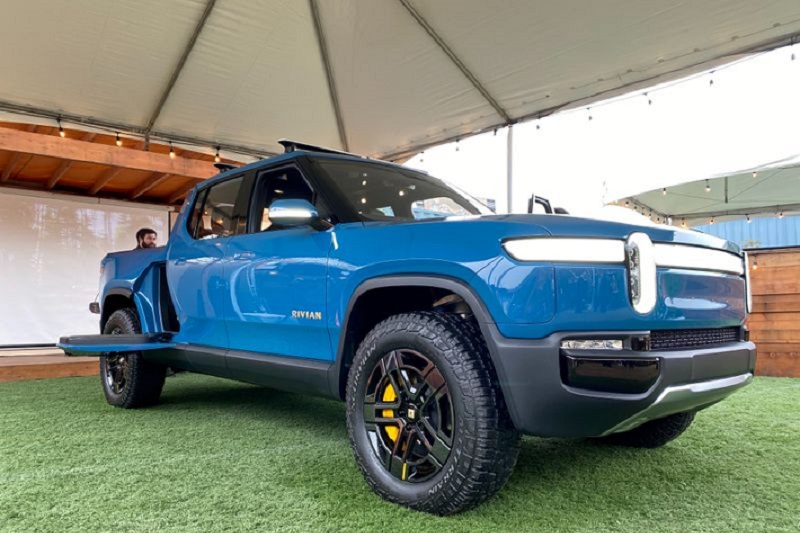
Rivian CEO Robert J. Scaringe sold 34,818 shares for $522,270 at $15.00 per share under a pre-arranged 10b5-1 plan, leaving him with 922,286 direct shares plus additional indirect holdings. The article also notes Rivian’s Q1 2026 results beat expectations, with EPS of -$0.33 versus -$0.63 expected and revenue of $1.38 billion versus $1.36 billion consensus. Other developments include an NHTSA investigation into a potential rear toe link defect affecting about 115,000 vehicles and DA Davidson raising its target to $15 from $14 while keeping a Neutral rating.
The headline signal is not the insider sale itself, but that management is monetizing into a stock that has already re-rated on improving execution while the fundamental story is still cash-intensive. In that setup, insider selling is usually less a directional tell than a liquidity and confidence check: it reduces marginal demand just as the market is asking whether operational momentum can outrun capex and working-capital needs over the next 2-4 quarters.
The bigger second-order issue is governance drift versus operational optionality. A CEO monetizing through a 10b5-1 plan while also sponsoring a separate venture initiative can create a perception of bandwidth fragmentation, which matters most when a company is still in the “prove scale economics” phase. That perception can cap multiple expansion even if quarterly prints continue to beat, because the market will demand evidence that margin progress is durable without repeated balance sheet support.
The litigation/recall overhang is more important for duration than magnitude: a safety probe rarely hurts the base case immediately, but it can slow the conversion of good earnings into sustained multiple expansion. If the issue is confined and manageable, the stock can still work over months; if it broadens into a pattern of quality control concerns, the market will likely compress the name on every rally. In contrast, a clean resolution plus continued R2 progress would be the primary catalyst to unwind this caution.
Contrarian read: the consensus may be underpricing how quickly positive earnings surprises can coexist with weak equity sponsorship in EVs. If the growth story persists, the stock can grind higher on fundamentals even with insider selling; but near term, the asymmetry favors fading strength because the market is likely to pay less for each incremental improvement until it sees a credible path to self-funding.
AI-powered research, real-time alerts, and portfolio analytics for institutional investors.
Request DemoOverall Sentiment
neutral
Sentiment Score
0.05
Ticker Sentiment
