

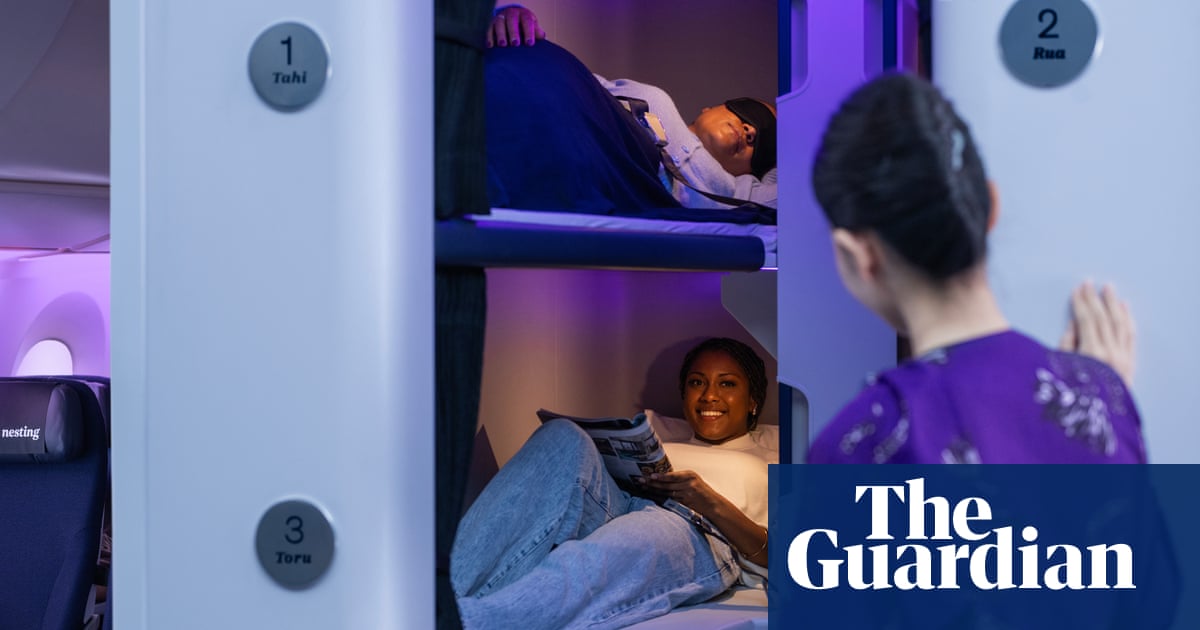
Air New Zealand will let economy passengers book four-hour sleeping-pod sessions on its Auckland-New York route from 18 May, with six Skynest pods slated to enter service in late 2026. The add-on is priced at NZ$500-600 per session and is intended to make ultra-long-haul travel more manageable, though it remains a niche premium upsell rather than a major revenue driver. The announcement also comes amid broader fare pressure and capacity cuts, but the immediate market impact looks limited.
This is less about an airline amenity and more about monetizing the last unconstrained variable in ultra-long-haul economics: passenger fatigue. If the concept works, it expands revenue per seat-miles without requiring a full premium-cabin retrofit, which is attractive in a high-fuel, volatile-demand environment. The more interesting second-order effect is competitive pressure on other long-haul carriers to add low-capex comfort products that can defend yield in economy without materially reducing density.
For UAL, the read-through is incremental but real: management has now seen that consumers will pay a meaningful premium for sleep, not just legroom. That should support ancillary revenue mix on transpacific and ultra-long sectors, especially where premium-economy is already saturated; the risk is execution friction, as airlines that overbuild “experience” products can end up cannibalizing higher-yield inventory if uptake exceeds assumptions. Over a 6-18 month horizon, this is supportive for ancillary ARPU trends, but not enough on its own to re-rate the stock unless it coincides with better capacity discipline and fuel stabilization.
BCS is a cleaner signal on the demand side: the market is still discounting discretionary travel softness, but travel-related spending is proving more elastic to trip quality than to ticket price alone. If consumers are willing to pay for comfort add-ons, airlines can preserve demand even as base fares rise, which reduces the probability of a sharp collapse in bookings from fare inflation alone. The contrarian point is that the industry may be underestimating how much of this is a segmentation tool rather than true demand expansion; the winner is the carrier with the best ancillary attach rate, not necessarily the one with the most novel product.
Near term, the catalyst path is product rollout, booking data, and commentary from rival long-haul carriers over the next 1-2 quarters. The main tail risk is consumer backlash if sleep products are perceived as cramped, low-value, or operationally messy; if reviews are poor, the concept could become a brand distraction rather than a revenue lever. The bigger macro reversal would be sustained fuel relief and capacity normalization, which would shift attention back to core ticket pricing and dilute the importance of ancillary innovation.
AI-powered research, real-time alerts, and portfolio analytics for institutional investors.
Request TrialOverall Sentiment
mildly positive
Sentiment Score
0.15
Ticker Sentiment
