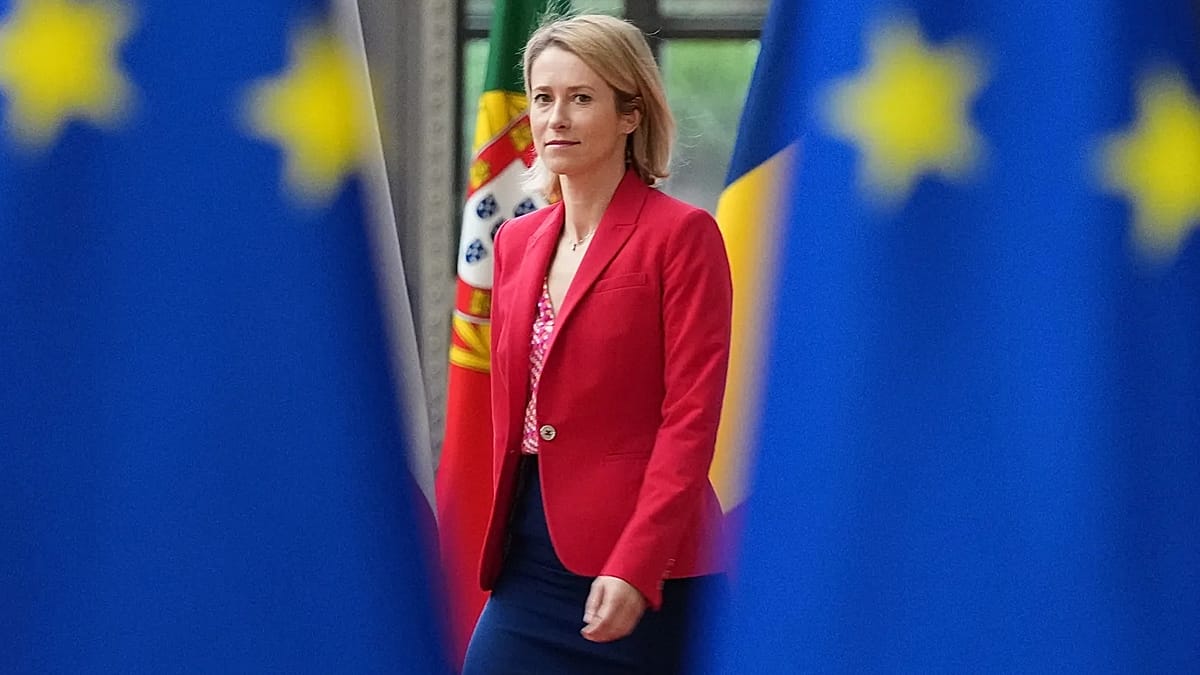
EU foreign policy chief Kaja Kallas rejected Vladimir Putin’s proposal to name former German Chancellor Gerhard Schröder as a mediator in potential Ukraine-Russia peace talks, saying he would be "sitting on both sides of the table." Ukraine also opposed the idea, while some German Social Democrats said it should be carefully considered. The article is primarily a political/diplomatic update with limited direct market implications.
The market implication is less about the mediator itself and more about the signal that any future переговоры path will be politically sanitized before it can affect sanctions, energy flows, or defense procurement. By publicly rejecting a Russia-preferred interlocutor, the EU is raising the hurdle for a fast diplomatic reset, which keeps the “higher-for-longer” risk premium embedded in European gas, power, and defense names over the next 1-3 months.
The second-order effect is that Moscow’s attempt to shape the negotiating frame may backfire by hardening EU unity and making any eventual talks more institutional, slower, and less likely to produce immediate sanctions relief. That matters for energy markets: a true détente would be bearish for European gas volatility, but this headline reduces the probability of near-term downside in TTF and supports the spread between European and US gas-linked equities. It also benefits defense contractors on the margin because order visibility improves when ceasefire odds fade.
The contrarian read is that the move is mostly noise unless it foreshadows a broader channel to negotiations; the equity market may be overpricing the diplomatic theater as a durable policy shift. If the Kremlin pivots to a more acceptable mediator within days, this headline fades fast. The real catalyst is not the person named, but whether there is any substantive movement on prisoner exchanges, ceasefire language, or sanction sequencing over the next several weeks; absent that, the tradeable effect should stay modest but directionally supportive for European security and energy-risk hedges.
AI-powered research, real-time alerts, and portfolio analytics for institutional investors.
Overall Sentiment
neutral
Sentiment Score
-0.05
