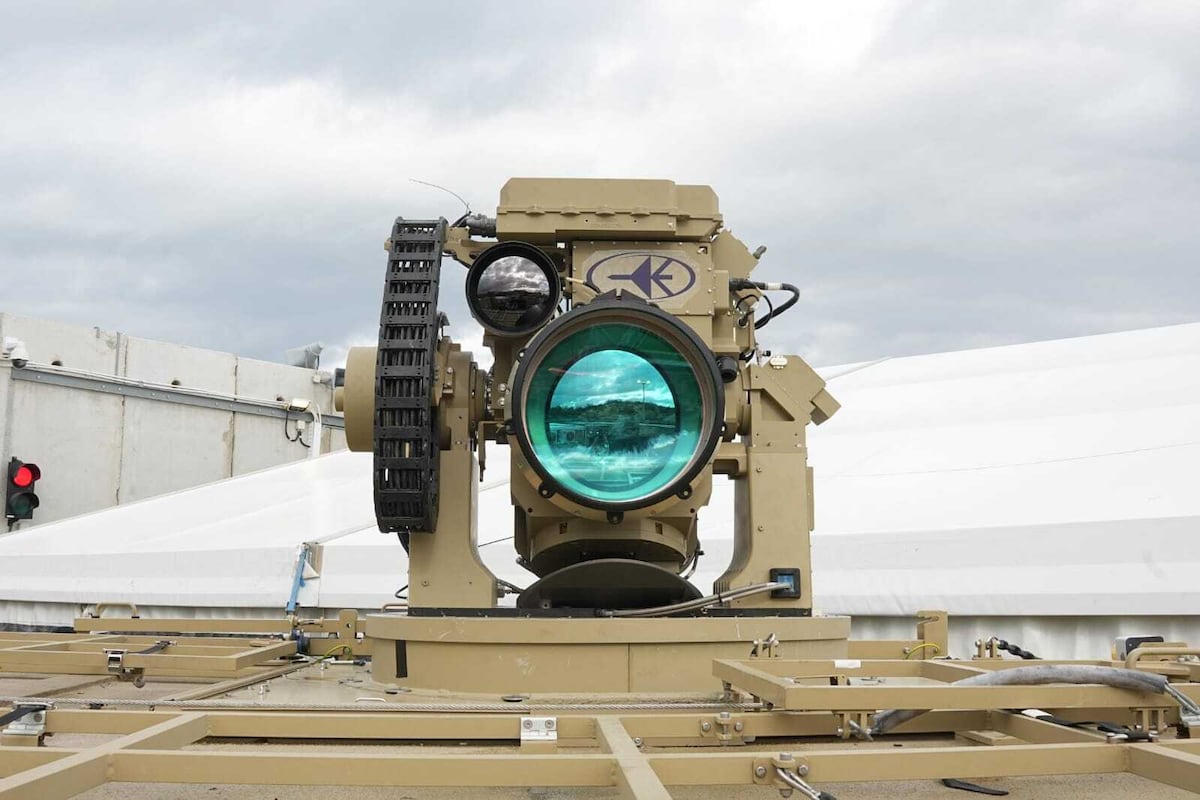
Israel has conscripted Elbit’s SIGMA 155 (Ro’em), a modular 155mm self‑propelled howitzer mounted on a 10x10 truck with automatic shell loading, a three‑person crew and ~40 km range, with a first battalion due and expected to replace M109 Paladins by the end of this fall. The IDF also took delivery of Rafael’s first operational Iron Beam high‑energy laser (~100 kW, ~10 km engagement range) slated for integration into Israel’s multi‑layered air defenses and entry into service in early 2026 after successful field tests; Rafael showcased additional 10–100 kW variants for portable, vehicle and naval use. These procurements materially upgrade Israeli land and air defenses and are likely to support near‑ to mid‑term contract activity and export prospects for prime contractors Elbit and Rafael.
Market Structure: Elbit (ESLT) and Rafael (RFL) are direct winners — domestic procurement and export potential should improve margins and order visibility; expect 5–15% incremental topline risk-adjusted uplift over 12–24 months if Israel signs export contracts. US legacy suppliers of M109-like systems face secular replacement headwinds in markets that prefer mobile, lower-crew systems; pricing power shifts toward vendors that can bundle sensors, autoloaders and directed-energy. Cross-asset: anticipate modest bid for Israeli equities/ILS on confirmed export orders, slight tightening in Israel sovereign spreads (5–20bp), and higher implied vols for defense equities around live-fire demos; commodity/steel impact is negligible but niche semiconductor/laser component suppliers could see 10–30% demand lift.
Risk Assessment: Tail risks include test failures, restrictive export controls (ITAR/UK) or component supply chokepoints (high-power fiber lasers) that could delay deliveries by 6–24 months and wipe 20–40% of near-term revenue projections. Immediate (days) effects are event-driven; short-term (weeks–months) driven by order announcements and supplier bookings; long-term (quarters–years) depends on foreign procurement cycles and integration with multi-layer air defenses. Hidden dependencies: logistics/training, sustainment contracts, and host-nation rules-of-engagement; catalysts include formal export contracts within 3–12 months and successful foreign demonstrations.
Trade Implications: Tactical: establish 2–3% long position in ESLT (target +25–40% in 12 months) and 1–2% long in RFL (target +30% in 18 months), enter on <10% pullbacks or after confirmed export MoU. Options: buy 12-month LEAP calls (ESLT + RFL) ~25–35% OTM sized 0.5–1% portfolio notional to play asymmetric upside; alternatively sell near-term covered calls after entry to harvest premium. Pair trade: long ESLT vs short GD (General Dynamics) 0.5:1 dollar-neutral to express shift toward mobile/autoloaded howitzers vs legacy tracked systems. Rotate 2–4% away from broad industrials into Aerospace & Defense (XAR or ITA) over 1–3 months.
Contrarian Angles: Consensus may overestimate immediate export velocity — expect 6–18 month sales gestation; stocks could be priced for perfection after successful demos, leaving downside if exports stall. The market underprices supplier upside: specialty laser optics and fiber manufacturers (small-cap supply chain names) could rerate if order flow is visible; conversely, ammo suppliers may see muted demand if autoloading + lasers reduce round consumption. Monitor export license approvals and first foreign contract within next 90–180 days as binary catalysts; avoid size-up until backlog visibility improves.
AI-powered research, real-time alerts, and portfolio analytics for institutional investors.
Request DemoOverall Sentiment
mildly positive
Sentiment Score
0.27
Ticker Sentiment
