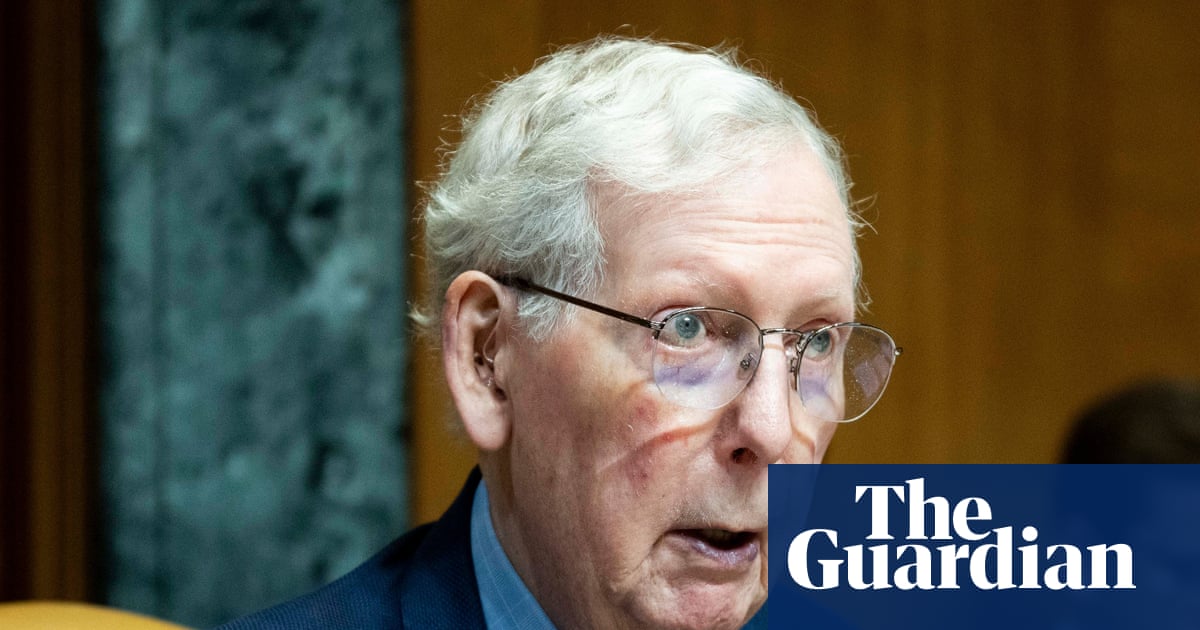
84-year-old Senator Mitch McConnell was admitted to the hospital on Sunday morning, with no update provided on his condition or the cause of the visit. The article highlights an ongoing pattern of health issues, including an eight-day hospitalization in February for flu-like symptoms, multiple freezes during public appearances, and several falls since 2023. The key political risk is whether he can complete his Senate term through January 2027.
This is not a direct market event, but it is a slow-burn governance risk with asymmetric second-order effects. The immediate read-through is to Senate operational continuity: even absent a vacancy, recurring health interruptions increase the odds of missed votes, leadership distraction, and delayed legislative sequencing on fiscal, appropriations, and nominations. That matters more in a narrowly balanced chamber than the individual senator’s agenda, because every week of procedural slippage raises headline volatility around shutdown risk, confirmation timing, and election-law battles.
The bigger market implication is not ideological but mechanical: if the seat becomes a genuine contingency before 2026, the odds of a partisan control shift in a tight Senate rise nonlinearly because Kentucky’s replacement process and a special-election campaign could briefly elevate uncertainty. That creates a modest but real premium for “status quo” assets that benefit from legislative inertia — defense appropriators, large-cap healthcare, and regulated utilities — while trimming the probability of sharp policy surprises that tend to hit rates-sensitive and tax-sensitive sectors first.
For healthcare specifically, the article reinforces the aging-demographics trade: political fragility around senior leadership is a reminder that healthcare demand is structurally sticky regardless of Washington churn. The more tradable angle is volatility around biotech policy and Medicare reimbursement headlines; if this becomes a broader narrative about aging lawmakers and institutional continuity, expect increased attention on healthcare access, elder-care, and hospital utilization names rather than pure drug discovery. That said, the direct market impact is low unless health deterioration becomes visibly acute over the next 1-3 months.
AI-powered research, real-time alerts, and portfolio analytics for institutional investors.
Request DemoOverall Sentiment
moderately negative
Sentiment Score
-0.20
The contrarian view is that this is likely being overread as an event risk for markets in the near term. Absent an unexpected resignation or prolonged incapacity, most pricing impact should remain in the background until there is a concrete procedural trigger. The better trade is to use any knee-jerk political volatility to add to high-quality defensive exposures rather than express a standalone macro short.
