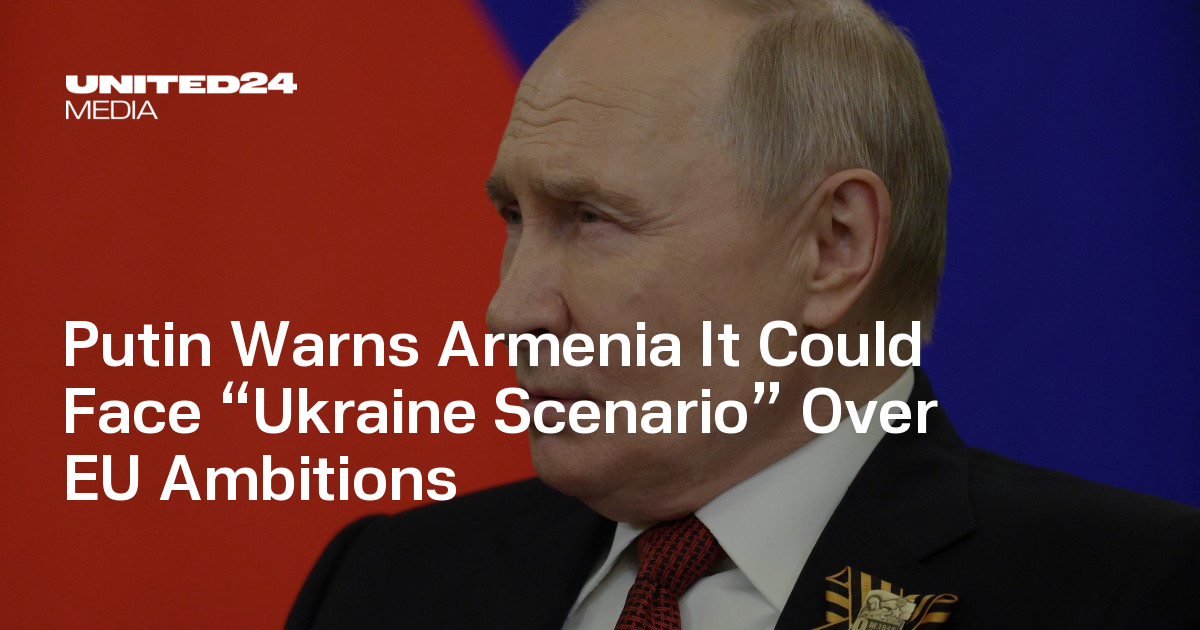
Putin urged Armenia to hold a referendum on its future relations with the EU and Russia, escalating pressure as Yerevan deepens ties with Brussels. He also linked Armenia’s EU ambitions to Russia’s war in Ukraine and said Moscow may make 'appropriate conclusions' if Armenia advances EU integration. The remarks reinforce geopolitical risk in the South Caucasus and the potential for a further cooling in Russia-Armenia economic and security relations.
This is less about Armenia itself than Moscow signaling that Eurasian economic membership is no longer a passive trade arrangement; it is becoming a compliance test. That raises the probability of selective economic retaliation if Yerevan keeps moving toward Europe, but the bigger second-order effect is on investor perception of policy sovereignty across the region: capital will now price a higher probability of customs friction, licensing delays, and softer credit support for any EM issuer deemed politically ambiguous.
The immediate market impact is probably modest because Armenia is too small to move major asset classes, but the precedent matters for frontier-risk premia. If Moscow starts treating EU alignment as a binary choice, the next pressure point is not equities but trade finance, remittances, and transport corridors—areas where even a low-intensity squeeze can hit bank NIMs and import-dependent businesses within one to three quarters.
For Europe, the more important read-through is that Russia is again framing economic integration as a security issue, which keeps Eastern Europe defense budgets and NATO logistics spend structurally supported. The hawkish rhetoric also reinforces the case that any de-escalation in the region is likely to be tactical, not strategic, so defense equities should not be traded as a one-week headline response but as a durable mid-cycle allocation with event-driven upside on any fresh coercive step.
Contrarian angle: the market may overestimate Moscow’s ability to economically punish Armenia without also hurting its own regional leverage. If Russia overplays its hand, it accelerates exactly the decoupling it wants to avoid, pushing Yerevan toward EU-compatible infrastructure, payment rails, and procurement over the next 6-18 months. That makes the real trade less about immediate sanctions and more about a slow rerouting of capital, logistics, and defense spending away from Russian-linked systems.
AI-powered research, real-time alerts, and portfolio analytics for institutional investors.
Request DemoOverall Sentiment
moderately negative
Sentiment Score
-0.35
Ticker Sentiment
