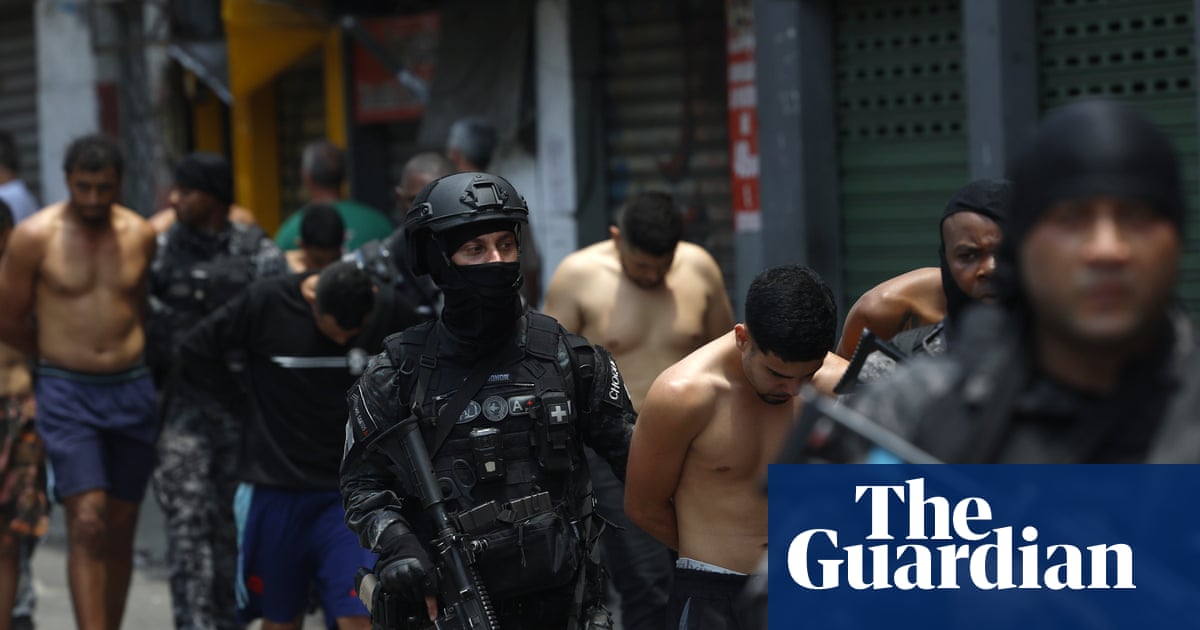
Rio de Janeiro experienced its deadliest police operation, resulting in 64 fatalities during a raid targeting the Red Command crime faction in favelas near the international airport. The intense violence and fear of reprisal attacks led to widespread closures of local businesses, including schools, shops, bars, and restaurants, and disrupted public transport services, causing significant economic and logistical chaos for commuters across the city.
Rio de Janeiro experienced its deadliest police operation, resulting in 64 fatalities, including four police officers, during a raid involving over 2,500 officers targeting the Red Command faction in favelas near the international airport. This "Operation Containment" aimed to capture gang members, with authorities seizing 93 automatic rifles and arresting over 80 individuals amidst intense gunfights and the gang's use of weaponized drones. This event marks a significant escalation in the ongoing conflict between state forces and organized crime.
The immediate aftermath saw significant economic and logistical disruption across Rio. Widespread fear of reprisal attacks led to the closure of schools, shops, bars, and restaurants, while bus companies recalled fleets, causing rush hour chaos and attempts by criminals to block major motorways, including the airport road. This directly impacts local commerce, tourism, and daily operations, indicating a tangible economic cost to the heightened violence.
Governor Cláudio Castro declared the city "at war," labeling the situation "narco-terrorism," reflecting an escalating government stance against organized crime. However, community leaders and human rights activists criticized the operation as a "state-sponsored massacre" and an ineffective "fight against poverty," highlighting the deep-seated socio-economic issues underpinning the conflict. This divergence in perspective underscores the complex and persistent challenges of urban violence in Brazil.
The incident highlights the severe operational risks for businesses and the potential for broader instability in a major economic hub. The use of advanced weaponry by criminal factions, such as weaponized drones, signals an evolving threat landscape that could necessitate increased security expenditures and impact supply chain reliability.
AI-powered research, real-time alerts, and portfolio analytics for institutional investors.
Request DemoOverall Sentiment
strongly negative
Sentiment Score
-0.85
