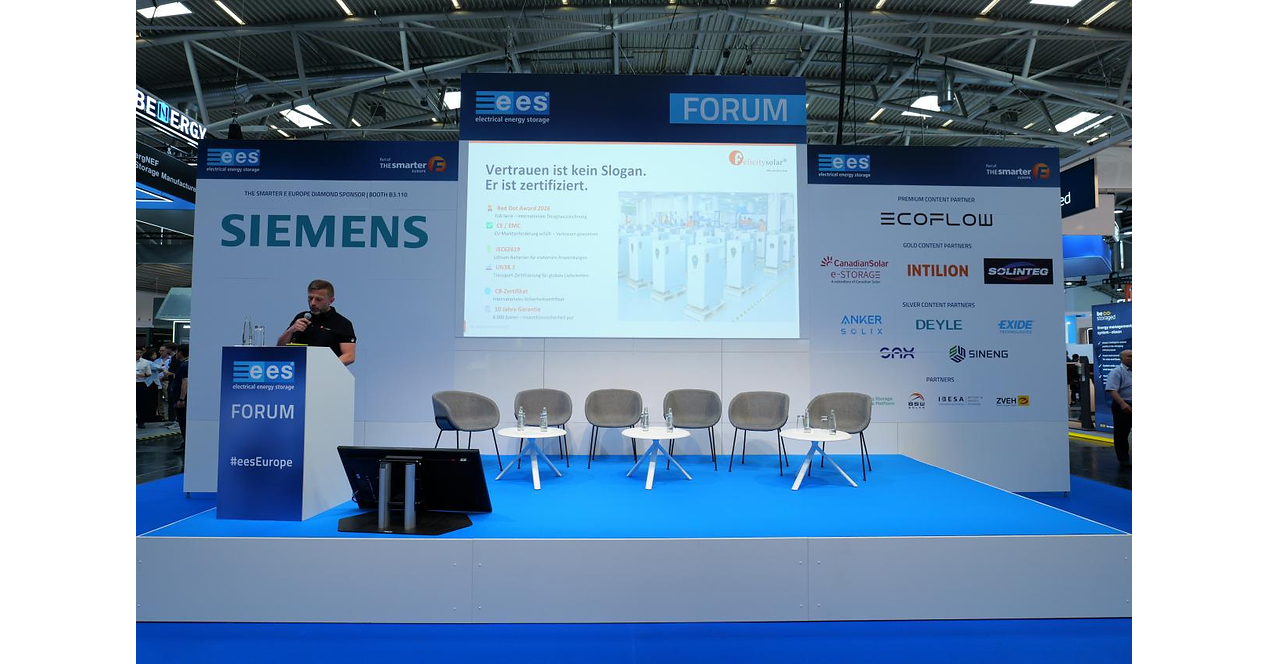
Felicitysolar stärkt seine europäische Präsenz mit integrierten Energiespeicher- und Smart-Energy-Management-Lösungen auf der The Smarter E Europe 2026 in München. Für Privathaushalte wurden 8-kW- und 20-kW-Systemlösungen sowie das Niederspannungs-Batterieportfolio FLB-Serie vorgestellt; im C&I-Bereich stehen u. a. ein 125-kW-Hybrid-Wechselrichter und skalierbare Hochspannungs-Batteriesysteme im Fokus. Zudem wurden lokale Service- und Partnerkapazitäten ausgebaut und Zertifizierungen (u. a. für 125-kW-Anlagen in Spanien) sowie der EUPD-Award 2026 für zusätzliche Markt-Glaubwürdigkeit genannt.
The market-relevant signal here is not “Europe expansion,” it is the shift from hardware monetization to bundled hardware + software + local service. That raises the competitive bar for incumbent inverter/storage vendors because the easiest way to win bids in Europe is to compress price, extend warranties, and subsidize commissioning — all of which pressure gross margin before they add meaningful volume.
Second-order, the likely winners are installers, EPCs, and electrical-distribution channels that can arbitrate between more vendors and push pricing lower; the losers are premium-priced pure plays with weaker service footprints, especially where residential and C&I customers can dual-source quickly. For names like SEDG and ENPH, the risk is not immediate share loss but a slower erosion of ASPs and attach-rate economics as integrated Chinese competitors normalize “good enough” systems plus local support.
This is a 1-3 quarter story, not a one-day catalyst. What reverses it is either regulatory friction on certifications/local content or evidence that European demand is still too soft for new entrants to monetize scale; without that, the structurally bearish read for incumbents is that software-led energy management shifts value away from box margins and toward whoever owns the customer relationship.
Contrarian view: the consensus may underweight how sticky service and commissioning become once an installer standardizes on a vendor’s monitoring and lifecycle platform. That could let a smaller entrant gain share faster than investors expect, but this release alone is not proof — channel checks on bookings, ASPs, and installation lead times matter more than booth traffic.
AI-powered research, real-time alerts, and portfolio analytics for institutional investors.
Request DemoOverall Sentiment
mildly positive
Sentiment Score
0.12
