



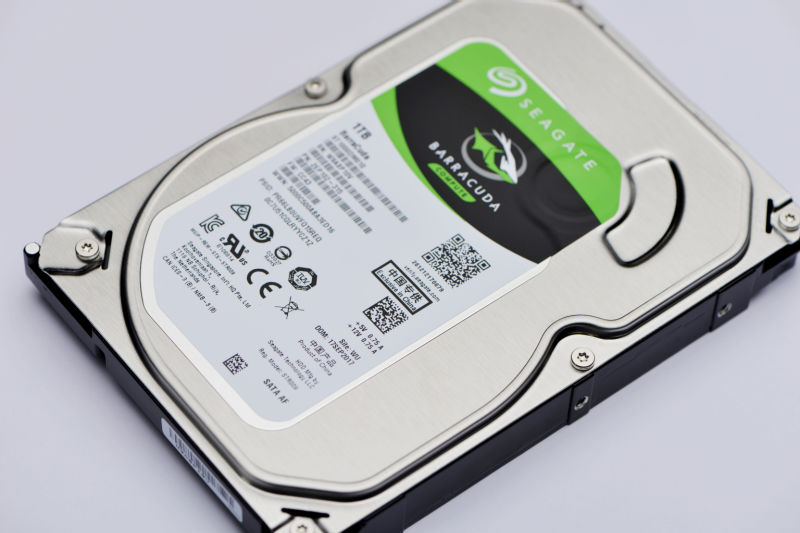
Seagate Technology surged 5.5% to a new 52-week high of $930.98 after bullish PC/AI news, multiple analyst price-target hikes, and the clearing of a $175 million Huawei-related legal overhang. Q3 fiscal 2026 EPS rose to $3.39 from $1.60 a year earlier on revenue of $3.11 billion, up 44% year over year, and the company guided Q4 revenue to about $3.45 billion plus or minus $100 million. Barclays lifted its target to $1,000, while Wells Fargo and BofA both raised targets to $900, reinforcing the positive demand and pricing outlook.
The market is beginning to price STX less like a cyclical hardware vendor and more like a scarce capacity provider into an AI-driven storage bottleneck. The key second-order effect is that AI PC and edge-AI upgrades can extend the demand cycle beyond hyperscale, pulling forward higher-capacity HDD mix and tightening the supply response for longer than typical semiconductor upcycles. That matters because storage is one of the few AI-adjacent segments where pricing can remain firm even if unit growth moderates.
The biggest near-term beneficiary is STX’s margin trajectory, but the more interesting implication is competitive: Western Digital and other storage peers should see the same pricing umbrella, while component suppliers tied to higher-capacity drives can benefit from mix shift without needing a broad demand boom. The legal settlement removes an overhang that was functionally capping multiple expansion; with that cloud lifted, the stock can rerate on durability of cash flows rather than just near-term EPS beats. The risk is that investors extrapolate one clean quarter into a multi-year straight line; if enterprise and consumer demand cools simultaneously, the valuation support from pricing power will compress fast.
For NVDA, the PC announcement is less about immediate revenue and more about ecosystem pull-through: if AI-native PCs gain traction, they create a broader installed base of local inference workloads that reinforce demand for storage, memory, and premium client upgrades. That is bullish for the broader AI hardware complex, but the first-order equity read-through is modest for NVDA versus the more direct operating leverage in STX. The contrarian take is that the move in STX may already discount most of the visible catalyst stack; the better edge may be in buying pullbacks or structuring convexity around the next pricing commentary rather than chasing strength after a new high.
AI-powered research, real-time alerts, and portfolio analytics for institutional investors.
Request TrialOverall Sentiment
strongly positive
Sentiment Score
0.78
Ticker Sentiment
