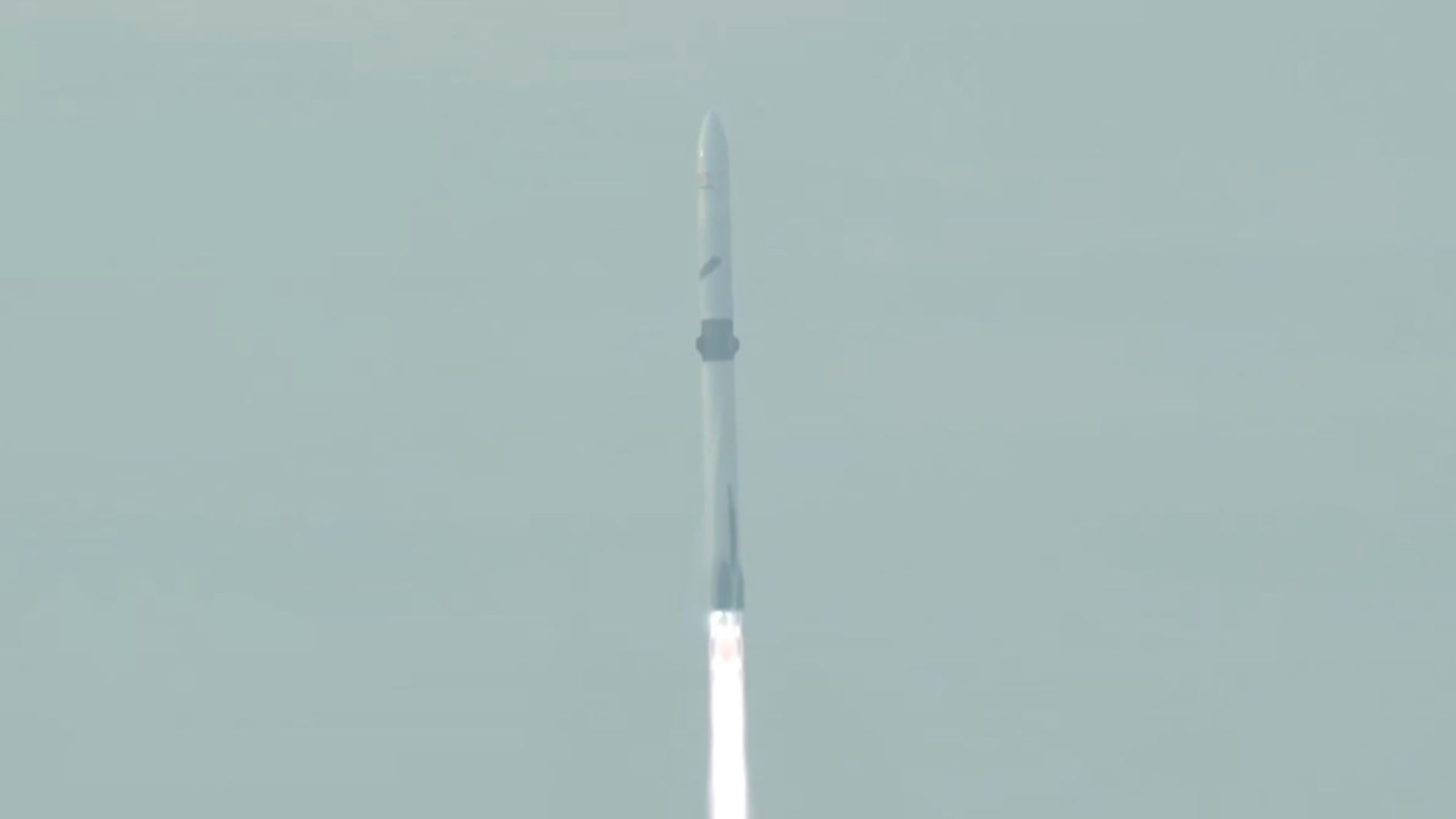
Blue Origin's third New Glenn mission failed to place AST SpaceMobile's BlueBird 7 satellite into the correct orbit, prompting the FAA to ground the rocket pending an investigation. The reusable first stage landed successfully, but the upper-stage engine underperformed during a key burn, forcing the satellite to be de-orbited and covered by insurance. The mishap could delay Blue Origin's Blue Moon test flight later this year and adds execution risk for NASA-related lunar lander plans.
The key market issue is not the lost payload; it is the sequencing risk this introduces for a launch provider trying to compress reliability proof into a very narrow calendar. In launch businesses, the first successful recovery often gets less valuation credit than the first clean upper-stage repetition, because customers buy schedule certainty, not just reusability headlines. A grounding now pushes the next meaningful data point out by weeks to months, which can matter more than the hardware failure itself if it overlaps with customer manifest decisions and insurance underwriting updates.
For ASTS, this is a classic short-horizon operational hit with longer-horizon optionality intact. The immediate hit is not just the satellite loss; it is another reminder that the company’s deployment cadence is hostage to third-party launch execution, which increases the probability of slippage in constellation fill and revenue ramp. The insurance recovery cushions capital loss, but it does not recover time value, and in a network buildout business the time delay can be more expensive than the hardware write-off because it defers coverage expansion and pushes out the point at which utilization starts compounding.
Second-order, competitors that are less launch-dependent or have better diversified launch access gain relative credibility. Any investor comparing ASTS to alternative direct-to-device or space-infrastructure names will likely apply a steeper discount to schedule risk until the next mission clears cleanly, especially if the FAA review drags into the next quarter. The right framework is that this is a confidence event, not an existential one: the stock can stay weak for several sessions or weeks even if the long-term thesis remains intact.
Contrarian take: the move may be only partially justified if investors extrapolate one upper-stage anomaly into a persistent launch-availability problem. Reusability on the booster side is still a meaningful de-risking milestone, and if the investigation identifies a narrow engine-performance issue rather than a systemic architecture flaw, the selloff could reverse quickly on a successful return-to-flight. The trade setup is therefore asymmetric: downside persists until schedule visibility improves, but upside can re-rate sharply on a clean next launch because the market is likely to be positioned for a worse outcome than the eventual facts support.
AI-powered research, real-time alerts, and portfolio analytics for institutional investors.
Request TrialOverall Sentiment
moderately negative
Sentiment Score
-0.42
Ticker Sentiment
