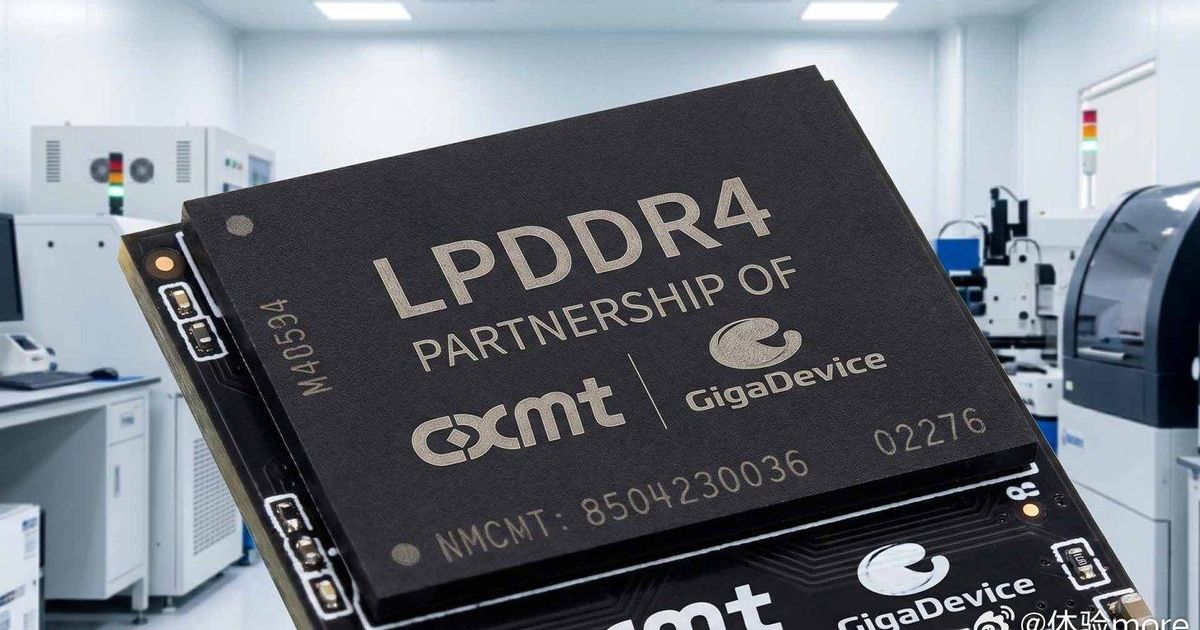
Samsung has stopped taking new LPDDR4 and LPDDR4X orders and plans a full end-of-life for the legacy memory line by late 2026, shifting capacity to higher-margin LPDDR5/LPDDR5X. The transition pressures OEMs and low-cost device makers that still rely on LPDDR4X, while benefiting suppliers positioned to fill the gap. Separately, GigaDevice signed an $825 million DRAM deal with CXMT, six times last year's $173.2 million agreement, signaling a major Chinese push into legacy memory markets.
This is less a one-off memory shortage story than a structural re-pricing of the legacy memory stack. When a tier-1 producer exits LPDDR4/DDR4, the marginal capacity becomes more valuable, but the beneficiaries are not necessarily the highest-quality incumbents; they are the fastest fillers of the gap with acceptable qualification risk. That favors Chinese suppliers and distributors in the near term, while creating a multi-quarter squeeze for handset, IoT, and embedded OEMs that still design to cost rather than to performance.
For QCOM, the issue is not unit loss from premium devices, but mix pressure in the low-end Android ecosystem where LPDDR4X remains deeply embedded in reference designs. If bill-of-materials inflation persists, OEMs will either absorb lower margins, down-spec other components, or delay launches; all three are negative for silicon attach rates. The more subtle second-order effect is that some budget phone and SBC vendors may stretch platform lifecycles, which delays replenishment demand and pushes revenue recognition out by 1-2 quarters even if end demand is intact.
The market may be underestimating how quickly this turns into a regionalization trade. If CXMT can convert legal access into exportable supply, the legacy-memory gap narrows faster than western analogs can re-tool, compressing pricing power for Micron and Japanese specialty suppliers in the low-end segment. But the reverse tail risk is real: if customer qualification, reliability, or geopolitical friction slows adoption, the shortage becomes acute into 2H26, forcing sudden redesigns and a sharper-than-expected cost shock for OEM guidance.
Consensus likely frames this as mildly negative for chip vendors and mildly positive for Chinese memory, but the asymmetric trade is in the transition friction itself. The winner is not the memory seller alone; it is the OEM that can redesign quickest, secure alternate sourcing, and pass through price. The losing cohort is the mid-tier consumer hardware stack that cannot re-engineer fast enough, making this a margin compression story before it becomes a unit-volume story.
AI-powered research, real-time alerts, and portfolio analytics for institutional investors.
Request TrialOverall Sentiment
mildly negative
Sentiment Score
-0.15
Ticker Sentiment
