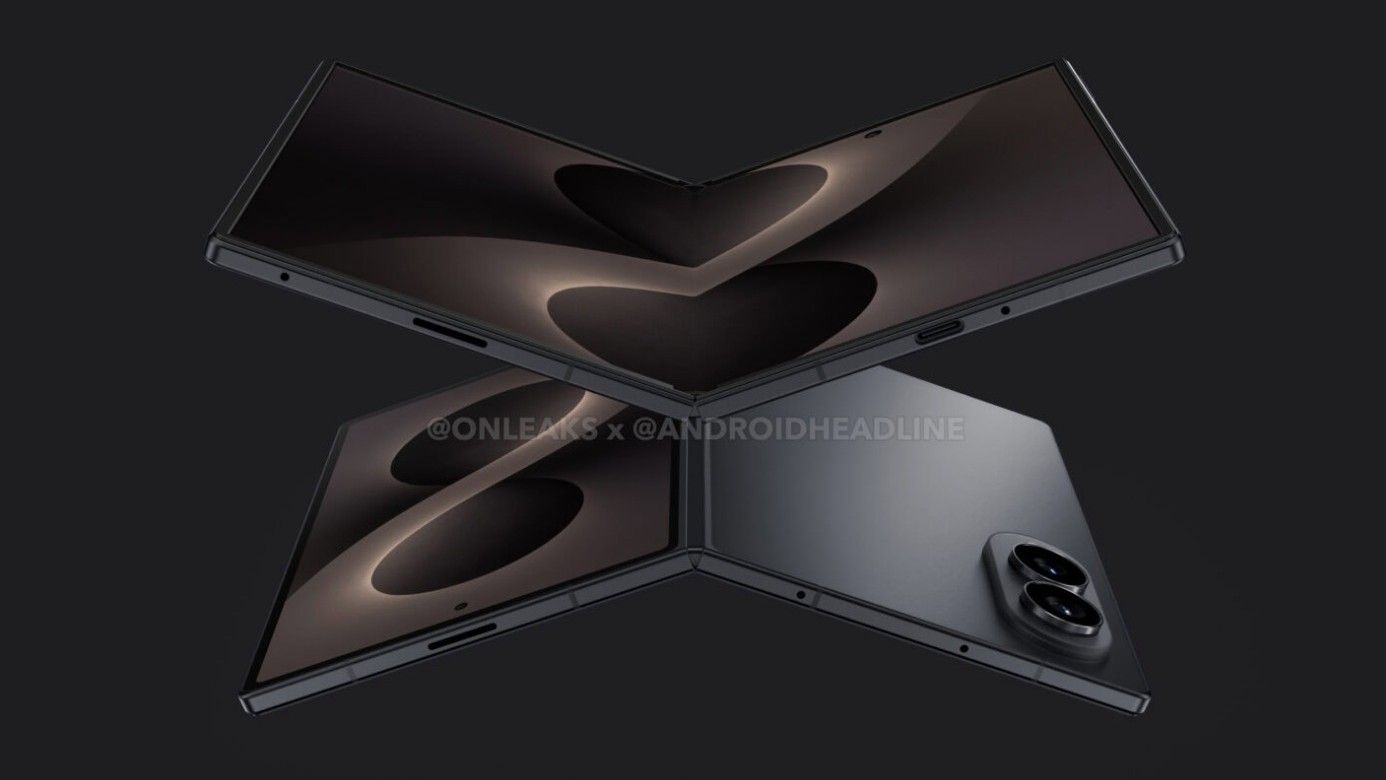
Samsung’s One UI 9 leak points to two upcoming foldables: the rumored Wide Fold (codenamed H8) with a shorter, wider cover display and Galaxy S25 Edge-like rear camera design, and the Galaxy Z Fold 8 (codenamed Q8), which appears largely unchanged externally. The Wide Fold addresses a long-running usability complaint about the Z Fold’s narrow cover screen, while the Z Fold 8 is expected to get a 5,000mAh battery and 45W wired charging. Both devices are expected to launch in July.
This leak is less important as a product preview than as a read-through on Samsung’s willingness to cannibalize its own form factor. A wider book-style foldable directly addresses the longest-running usability complaint in the category, which should improve conversion among premium Android buyers who previously treated foldables as novelty goods rather than daily drivers. The second-order effect is that Samsung is implicitly resetting the category’s spec benchmark toward ergonomics and battery life, which pressures competitors to defend on real-world utility rather than just hinge thickness or camera theatrics.
The bigger competitive implication is not that the Fold line is unchanged, but that Samsung appears to be segmenting the foldable market into two distinct premium use cases: one optimized for legacy users comfortable with the current aspect ratio, and one designed to pull in mainstream smartphone upgraders. That broadens Samsung’s addressable demand pool without requiring a radical software rewrite, which is structurally favorable for Samsung’s ecosystem attach rates and mix, especially if the wider model can command an Ultra-like price premium. Supply chain beneficiaries should be display and battery content, while any OEM that competes on thinness alone risks being trapped in a low-differentiation race.
The near-term risk is that a better form factor does not automatically translate into a bigger market if launch pricing overshoots consumer willingness to pay. The key catalyst is July preorder elasticity: if the new model shows materially stronger early demand than prior Fold generations, it could re-rate expectations for the entire foldable segment over the next 1-2 quarters. The contrarian view is that the market may be underestimating how much of the profit pool stays with Samsung even when competition improves — because the winner in premium hardware is often the company that converts incremental design improvements into higher average selling prices, not the one that creates the loudest launch cycle.
AI-powered research, real-time alerts, and portfolio analytics for institutional investors.
Request DemoOverall Sentiment
mildly positive
Sentiment Score
0.15
