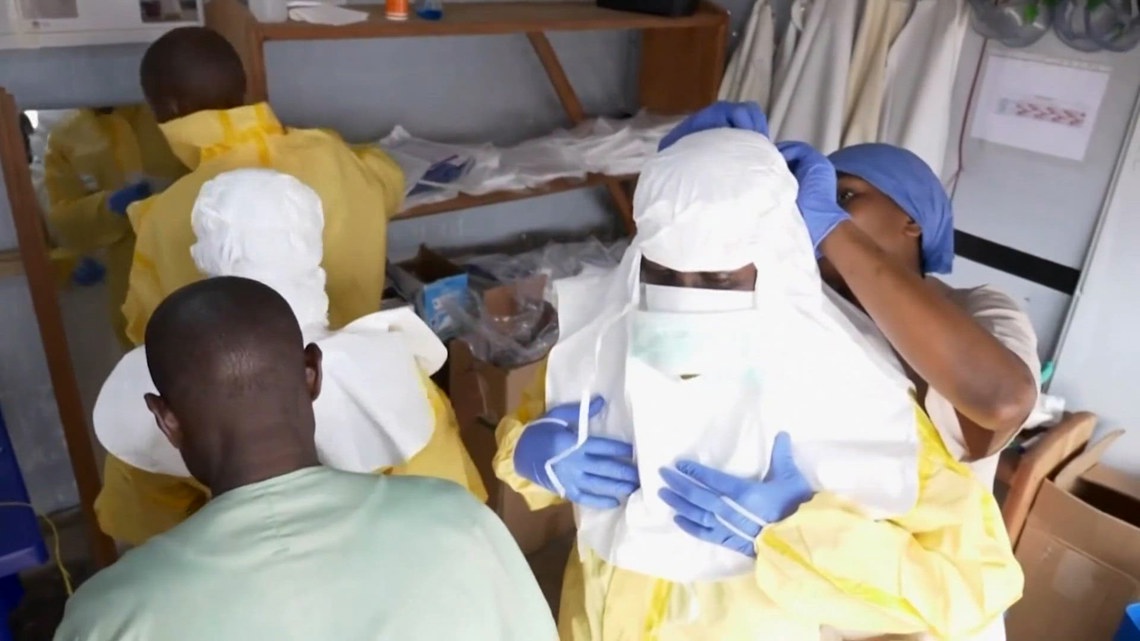
The U.S. Department of Homeland Security is directing travelers from the Democratic Republic of the Congo, Uganda, and South Sudan to land at Dulles International Airport for enhanced Ebola screening, following a WHO-declared public health emergency. Authorities cite 139 suspected deaths and nearly 600 suspected cases, with no available vaccine or medicine for the Bundibugyo strain. The measures affect travelers, airlines carrying passengers from impacted countries, and could weigh on regional travel and logistics flows.
The near-term market impact is less about direct economic damage from the outbreak and more about operational friction in travel, border processing, and emergency capacity. Routing affected travelers through a single screening hub creates a temporary bottleneck that should modestly benefit airport operators and medical services around that facility, while pressuring any carrier with higher exposure to East Africa itineraries via longer turnaround times, compliance costs, and potential itinerary disruption. The second-order issue is that public-health routing can become a template: if case counts accelerate, additional hubs or broader screening rules could follow, increasing friction for international travel without needing a formal ban.
The biggest loser set is likely not airlines broadly but the most exposed international leisure and VFR carriers, plus airport concession revenue tied to lower passenger dwell times if screening processes intensify. In contrast, public-health vendors, temperature-screening suppliers, hospital operators with infectious-disease capacity, and select logistics firms with cargo-only exposure should see little downside and may even benefit from higher scrutiny of passenger movements. The article also hints at a geopolitical overhang: if the outbreak expands, aid requirements and diplomatic pressure on the region rise, which can disrupt regional commerce and keep risk premia elevated across frontier and emerging-market assets tied to Central/East Africa.
The key risk is that markets underprice the duration of this issue because the initial policy response looks narrow. If Bundibugyo spread continues undetected for weeks, the story can shift from a travel-specific headwind to a broader risk-off catalyst for global travel, especially if a U.S. imported case appears within the next 2-6 weeks. Conversely, if case counts plateau and no imported cases emerge, this should fade quickly; public-health actions are usually more bearish for sentiment than for actual airline fundamentals unless they expand materially.
AI-powered research, real-time alerts, and portfolio analytics for institutional investors.
Request DemoOverall Sentiment
moderately negative
Sentiment Score
-0.45
