
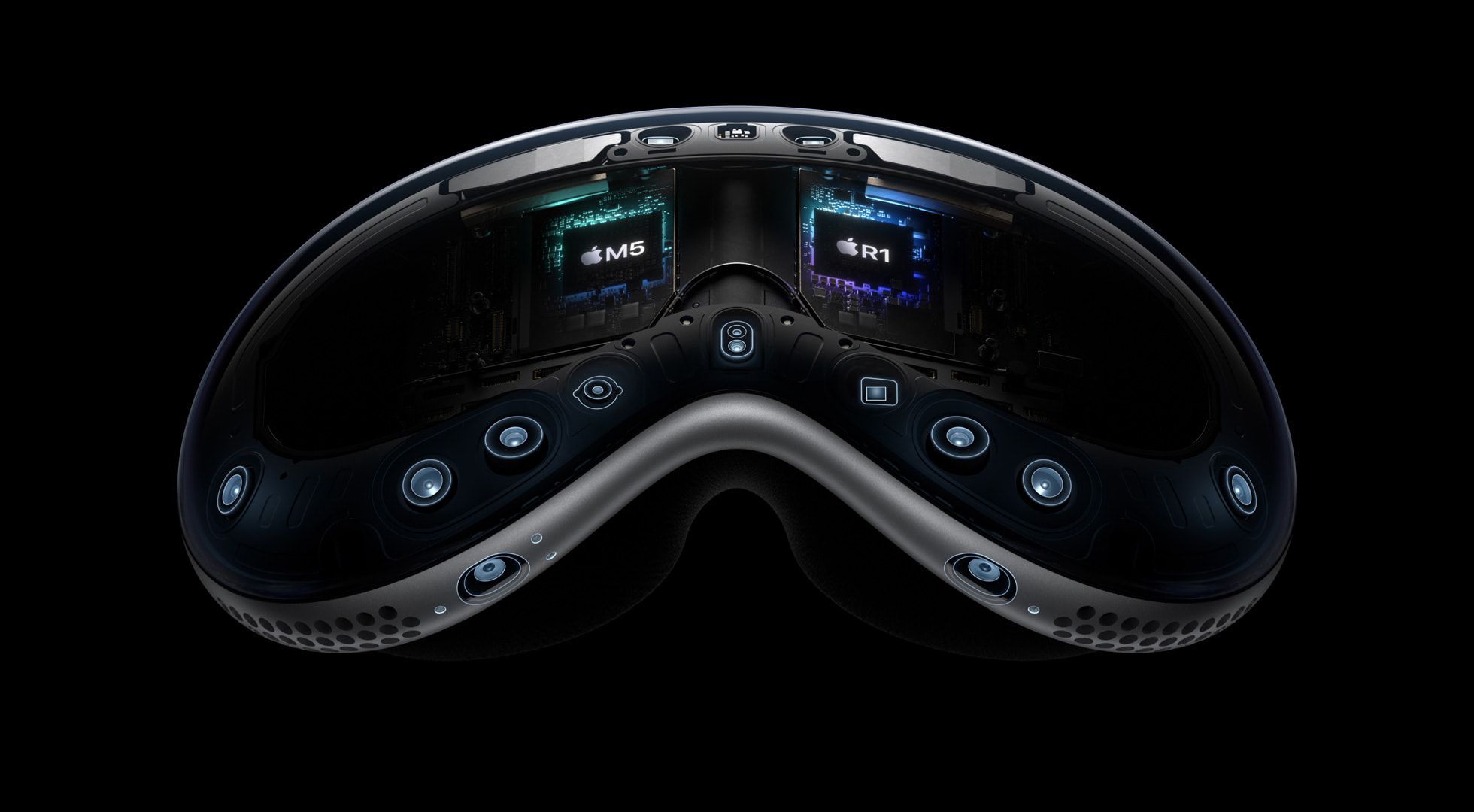
Apple's cheaper, lighter Vision Pro successor is now expected no earlier than late 2028 or 2029, indicating a multi-year delay for any meaningful refresh to the $3,499 headset. Bloomberg's Mark Gurman also said the previously rumored "Vision Air" was canceled, while Apple's focus has shifted to smart glasses targeted for late 2027. The update suggests the Vision Pro category remains on ice despite the October 2025 M5 refresh.
This is less a near-term product delay than a signal that Apple has not yet found a cost/performance architecture that can scale beyond enthusiasts. The implication is that mixed reality remains a long-dated optionality story for AAPL rather than a material earnings driver through at least the next 2-3 years, which reduces the probability of a step-change in AR/VR supplier demand before 2028. That pushes the opportunity set away from headset volume and toward components, optics, and manufacturing enablers that can win regardless of Apple’s exact form factor.
The second-order winner is the smart-glasses supply chain: waveguides, microLED, low-power sensing, and edge-AI silicon should see design-win activity sooner than the headset ecosystem. Suppliers exposed to ultra-low-power compute and lightweight optics could get a re-rating on the expectation of a 2027 glasses launch, while pure-play VR hardware names lose a visible catalyst and may face multiple compression if investors had been underwriting a faster Apple revival. On the competitive side, Meta retains the clearest consumer AR/VR roadmap advantage, not because its hardware is unbeatable, but because time-to-market matters more than spec superiority in this category.
The main risk to the bearish read on AAPL is that this remains immaterial economically: if the market has already written off Vision Pro as a hobby, further delays won’t move earnings estimates much. But the opportunity cost matters strategically — the longer Apple waits, the more it risks ceding interface leadership to ecosystem partners that can train users on glasses-based AI before Apple arrives. If Apple’s smart glasses slip materially beyond 2027, the thesis becomes even less about product cadence and more about structural loss of category control.
Consensus may be underestimating how positive this is for Apple’s capital allocation discipline. Delaying a capital-intensive, low-attach-rate hardware push preserves margin and avoids forcing a bad product into market just to show progress. That suggests the stock can absorb the delay if investors view it as pruning, not retreating; the real read-through is not weaker Apple, but a longer runway for external suppliers tied to ambient computing rather than premium headset hardware.
AI-powered research, real-time alerts, and portfolio analytics for institutional investors.
Request TrialOverall Sentiment
mildly negative
Sentiment Score
-0.15
Ticker Sentiment
