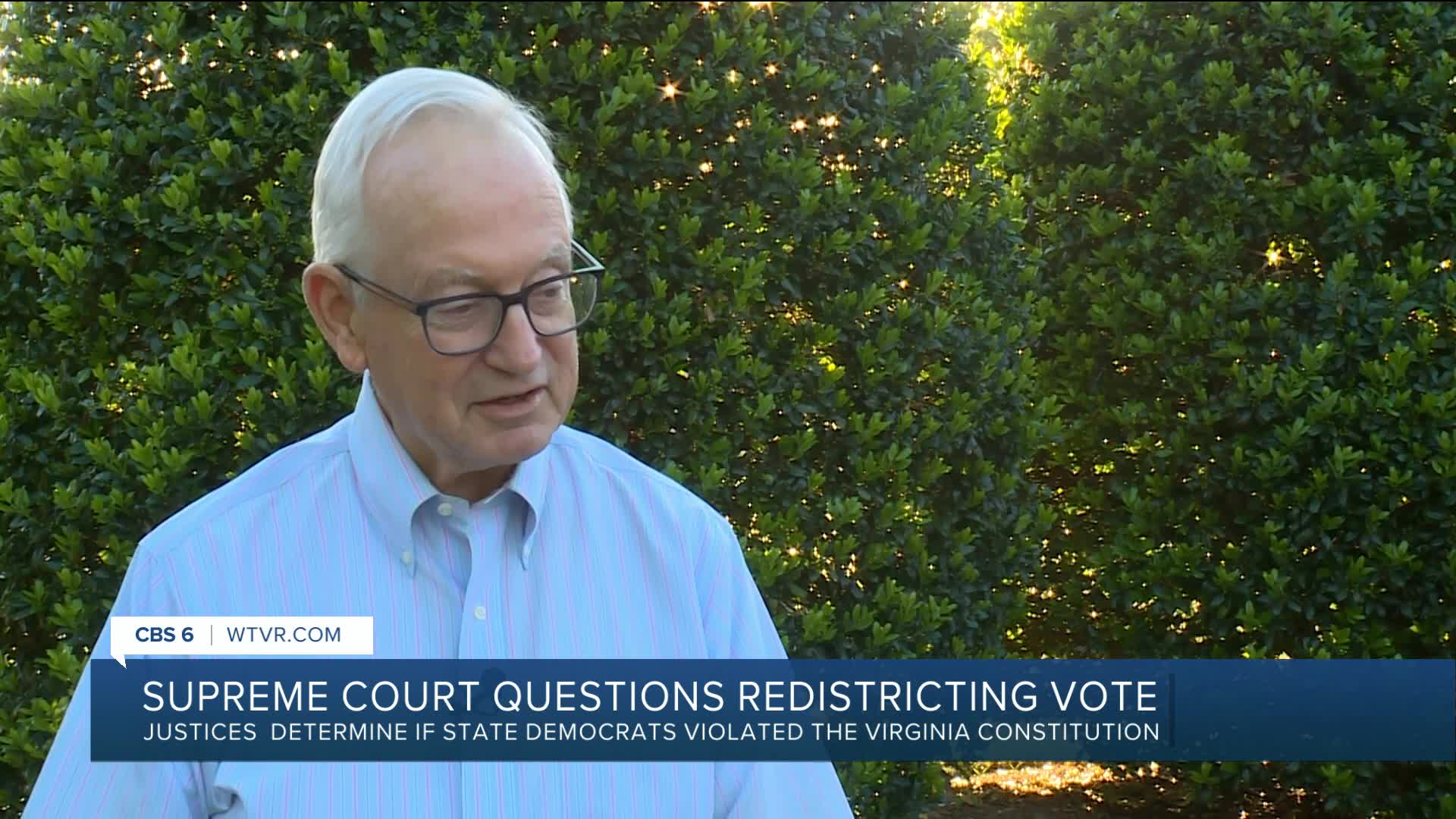
Virginia Supreme Court justices are weighing whether Democrats violated the state constitution by sending a redistricting amendment to voters during early voting, with the dispute centering on when an "election" legally begins. Republicans say more than 1 million people voted before the amendment's details were known, while Democrats argue the process complied with constitutional requirements. The ruling could affect the voter-approved U.S. House map, but the article reports no immediate market-moving financial impact.
This is less a state-law story than a timing event with federal spillover. The market consequence hinges on whether the court treats the amendment defect as curable procedural sloppiness or as a void action that can unwind an already-ratified map; the latter would inject a fresh layer of uncertainty into House-seat assumptions, committee control probabilities, and donor spending plans for 2026. The key second-order effect is that election-law ambiguity itself becomes a campaign variable: if the map is suspended, both parties will front-load legal-advertising budgets and recruiting, which tends to help the highest-quality digital and field vendors while hurting candidates relying on static district boundaries.
The biggest near-term risk is a binary legal gap between now and the court’s ruling. Even a short-lived injunction can distort fundraising and candidate filing behavior because the value of each seat changes immediately when district lines become uncertain; that generally widens the range of outcomes for marginal incumbents and increases volatility in related political-media names. If the court narrows the issue procedurally rather than substantively, the market may quickly reprice back toward status quo, but if it grants relief, expect a months-long cascade of appeals that keeps headline risk elevated through the next election cycle.
Contrarian view: the consensus is probably overestimating the probability that this becomes a durable map change and underestimating the likelihood of a temporary, messy compromise that preserves most of the political outcome while delaying implementation. That argues for trading around volatility rather than expressing a clean directional view on either party’s electoral prospects. The cleaner expression is in ancillary beneficiaries of legal churn: consultants, pollsters, and voter-contact platforms that monetize uncertainty regardless of which side ultimately wins.
From a positioning standpoint, the main opportunity is not the map itself but the increased likelihood of higher political-spend intensity and faster district-adaptation cycles. If the ruling goes against the map, expect a short-term lift in firms tied to digital persuasion and field operations; if it goes the other way, the unwind should be fast, so optionality is preferable to outright equity risk.
AI-powered research, real-time alerts, and portfolio analytics for institutional investors.
Request DemoOverall Sentiment
neutral
Sentiment Score
0.00
