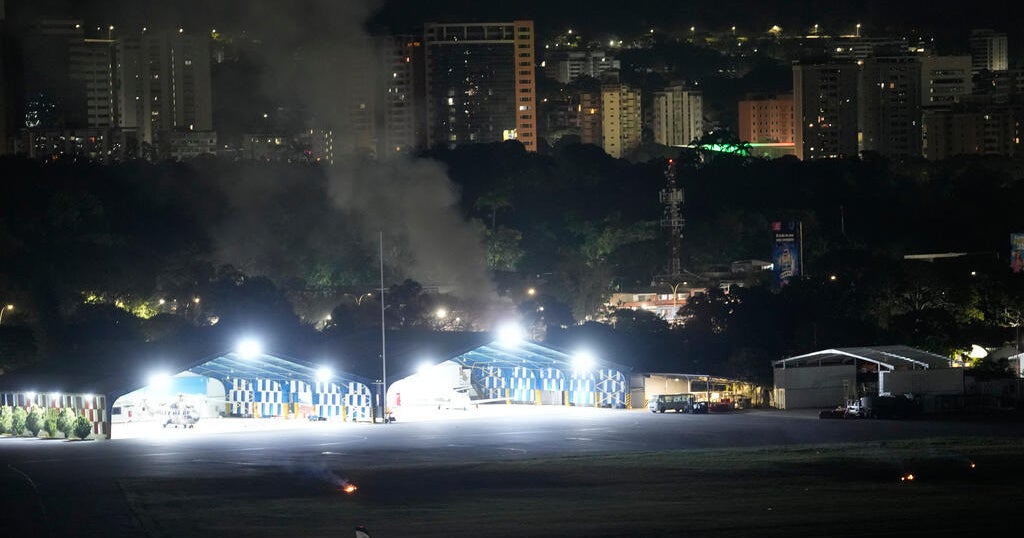
Explosions and low-flying aircraft were reported in Caracas around 2 a.m., and U.S. officials told CBS News that President Trump ordered strikes inside Venezuela early Saturday; thousands of U.S. forces and several naval vessels have been deployed to the region. The incident follows sustained U.S. pressure on Maduro—seizure of two sanctioned oil tankers last month and a mid-December blockade on sanctioned tanker traffic—and raises near-term geopolitical risk for Venezuelan oil flows and emerging-market assets, with potential upside volatility in energy prices and risk-off moves in regional markets.
Market structure: Immediate winners are integrated oil majors (scale/marketing: XOM, CVX), tanker owners/charterers and defense contractors (LMT, RTX, NOC) due to supply disruption and higher freight/defense demand; losers are Venezuelan production (PDVSA, effectively offline), regional EM assets and small-cap US shale (PXD, FANG) which lack downstream integration. A 0.5–1.0 mbpd sustained outage would likely push Brent/WTI +$5–$15 in 1–12 weeks, widening refining and tanker spreads and lifting gold as a real-rate hedge.
Risk assessment: Tail risks include full-scale blockade or wider region escalation (low-probability) driving oil +$20/bbl and global equities -8–12% within weeks; secondary risks are insurance/freight shocks and Russian/IR partnerships complicating sanctions. Near-term (days) volatility will spike; medium-term (3–6 months) pricing reflects sanction/enforcement outcomes; long-term (12+ months) depends on reconstruction of Venezuela supply and geopolitics.
Trade implications: Favor 3–6 month exposure to integrated majors and defense, tactical oil volatility plays (call spreads) and gold miners (NEM, GOLD) while cutting EM sovereign risk (EMB) and avoiding small-cap E&P. Use delta-limited options to capture spikes and hedge portfolio tail risk with VIX or long USD (UUP). Entry: act within 48–72 hours for options; scale equities over 1–4 weeks; trim if oil retraces >15% from event peak.
Contrarian angles: Consensus may overstate permanent loss of Venezuelan barrels—sanctions, ship reflags and SPR releases can cap upside within 3 months; that makes short-duration call spreads superior to outright longs. Mispricing: majors (XOM/CVX) will re-rate faster than small independents—implement relative-value (long majors, short XOP/PXD) and avoid leverage; if market pays >$15/bbl premium for >90 days, re-evaluate for longer commodity exposure.
AI-powered research, real-time alerts, and portfolio analytics for institutional investors.
Request DemoOverall Sentiment
strongly negative
Sentiment Score
-0.60
