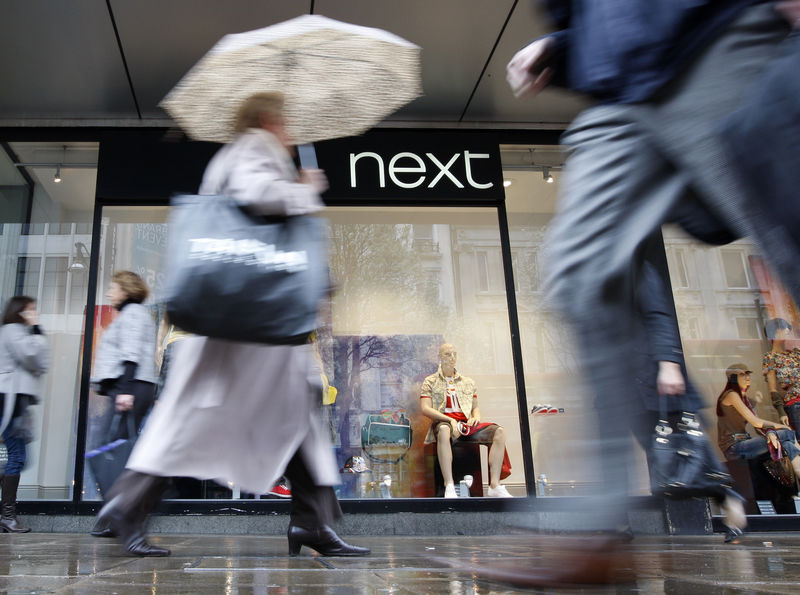
RBC turned more defensive on European retail as Iran conflict-related cost pressures raise fuel, freight and food inflation while central banks shift toward potential rate hikes instead of cuts. It upgraded Next, Inditex and Sainsbury’s as outperform picks, but downgraded Associated British Foods to underperform and WH Smith to sector perform, citing earnings and geopolitical risk. RBC also flagged 2027 inflation estimates of 4.7% for Marks & Spencer and Next, with Next disclosing £15 million of additional conflict-related costs.
The key read-through is not just higher input costs, but a regime shift toward dispersion: retailers with true pricing power and richer customer mix can preserve margin, while value and exposed discretionary names get hit twice by weaker volumes and more expensive logistics. That makes NXT the cleaner winner versus the broader UK retail complex because it has both brand elasticity and operating leverage, while lower-quality chains face the classic squeeze where gross margin compression arrives before demand destruction shows up in reported comps. The second-order effect is that higher fuel and freight costs act like a stealth tax on middle- and lower-income baskets, which should further concentrate spend at a small set of large grocers and away from fragmented discretionary retail. That is a setup for relative outperformance in food-retail defensives and underperformance in import-heavy apparel/household names with weaker FX pass-through; the biggest risk to the long-duration winners is that central banks over-tighten into an already fragile consumer backdrop, compressing multiples even for companies with good operating performance. For NXT specifically, the market may be underestimating how much of the macro damage is already visible in guidance language across the sector, not in NXT's own numbers. The bigger near-term catalyst is not earnings revisions but consensus multiple expansion/contraction as investors re-rate retailers based on exposure to cost inflation, wage inflation, and currency translation; that favors a pair structure over a naked directional long. Contrarian angle: if the geopolitical shock eases quickly, the sector could snap back because positioning is likely moving defensively faster than fundamentals. But absent a durable de-escalation, the move looks early rather than overdone — cost inflation typically hits margins with a 1-2 quarter lag, so the weak point is likely the next reporting cycle rather than immediate prints.
AI-powered research, real-time alerts, and portfolio analytics for institutional investors.
Request DemoOverall Sentiment
moderately negative
Sentiment Score
-0.35
Ticker Sentiment
