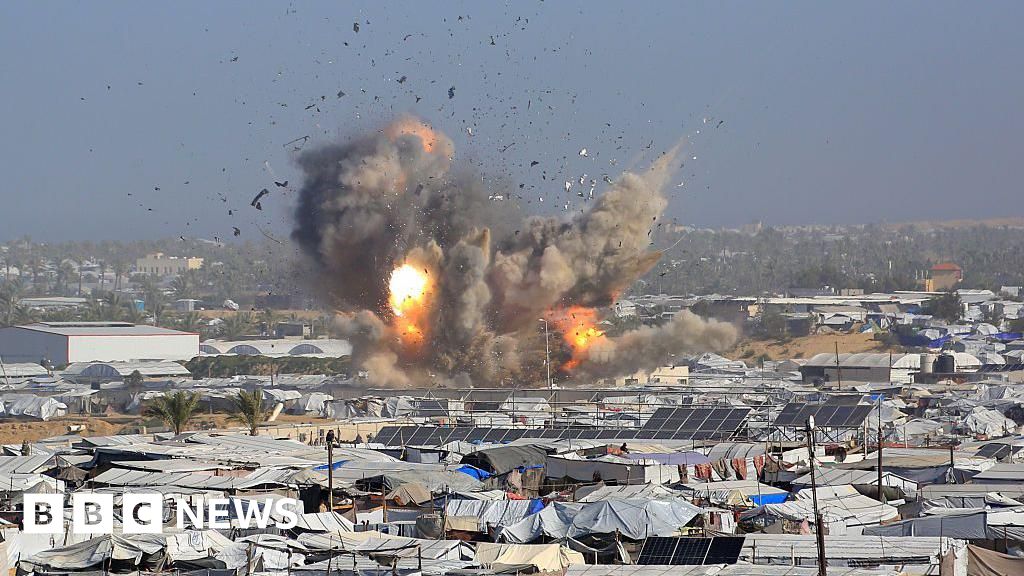
Israeli air strikes across the Gaza Strip killed at least 27 Palestinians, including women and children, with attacks reported in Khan Younis and Gaza City’s Shifa hospital and video showing bodies pulled from rubble. The Israel Defense Forces said strikes targeted Hamas operatives, commanders and weapons facilities — including actions in Rafah under the existing ceasefire arrangement — marking the heaviest incidents since the ceasefire and raising the risk of renewed escalation with potential knock-on effects for regional risk assets and commodity markets.
Market structure: Immediate beneficiaries are defense contractors (Lockheed LMT, Northrop NOC, Raytheon RTX) and safe-haven assets (gold GLD, US Treasuries TLT) as geopolitical risk reprices. Direct losers are regional travel/tourism and EM assets — expect near-term underperformance of airline ETF JETS and frontier EM sovereigns; energy impact is conditional on escalation beyond Gaza into Lebanon/Iran.
Risk assessment: Baseline probability of limited, short-lived flare-ups over days is ~30%; probability of wider regional conflict over 3 months ~10–15%, which would materially push Brent >$10/bbl. Tail risks include Iranian or Hezbollah entry causing oil shocks (+10–30% within 2–6 weeks) and broad risk-off leading to 5–12% drawdowns in equity indices. Hidden dependencies: shipping insurance, Israeli gas infrastructure (Leviathan), and US diplomatic moves can rapidly change market pricing.
Trade implications: Expect 5–10% bid in defense stocks and 3–7% in GLD/WTI on measured escalation; position sizing should be tactical (1–3% portfolio per trade). Use options to express asymmetric views — buy calls on LMT/NOC and puts on JETS or HYG for credit stress. Rotate from cyclical EM equities into defensives (consumer staples, utilities) and cash duration (TLT) for 1–12 week protection.
Contrarian angles: Consensus will overpay for headline defense exposure and gold; longer-term reconstruction/commodity plays (cement, copper) are underpriced and could outperform 6–18 months if conflict remains localized and reconstruction begins. Also, if oil moves >7% and then mean-reverts within 4 weeks, short energy volatility (sell 1–2 week straddles) as a mean-reversion trade.
AI-powered research, real-time alerts, and portfolio analytics for institutional investors.
Request DemoOverall Sentiment
strongly negative
Sentiment Score
-0.60
