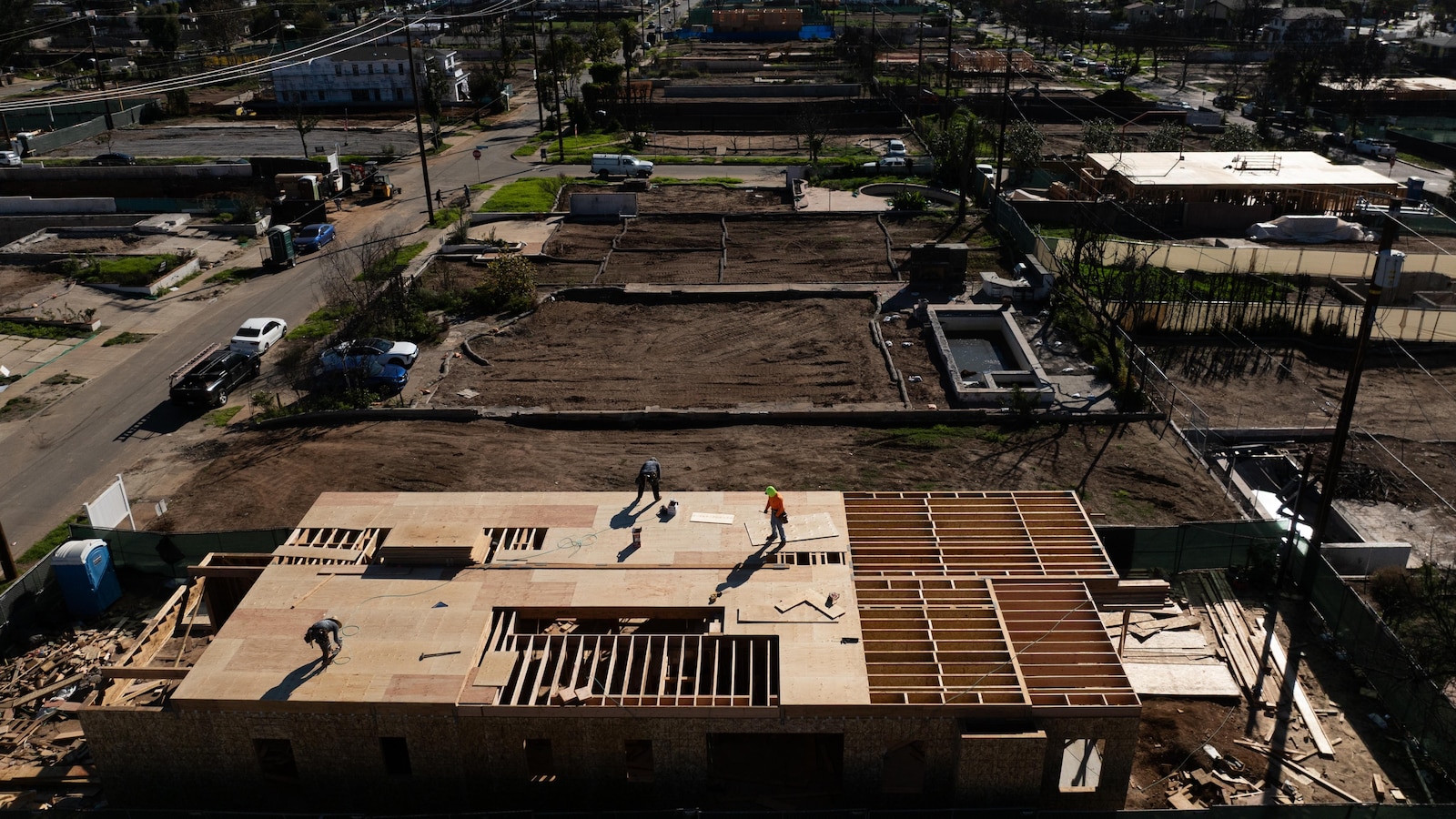
A year after the Jan. 7, 2025 Palisades and Eaton wildfires that killed 31 people and destroyed roughly 13,000 residential properties in Los Angeles County, fewer than a dozen homes have been rebuilt and about 900 are under construction. Recovery is hampered by insurance shortfalls and slow claim resolutions—less than 20% of total-loss claimants had closed claims by December—and significant dissatisfaction with large carriers (many policyholders held State Farm or the FAIR Plan), prompting a county civil probe into State Farm; lawsuits also target Southern California Edison. Rebuild costs can exceed $1 million, hundreds of properties have been sold and many homeowners are turning to SBA loans or tapping retirement savings, creating uneven recovery outcomes and potential credit and reputational pressure on insurers and utilities.
Market-structure: Rebuild demand concentrates winners in building-materials distributors (HD, LOW), remediation contractors (Clean Harbors CLH) and modular/prefab suppliers, while legacy P&C insurers and utility owners (litigation targets) are the direct losers. Expect suppliers to capture outsized pricing power for 9–18 months as constrained labor and permitting bottlenecks limit throughput, compressing margins for traditional single-family builders who face cost-overrun risk.
Risk assessment: Tail risks include a multi-billion dollar plaintiff judgment or regulatory fines against Southern California Edison (EIX) that could widen utility credit spreads >200bp and force insurer reserve increases across CA carriers; a second tail is a reinsurance shock raising rebuild costs 10–30%. Immediate (0–3 months) uncertainty centers on claim closures and SBA/FEMA flows, short-term (3–12 months) on permit/labor constraints, and long-term (12–36 months) on demographic shifts and neighborhood decline in hardest-hit ZIPs.
Trade implications: Tactical trades favor long building-supplies and remediation equities or call spreads for 6–12 months, paired with targeted downside protection on utilities/insurers via puts or CDS; rotate out of regional bank exposure tied to CA mortgages. Enter in tranches over 0–3 months, size positions 1–3% portfolio, and plan to take profits at 10–25% moves or after key catalysts (State Farm probe results, Edison litigation) within 60–180 days.
Contrarian angles: Consensus understates 18+ month recovery timelines—this benefits suppliers more than homebuilders and makes shorting marginal new-home builders (KBH, DHI) attractive vs. long suppliers. Historical parallel (Boulder 2021) shows rebuild acceleration after 12–18 months; monitor claim-closure rate >50% within 90 days as a trigger to shift from suppliers into builders.
AI-powered research, real-time alerts, and portfolio analytics for institutional investors.
Request DemoOverall Sentiment
strongly negative
Sentiment Score
-0.60
