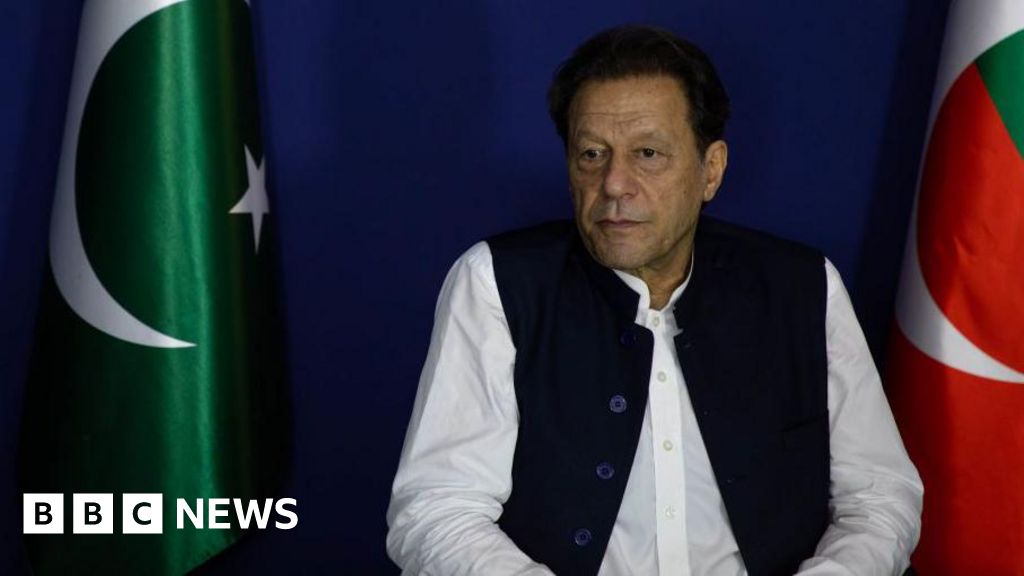
Former prime minister Imran Khan and his wife Bushra Bibi received additional concurrent prison sentences in Pakistan’s Toshakhana state-gift fraud case—10 years for criminal breach of trust and seven years for criminal misconduct—and were fined over 16 million PKR (~£42,600). The conviction centres on allegations that Khan arranged an undervaluation of a Bulgari jewellery set given to Bibi by Saudi Crown Prince Mohammed bin Salman in 2021; Khan, detained since August 2023 and already serving other sentences including a 14-year term, plans to appeal. The verdict heightens political and judicial risk around a key opposition figure, a consideration for country-risk and sovereign/EM exposure though it is unlikely to trigger immediate broad market moves.
Market structure: The immediate winners are FX shorts (USD/PKR long) and global safe-haven assets; losers are Pakistan sovereign bonds, domestic banks and consumer cyclical names that rely on confidence and external financing. Political-legal decay raises sovereign funding risk—expect Pakistan USD spreads and 1–5y local yields to reprice higher within days to weeks if IMF tranches/Saudi support pause.
Risk assessment: Tail risks include mass unrest or IMF program derailment causing 200–500bp widening in sovereign spreads and a >10% PKR devaluation over 1–3 months; lower-probability upside is a quick Saudi/IMF backstop capping moves. Hidden dependencies: remittances and foreign reserves are weather-vanes—a 5% drop in remittances or delay in a $1–3bn tranche materially tightens FX and forces central-bank intervention.
Trade implications: Direct plays tilt to short Pakistan exposure (PAK ETF) and long USD/PKR via 1–3m NDFs; hedge EM beta by pairing long EMB or EEM vs short Pakistan-specific instruments. Use options to express asymmetric views: buy 3-month 10–20% OTM puts on PAK or USD/PKR call options and size to 1–3% portfolio risk with stop-loss rules.
Contrarian: Consensus may overstate permanence—sentences run concurrently and Saudi/IMF political calculus could produce stabilization within 3–6 months, creating mean-reversion trades. Watch for CDS tightening or confirmed external financing (announcement of >$2bn within 30 days) as an opportunistic long-entry trigger for beaten-down Pakistan assets.
AI-powered research, real-time alerts, and portfolio analytics for institutional investors.
Request DemoOverall Sentiment
moderately negative
Sentiment Score
-0.35
