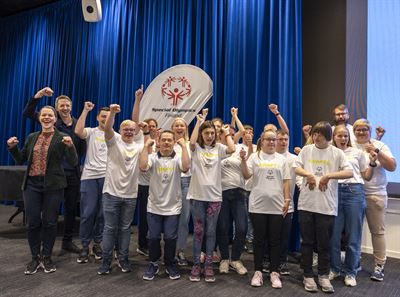
Fazer’s Oululainen Reilu brand will become the main partner of Special Olympics Finland from 2026, scaling a collaboration that began in 2024 to promote inclusion, wellbeing and consumer-facing initiatives such as nutrition workshops, joint sports try-outs, visibility at the Fazer Experience Visitor Centre (≈250,000 annual visitors) and branding on Reilu bread packaging. Fazer Bakery Finland employs ~1,600 people and Fazer Group reported roughly €1.2 billion in net sales in 2024; the partnership is a strategic CSR and marketing play likely to modestly boost brand equity in Finland but with limited near-term financial impact.
Market structure: This partnership is a low‑impact but positive brand/ESG signal for Fazer and Finnish grocery retailers (Kesko, S‑Group) that sell Oululainen Reilu products; expect a modest volume/loyalty uplift of ~0.2–0.8% in bread category and potential 10–50 bps gross‑margin tailwind over 12–36 months from improved brand equity rather than price power. Competitive dynamics: Rivals can replicate sponsorships quickly, so first‑mover advantage is short lived (6–18 months); incumbents with broad DTC reach get the most ROI from such PR moves. Supply/demand: No material change to raw‑material demand (flour/packaging) — net effect is demand reallocation within staples, not category expansion. Cross‑asset: negligible FX or commodities impact; modest positive for investment‑grade Nordic food producers’ credit spreads (tighter by 5–15bps over 6–12 months) as brand risk declines.
Risk assessment: Tail risks are reputational/activist backlash or a scandal tied to sponsorship (low probability, high impact) that could erase the brand uplift in weeks; regulatory risk is minimal. Time horizons: immediate (days) – negligible market reaction; short (weeks–months) – watch marketing cadence and retailer listings; long (quarters–years) – measurable SKU share and margin effects. Hidden dependencies: impact depends on execution (in‑store visibility, pricing, promotional cadence) and competitor counter‑spend; World Games 2027 is a catalyst that could concentrate visibility in H2 2027. Monitor: >€10m incremental marketing spend or expansion to additional Nordic markets as triggers.
Trade implications: Favor modest, defensive exposure to consumer staples and ESG‑aligned names: 1–3% portfolio overweight in XLP (US staples ETF) and 0.5–1% in broad ESG ETF (ESGU) with a 6–12 month horizon; implement a pair trade long ORK.OL (Orkla ASA, diversified European consumer staples) vs short XLY (consumer discretionary ETF) to capture resilience differential over 3–12 months. Options: buy 3–6 month puts on XLY (0.5–1% portfolio risk) as a cheap hedge into potential discretionary weakness if consumer spend rotates to staples. Sector rotation: reduce cyclical consumer discretionary exposure by 1–3% and redeploy into staples and ESG names.
Contrarian angles: The market understates the potential for real pricing/margin benefit from authentic inclusion programs — brands that execute well can capture 50–200 bps EBIT expansion over 2–3 years; conversely, the market may be overestimating short‑term sales lift (likely <1%). Historical parallels (CSR sponsorships by Nestlé/Unilever) show slow, sticky upside rather than immediate spikes — treat this as a multi‑quarter alpha source, not a trade catalyst. Unintended consequences include competitor over‑investment in low‑ROI sponsorships that compress promotional returns — watch gross margin trends and SKU‑level sales data to detect misallocation.
AI-powered research, real-time alerts, and portfolio analytics for institutional investors.
Request DemoOverall Sentiment
mildly positive
Sentiment Score
0.30
