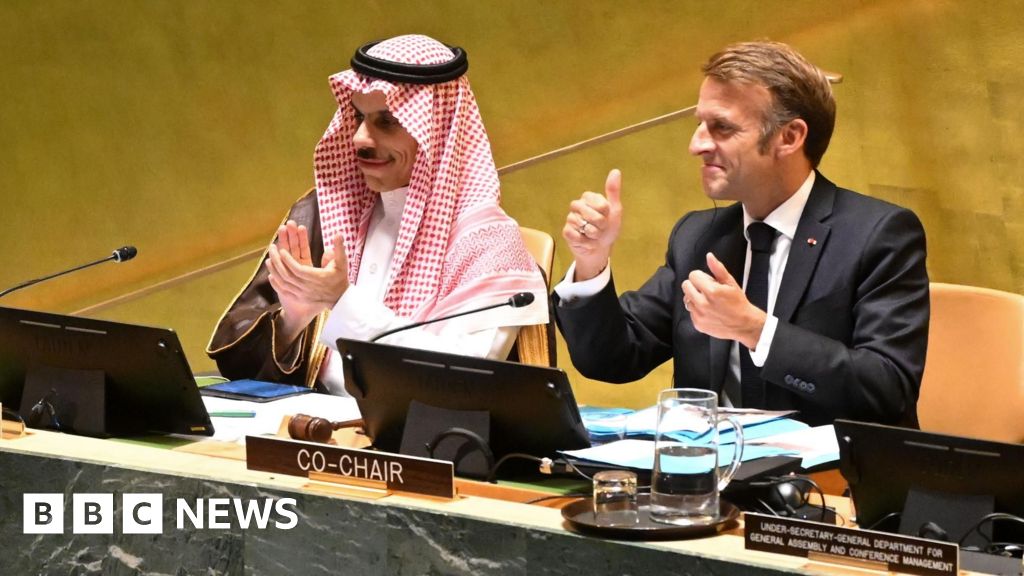
European powers, led by France and the UK, are advancing efforts to recognize a Palestinian state at the UN, a diplomatic maneuver aimed at preserving the two-state solution amidst the ongoing Gaza conflict and perceived inefficacy of Israel's current strategy. This initiative, coordinated with Saudi Arabia, seeks to create leverage for Hamas disarmament and potential Saudi-Israel normalization, but faces strong opposition from Israel and a significant rejection from the US Trump administration. The transatlantic divergence underscores a deep diplomatic rift and raises questions about the ultimate impact of European efforts without critical US backing in resolving the conflict.
A significant geopolitical schism is emerging as major European powers, led by France and the UK, formally recognize a Palestinian state in a UN initiative sponsored by Saudi Arabia. This move is a direct response to the perceived failure of Israel's military strategy in Gaza and an effort to preserve the viability of a two-state solution. However, the initiative's efficacy is severely constrained by staunch opposition from both Israel, which threatens retaliatory annexation of West Bank territory, and, crucially, the US Trump administration. The US rejection marks the deepest-ever transatlantic split on the Middle East conflict, with Washington operating on a separate diplomatic track and actively undermining the European effort. While the European-Arab coalition aims to create leverage by calling for Hamas to disarm and offering Israel the prospect of normalization with Saudi Arabia, the article underscores that without the 'meaningful pressure' only the US can apply, this diplomatic gamble has limited prospects for success. The withdrawal of Qatar as a mediator further compounds the diplomatic dysfunction, reinforcing the pessimistic sentiment and suggesting prolonged regional instability rather than an imminent resolution.
AI-powered research, real-time alerts, and portfolio analytics for institutional investors.
Request DemoOverall Sentiment
moderately negative
Sentiment Score
-0.60
