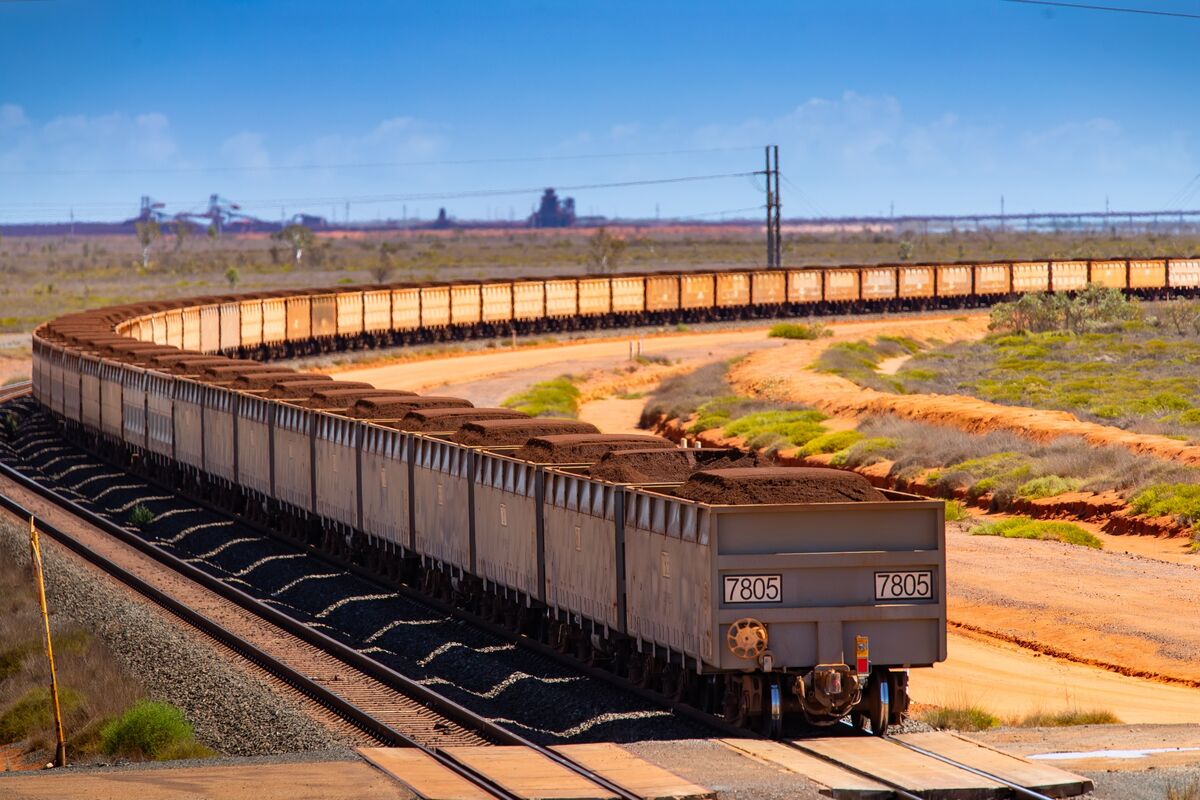
Iron ore fell 2.1% to $99.10 a ton in Singapore, dropping below $100 for the first time since March as abundant seaborne supply and weaker China demand pressured prices. Chinese steel production shrank again in May, while fixed-asset investment fell to the weakest level since the pandemic, adding to growth concerns. The setup is negative for iron ore and broader bulk commodity markets.
The immediate loser is the high-cost marginal seaborne producer set: once spot prices lose the $100 handle, the market starts repricing the second derivative of profitability, not just current cash flow. That tends to hit smaller Australian miners, Brazilian export-heavy names, and any producer with elevated freight or impurity penalties first, while lower-cost incumbents with mine-rail-port integration can use the weakness to preserve share and pressure the fringe into curtailments.
The bigger second-order effect is on Chinese steel margins and restocking behavior. If finished steel demand is already soft, cheaper ore does not automatically translate into higher import volumes; instead, mills can run inventory lean and delay purchases, which extends price weakness for weeks rather than days. That dynamic also matters for coking coal, rebar, and industrial metals broadly: lower input costs may temporarily support margins, but they also signal a growth scare that can compress end-demand and cap the benefit.
The main catalyst to reverse this is not a supply shock but a credible China policy impulse: infrastructure acceleration, property easing that actually lifts starts, or a meaningful cut in steel output discipline. Absent that, the path of least resistance is a grind lower toward the marginal cost band over the next 1-3 months, with sharp but brief rebounds likely on any stimulus headline. The contrarian read is that the move may be partially front-running macro disappointment, so a simple outright short after a one-day selloff is lower quality than waiting for a failed rebound into resistance.
For risk management, watch whether seaborne inventories keep building and whether Chinese mill margins stabilize; if both worsen, the downside can overshoot quickly as traders de-risk commodity beta more broadly. The trade is less about iron ore alone and more about whether this is an isolated raw-material correction or an early read-through on China’s activity cycle into Q3.
AI-powered research, real-time alerts, and portfolio analytics for institutional investors.
Request DemoOverall Sentiment
moderately negative
Sentiment Score
-0.45
