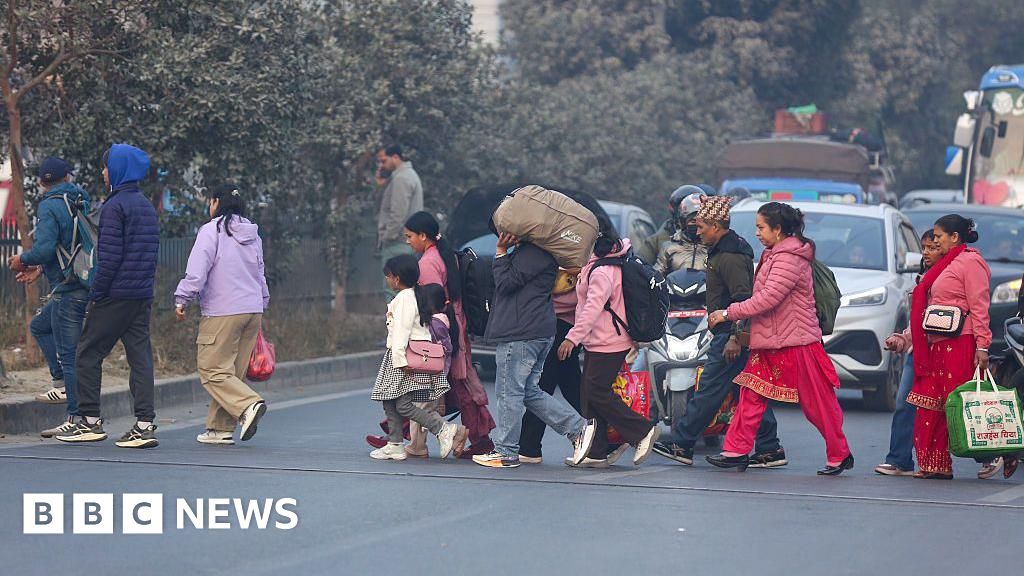
Roughly 800,000 residents have left Kathmandu to return to registered constituencies ahead of tomorrow’s parliamentary election in Nepal, where some 19 million voters (including nearly 1 million first-time voters) will choose 275 MPs—165 by first-past-the-post and the remainder by proportional representation. The vote is the first since youth-led anti-corruption protests toppled the government in September 2025, prompting transport suspensions, public holidays and heightened attention on key seats such as Jhapa-5 where former PM KP Sharma Oli faces ex-rapper Balendra Shah; the outcome will be a near-term political-risk event for Nepal’s policy continuity and investor sentiment in the country.
Market structure: The nationwide mobilization for voting removes ~800k people from Kathmandu temporarily, cutting urban consumption (restaurants, retail, local transport) by an estimated 5–15% in the 48–72 hour window and creating one-off logistic frictions for goods distribution in the Valley. Politically-driven market winners are likely rural retail, local transport operators and cash-rich incumbents in constituencies that secure contract awards; losers include Kathmandu hospitality, short-duration retailers, and any listed firms with concentrated Kathmandu revenue streams where access is cut for 2–5 days.
Risk assessment: Immediate (days) risk is operational — suspended transport and road jams can cause delivery delays and short-term revenue misses; short-term (weeks) risk is coalition uncertainty that can widen sovereign/FX spreads by 50–200bps; long-term (quarters) risk is policy shifts (anti-corruption reforms) that can reprice concessions and bank asset quality. Tail scenarios (10% probability) include large-scale protests or a contested result that freezes infrastructure approvals for 3–6 months and forces remittance flow disruptions.
Trade implications: Because Nepal is small and illiquid, the pragmatic trades are regional: hedge EM beta and favor India over broader EM. Tactical plays include short-dated downside protection on EEM and a relative long in INDA vs EEM for a 3–6 month window; keep position sizing tiny (1–2% AUM) given event idiosyncrasy. If Nepse or Nepali sovereign spreads gap >150bps, deploy opportunistic long exposures to Nepali banks or EM sovereign ETFs with tight stops and 6–12 month reversion targets.
Contrarian angles: The market may overreact — Nepal’s GDP and remittances (large share of GDP) create sticky fundamentals; a >10% sell-off in Nepse would likely be overdone and present a value entry into high-quality banks (NABIL.NP, NIB.NP) with mean reversion within 6–12 months. Conversely, if new anti-corruption measures accelerate, infrastructure concession pipelines could be rerated lower — size positions conservatively and use options to cap downside.
AI-powered research, real-time alerts, and portfolio analytics for institutional investors.
Request TrialOverall Sentiment
neutral
Sentiment Score
0.00
