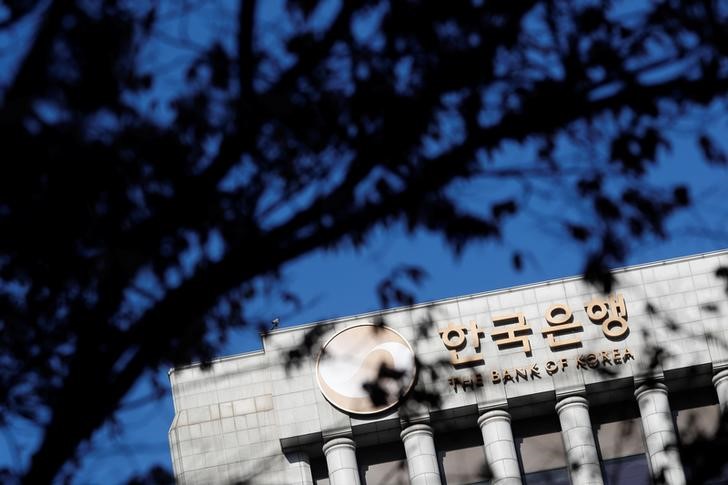
The Bank of Korea left its benchmark rate unchanged at 2.5% as it adopted a cautious stance amid Middle East war-driven inflation and won volatility. Officials signaled that higher energy prices from the Iran conflict could keep inflation elevated, though weak domestic demand may limit the pace of any future tightening. South Korea’s chip-led growth and AI-related demand provide some policy headroom later in the year.
The immediate market implication is not just a higher-for-longer BOK, but a wider policy divergence versus developed Asia if energy prices keep bleeding into inflation expectations. That tends to support KRW rates and front-end yields, but the bigger second-order effect is on domestic cyclical credit: households and SMEs with floating-rate exposure feel the lagged pain while export-heavy chip names remain insulated for now. The policy bar for easing has likely moved out several quarters, which means any Korea rebound that depends on cheaper funding is probably premature.
The more interesting setup is the asymmetry between Korea’s externally driven earnings engine and its internally driven demand weakness. If chips keep carrying growth while the rest of the economy stalls, the BOK can justify staying restrictive even as headline GDP looks resilient, which is bearish for rate-sensitive small caps, construction, and consumer discretionary. That creates a narrowing leadership regime: a few AI-linked exporters can outperform while broad domestic equity beta underperforms, especially if the won weakens on geopolitical shocks.
A hawkish tilt on inflation is also a signal that the central bank is more worried about imported cost pressure than the market is pricing. If the Middle East conflict escalates further, the first-order move is higher energy, but the second-order move is tighter local financial conditions via FX and inflation pass-through. The contrarian angle is that this may be less bullish for banks than the market assumes: higher policy rates help NIMs only if credit quality holds, and with weak domestic demand, the risk is a delayed deterioration in asset quality rather than a clean repricing higher.
The consensus may be underestimating how quickly the policy debate can flip from 'pause' to 'constraint' if the won weakens materially. In that case, the BOK may be forced to defend currency stability even if growth softens, which would extend the pain for domestic demand plays and raise the cost of capital across the board. That sets up a tactical opportunity to fade any rally in interest-sensitive Korean equities into strength, while staying constructive on the small set of chip-exporters with global pricing power.
AI-powered research, real-time alerts, and portfolio analytics for institutional investors.
Request TrialOverall Sentiment
neutral
Sentiment Score
-0.10
