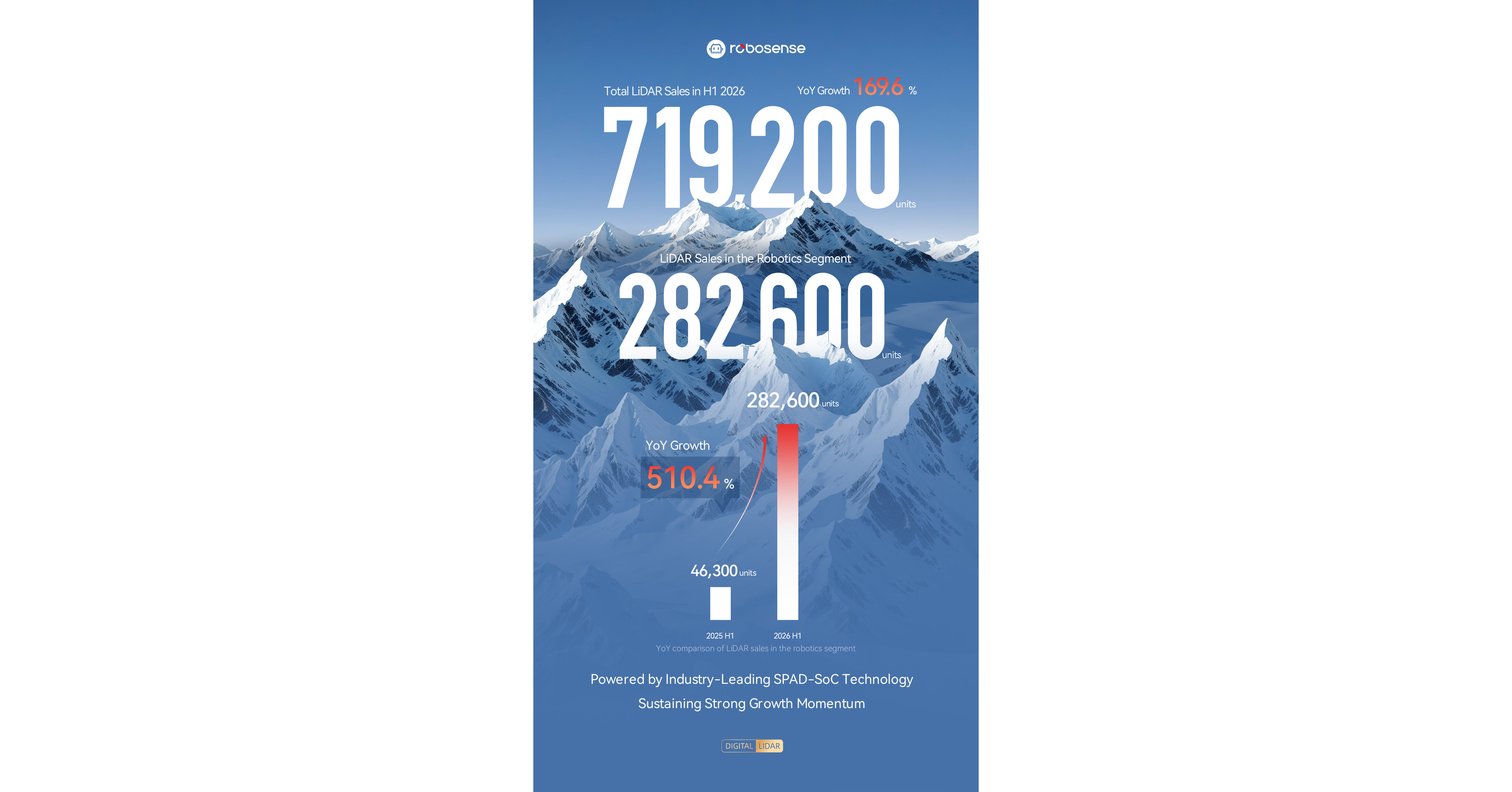
RoboSense reported H1 2026 LiDAR sales of 719,200 units, up 169.6% YoY, with robotics LiDAR surging 510.4% to 282,600 units. In Q2 2026, total LiDAR reached 388,900 units, including 97,100 robotics units (+182.3% YoY) and 291,800 ADAS units (+135.7% YoY). The company attributes the growth to its full-stack proprietary chip technology and continued mass-production ramp, including E1R and Airy series, and cites cumulative deliveries of E Platform fully solid-state digital LiDAR products surpassing 300,000 units.
The key market implication is not the unit print itself but the evidence that LiDAR is moving from a niche ADAS add-on into a lower-friction procurement item for robotics OEMs. That should help the best-scaled supplier win share while forcing smaller rivals to compete on price, integration support, and delivery lead times rather than sensor performance alone. In the near term, that is mildly bullish for the category leader and bearish for any competitor still selling a thesis rather than a production line.
Second-order, the fastest growth in robotics units is likely to be the least profitable mix unless attach rates for software, calibration, or perception modules are rising. If this is mostly cleaning, lawn, and logistics robots, the customer base is broadening but the procurement cycle is more price sensitive than ADAS, so the risk is that revenue scales faster than gross profit. Watch for inventory build, receivable days, and any sign that ASPs are bending down as competitors chase the same design wins.
Over 1-3 months, the catalyst path is earnings/guidance and whether management can show margin durability, not just volume momentum. Over 6-18 months, the structural winner is whoever becomes the default perception layer for embodied AI platforms, but that only matters if they can keep chip and module economics from commoditizing. The contrarian view is that the market may be over-assigning strategic value to unit growth when the real variable is cash conversion; if margin fails to expand, this becomes a scale story with weak equity value capture.
AI-powered research, real-time alerts, and portfolio analytics for institutional investors.
Overall Sentiment
strongly positive
Sentiment Score
0.55
Ticker Sentiment
