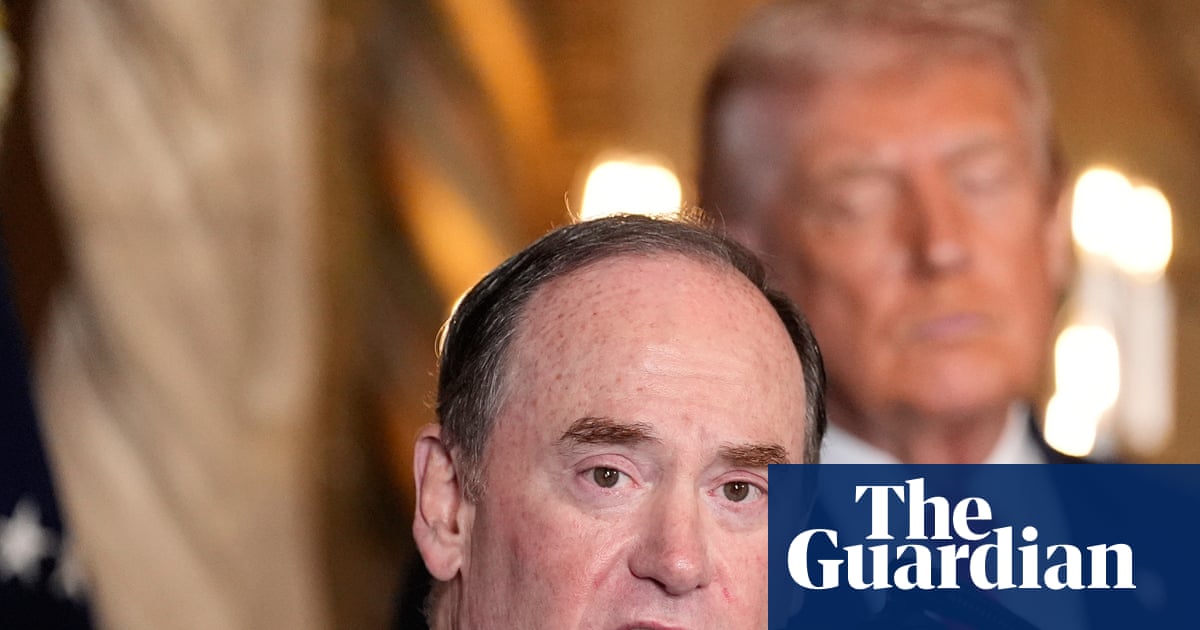
The Pentagon abruptly removed Navy Secretary John Phelan, with Hung Cao named acting secretary, amid reported internal conflict with Defense Secretary Pete Hegseth and senior staff. The article also notes continued senior defense firings under Hegseth and an active U.S. Navy blockade of Iranian ports, adding geopolitical tension. The immediate market impact is likely limited, but the leadership shake-up is notable for defense-sector governance and policy continuity.
This is less about a personnel change than about governance risk inside the defense budget machine. A secretary who is perceived as politically pliant but operationally weaker tends to increase the probability of abrupt program reprioritization, especially in shipbuilding and procurement, where the Navy’s timelines are already fragile and supplier confidence matters more than headline policy. The immediate beneficiary is not the Pentagon itself but contractors and consultancies that can adapt fastest to shifting internal power centers; the losers are the prime contractors with the most exposure to multi-year Navy execution risk if oversight becomes more erratic.
Second-order, the change likely raises execution volatility more than budget volatility. That is important because defense equities usually trade on appropriations certainty, but margins on large naval programs are far more sensitive to award timing, change orders, and political interference than to topline spending alone. Over the next 1-3 months, expect a higher probability of award slippage, schedule resets, and louder rhetoric around “accountability,” which can briefly pressure shipbuilders even if full-year funding is unchanged.
The contrarian angle is that this may ultimately be mildly positive for the largest primes if the new acting leadership pushes harder on procurement discipline and accelerates decisions that have been bottlenecked by internal conflict. Markets may overreact to the personnel shock, but if the replacement is more aligned with the existing chain of command, the near-term noise could translate into cleaner program execution by mid-year. The main tail risk is a broader purge dynamic that destabilizes civilian-military coordination and delays contracting across the Navy for several quarters.
AI-powered research, real-time alerts, and portfolio analytics for institutional investors.
Request TrialOverall Sentiment
mildly negative
Sentiment Score
-0.20
