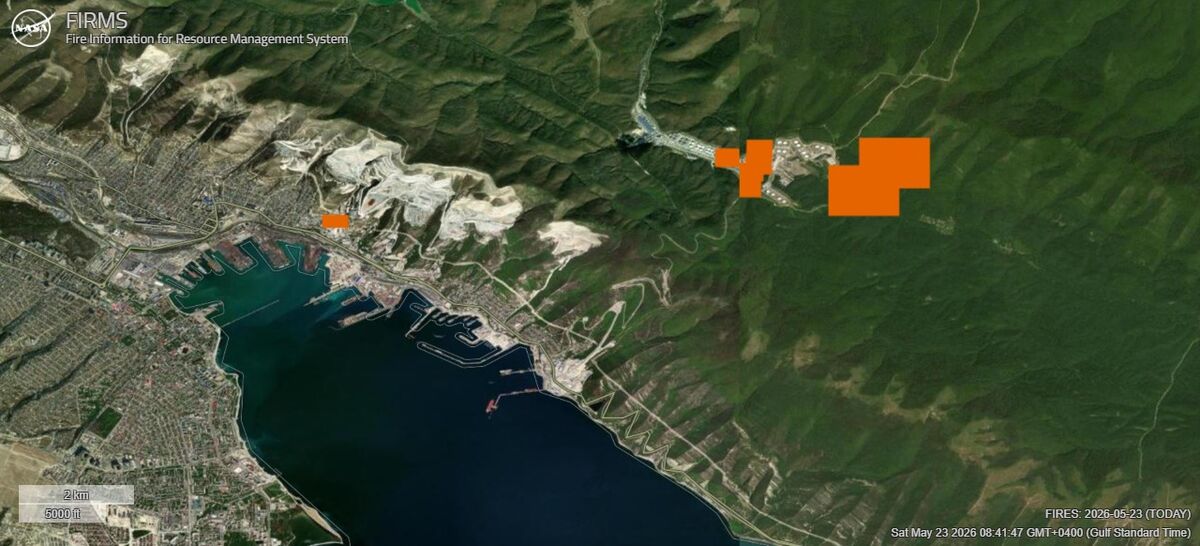
An overnight drone attack set fire to oil facilities at Russia’s key Black Sea port of Novorossiysk, including an oil depot and part of the oil terminal. The incident adds to a series of hits on Russia’s energy infrastructure and raises near-term supply disruption risk. This is likely supportive for oil prices and relevant to Black Sea energy flows.
This is not just another localized sabotage event; it reinforces a structural risk premium on Black Sea energy logistics. Even when physical damage is limited, repeated strikes force shippers, insurers, and port operators to re-price optionality around loading delays, higher war-risk premia, and more conservative routing, which can tighten seaborne crude availability well before any barrels are actually lost.
The second-order effect is dispersion: benchmark prices may only react modestly, but regional grades and freight-linked arb economics can move more sharply. Any sustained interruption at a key export node tends to support non-Russian competing supply streams first — Middle East, North Sea, and U.S. Gulf cargoes — because traders pay up for reliability when the marginal barrel becomes uncertain. That usually shows up fastest in time-spreads and product cracks rather than in headline flat-price moves.
The main catalyst to watch is whether this is followed by a broader campaign against storage, pumping, or export loading infrastructure over the next days to weeks. If the market concludes the pattern is escalating, the move can become self-reinforcing: higher insurance costs reduce vessel availability, which slows export cadence, which then widens local discounts and raises the value of alternative barrels. Conversely, if damage is contained and outbound flows normalize quickly, the risk premium should compress just as fast, making this a fadeable event for short-dated traders.
The contrarian view is that markets may be underestimating the durability of these disruptions because the immediate physical damage can be small while the operational friction compounds. The bigger prize for attackers is not destruction but repeated uncertainty, which can erode throughput and confidence over months. That said, if buyers already built in a geopolitical discount, the cleaner trade is not outright oil beta but relative value in freight, insurance, and exporters with dependable logistics.
AI-powered research, real-time alerts, and portfolio analytics for institutional investors.
Request DemoOverall Sentiment
moderately negative
Sentiment Score
-0.35
