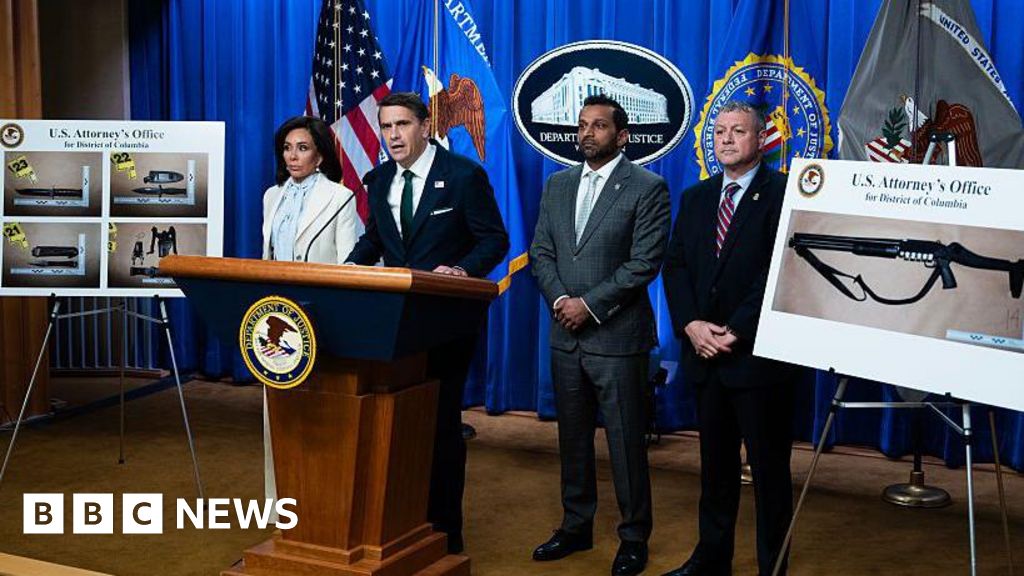
Authorities have not conclusively determined whether the suspect shot a Secret Service officer during the Trump press dinner incident, despite early public statements from top officials that he did. Prosecutors' filings have shifted, and the lack of clarity could complicate the case, but the story is primarily a legal and political update rather than a market-moving event. No direct financial impact is evident beyond broader risk around security and public affairs.
The immediate market read is not about the individual case, but about institutional credibility under political stress. When law-enforcement narratives wobble in a high-salience election-year event, the second-order effect is a higher probability of procedural delay, discovery disputes, and defense-friendly ambiguity that can push resolution from weeks into quarters. That matters because the case becomes less about the headline risk and more about the government’s ability to convert a chaotic incident into a clean, jury-ready record.
The broader beneficiary set is concentrated in firms exposed to federal security, surveillance, and forensic process rather than the political news cycle itself. A prolonged investigation tends to support incremental spending on body-worn cameras, perimeter monitoring, incident reconstruction, and secure event logistics, with the best operating leverage likely at vendors already embedded in DHS, federal IT, and physical security procurement. The negative read-through is for any contractor whose products are implicated in checkpoint or ballistic protection failures: even absent direct fault, scrutiny can delay awards, trigger audits, and raise liability reserves.
The contrarian point is that the market may be overpricing reputational damage and underpricing budget follow-through. High-profile security failures usually accelerate procurement faster than they punish the entire ecosystem, because agencies respond with visible remediation spend and tighter protocol enforcement. The main tail risk is political: if the case becomes a broader governance flashpoint, Congress could slow or redirect security appropriations, but that is a months-long process, not a days-long trade.
For the defense-adjacent complex, the cleaner trade is on secondary demand for incident-response and surveillance rather than on headline security names. On the litigation side, the longer the evidentiary gap persists, the higher the odds of charging adjustments or plea leverage, which reduces immediate downside for the government’s case but extends media volatility around the story.
AI-powered research, real-time alerts, and portfolio analytics for institutional investors.
Request DemoOverall Sentiment
moderately negative
Sentiment Score
-0.20
