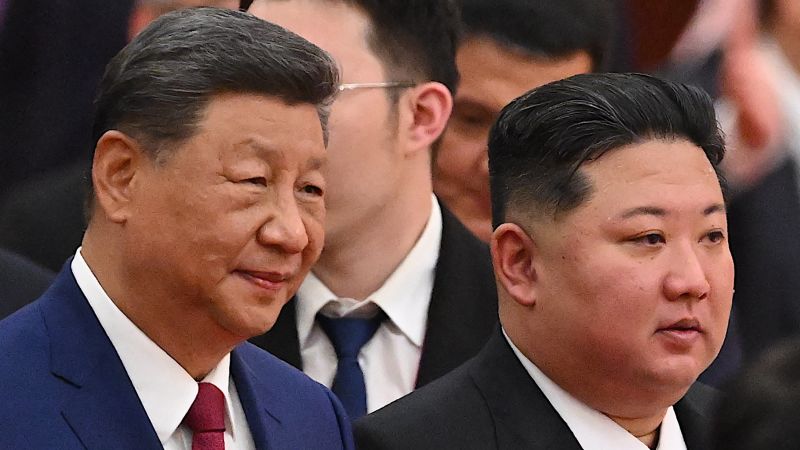
Chinese leader Xi Jinping and North Korea's Kim Jong Un held formal talks in Beijing, following their unprecedented joint appearance with Russia's Vladimir Putin at a military parade, signaling a coalescing anti-Western bloc aimed at shifting global power dynamics. This meeting occurs amidst deepening Russia-North Korea ties, including a mutual defense pact and military cooperation, which has reportedly left China 'uneasy' regarding regional stability and potential U.S. focus, despite Beijing's historical role as Pyongyang's primary patron and its continued indirect support for both nations.
The formal meeting between China's Xi Jinping and North Korea's Kim Jong Un, following their joint appearance with Russia's Vladimir Putin, signals the public consolidation of an anti-Western bloc aimed at altering the global balance of power. This development is contextualized by a deepening Russia-North Korea relationship, codified in a new mutual defense pact and driven by Moscow's need for military supplies in Ukraine. While China remains North Korea's primary economic patron, accounting for over 95% of its trade, and its only formal treaty ally, Beijing is reportedly 'uneasy' about the burgeoning Moscow-Pyongyang axis. Chinese concerns stem from the potential for the alliance to complicate East Asian security, attract greater U.S. military focus to the region, and undermine Beijing's own influence over the Korean Peninsula. Furthermore, Beijing fears that Russian military technology transfers could embolden the Kim regime. Despite this apprehension, analysis suggests China will not actively disrupt the Russia-North Korea relationship but will instead continue its policy of enabling sanctions evasion for both nations, seeking to maintain its influence while Pyongyang leverages its position between the two larger powers.
AI-powered research, real-time alerts, and portfolio analytics for institutional investors.
Overall Sentiment
strongly negative
Sentiment Score
-0.70
