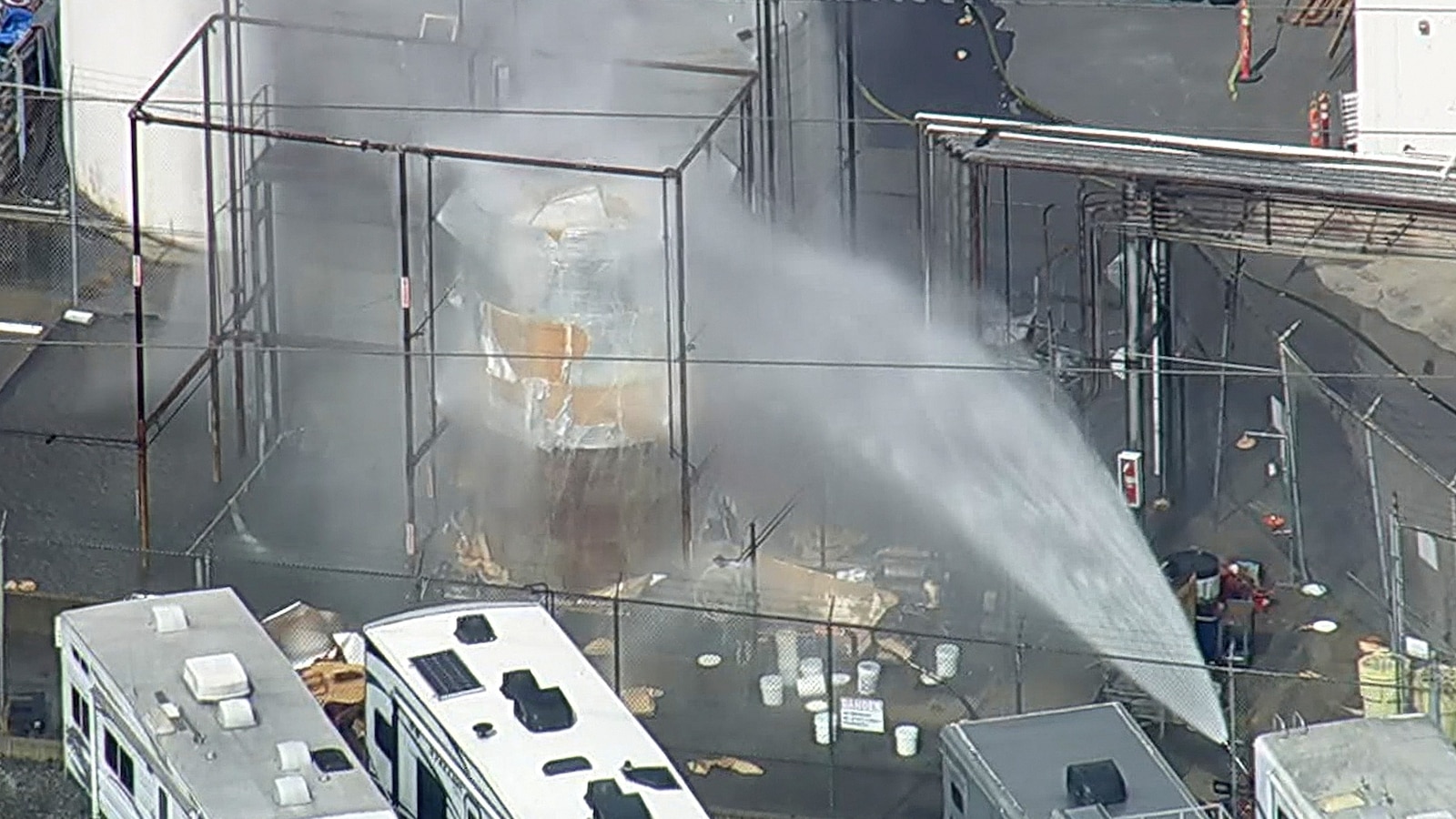
Officials said the overheating chemical tank at GKN Aerospace in Garden Grove is no longer at risk of a catastrophic BLEVE explosion after internal temperatures declined and the chemical began to solidify. However, evacuation orders remain in place for roughly 50,000 people across a 10-square-mile zone while authorities continue monitoring for leaks and air-quality risks. California declared a state of emergency in Orange County, and roads, schools, hospitals and critical infrastructure in the area are still affected.
The immediate market read is not about the chemical incident itself but about the value of operational continuity insurance: aerospace manufacturing, logistics, and adjacent industrial parks avoid a prolonged shutdown, which matters more than the headline safety scare. For a company like GE, the direct earnings impact is likely negligible, but the episode highlights how single-site process failures can create outsized customer concentration risk for high-reliability industrial suppliers, which can pressure local production schedules even after the acute hazard passes.
The second-order winner is the regional supply chain. Once evacuation zones compress and roads reopen, there should be a catch-up effect in freight, emergency remediation, and contractor demand over the next 1-3 weeks, but the bigger implication is a modest repricing of perceived tail risk around Southern California aerospace/industrial nodes. That can subtly favor diversified defense primes and logistics networks with broader geographic footprints over single-facility operators exposed to permitting, environmental, and litigation delays.
The contrarian point is that “catastrophic risk removed” does not equal “incident resolved.” The lingering questions are remediation cost, insurance recovery, and potential regulatory scrutiny around handling of volatile chemicals; those are months-long overhangs that can outlast the operational event by a quarter or more. The market is likely to underprice this follow-through because the headline volatility fades faster than the legal and compliance drag.
For GE specifically, this is a non-event fundamentally, but if investors extrapolate the aerospace supply chain disruption risk too far, that would create a better entry point than a reactionary short. The cleaner trade is to own names that benefit from remediation and inspection spending while avoiding highly localized industrial operators until air-quality and liability clarity improve.
AI-powered research, real-time alerts, and portfolio analytics for institutional investors.
Request DemoOverall Sentiment
neutral
Sentiment Score
-0.05
Ticker Sentiment
