
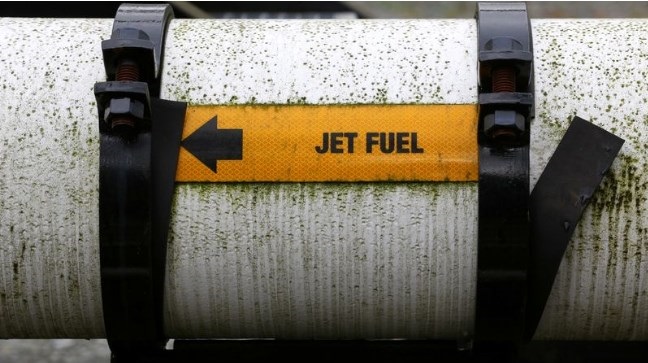
The IEA warned Europe could face physical jet fuel shortages by June if only 50% of Middle East supply can be replaced, with stocks falling below the critical 23-day cover level. Europe depends on the Middle East for about 375,000 bpd, or 75% of its net jet fuel imports, and Britain imports 65% of its demand. The report implies summer supply tightness and potential demand destruction at select airports if replacement flows are inadequate.
The first-order trade is not in airlines alone; it is in the entire European logistics stack that prices on uninterrupted fuel availability. A jet-fuel squeeze would widen schedule uncertainty, raise hedging costs, and force carriers to protect premium routes first, which means lower-yield leisure traffic absorbs the shock before headline traffic numbers deteriorate. That creates a lagged earnings hit: capacity can look intact for weeks while unit revenue and disruption expenses quietly worsen.
The more interesting second-order effect is that this becomes a refining and product-crack story, not a crude story. Any near-term substitute barrels have to be pulled through longer routes, different specs, or from inventories, which lifts delivered middle-distillate prices disproportionately versus Brent. That should support European refiners with export access and complex product yield, while hurting import-dependent airlines, airport operators, and freight/logistics names with thin pass-through.
The setup is still highly time-sensitive: the market will likely price this as a tail risk until inventory draw data or shipping reroutes confirm it, but physical scarcity can reprice within days once stocks fall toward the low-30-day cover zone. The reversal path is also clear: any diplomatic de-escalation, rerouting of Gulf flows, or faster replacement from the Atlantic Basin would compress the premium quickly. In other words, this is a classic convexity trade where the upside comes from a summer dislocation, but the premium can decay fast if headlines improve.
The contrarian view is that the market may be underestimating how much demand destruction Europe can absorb before outright shortage. Airlines can trim frequency, upgauge aircraft, and shift capacity to more profitable routes, which may cap equity downside even if spot jet prices spike. That argues for owning volatility and relative value rather than naked directional shorts on the broad transport complex.
AI-powered research, real-time alerts, and portfolio analytics for institutional investors.
Request TrialOverall Sentiment
moderately negative
Sentiment Score
-0.35
Ticker Sentiment
