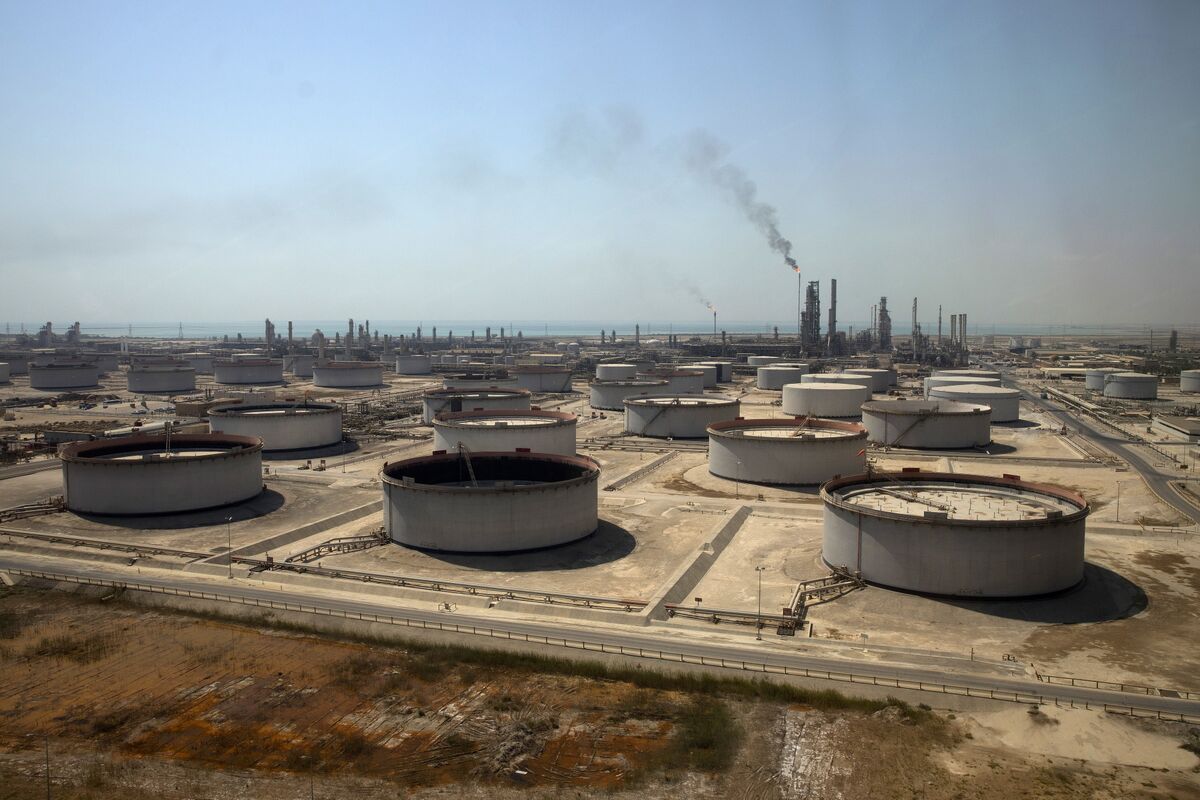
OPEC+ confirmed a three-month pause in planned production increases for the first quarter of 2026, a decision led by key members including Saudi Arabia and reiterated after a series of video conferences. The pause, first announced earlier this month, reflects expectations of weaker seasonal demand and growing signs of a global oil market surplus; the move is intended to restrain additional supply and limit downside pressure on prices over the near term.
Market structure: OPEC+ pausing planned Q1 2026 output increases is a tactical supply brake that cushions downside but does not eliminate a seasonal-demand driven surplus; expect Brent volatility to compress near term and spreads to flatten (contango to weaken) unless inventories shrink by >10m bbl over 4 weeks. Direct winners are cash-generative majors (XOM, CVX, SHEL) and refiners that benefit from resilient crack spreads; losers are levered US E&P names and oilfield services (SLB, HAL) whose growth optionality is most rate-sensitive. Risk assessment: Tail risks include a geopolitical shock (e.g., Red Sea/Strait of Hormuz escalation) spiking prices >30% in days, or a macro demand shock (China slowdown) pushing Brent down >25% across quarters; another low-prob event is OPEC+ fragmentation leading to renewed supply growth. Immediate (days) — muted headline volatility; short-term (weeks/months) — inventory builds drive price downside pressure; long-term (quarters) — capital discipline in shale/majors can retrench supply and re-tighten markets. Trade implications: Favor 6–12 month exposure to integrated majors and selected refiners (XOM, CVX, VLO) while shorting broad E&P exposure (XOP) and oilfield services. Use options to define risk: buy call spreads on majors (6–9 month) for leveraged upside if back-end tightens, and buy put or put spreads on XOP/USO for protection against persistent surplus. Rotate credit exposure away from high-yield E&P bonds into investment-grade energy credits if oil falls >15%. Contrarian angles: Consensus treats the pause as bullish; that understates demand-side risk — if Chinese industrial/data indicators slip (PMI <49 for two months) a further price drop is likely despite the pause. Historical parallel: 2014–15 Saudi non-cooperation led to shale-capex cuts and eventual recovery, but today shale capex is lower so the amplitude may be smaller; implied vols may therefore underprice downside tail risk — consider cheap downside insurance.
AI-powered research, real-time alerts, and portfolio analytics for institutional investors.
Request DemoOverall Sentiment
neutral
Sentiment Score
0.10
