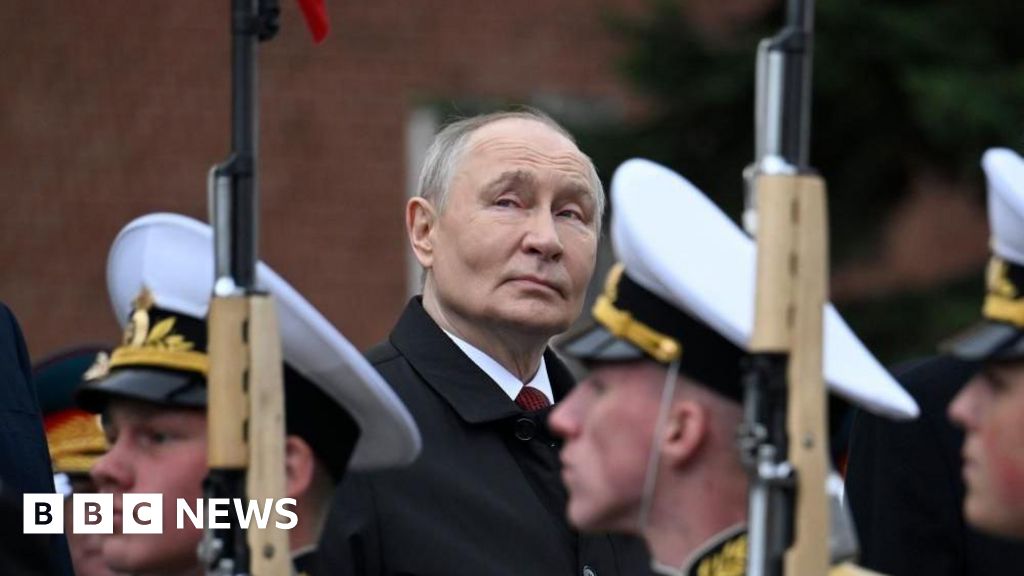
Putin used Moscow's scaled-back Victory Day parade to justify Russia's war in Ukraine and denounce NATO, while reaffirming a three-day ceasefire that appeared to hold during the ceremonies. The event featured fewer foreign leaders and no armored vehicles or ballistic missiles, underscoring tighter security and the strain of the war effort. The article is geopolitically significant and may affect defense and regional risk sentiment, but it contains no direct market price catalyst.
The key market signal is not the speech itself but the choreography: a visibly pared-back display paired with escalated rhetoric usually means the Kremlin is trying to compensate for a narrower set of options. That combination tends to be bearish for any near-term de-escalation premium in Eastern European assets, while modestly supportive for defense procurement visibility in Europe over the next 6-18 months as governments treat ceasefire optics as tactical, not strategic. The absence of heavy hardware also hints at equipment preservation constraints, which matters because it reduces the probability of a quick breakthrough and increases the odds of a grinding, manpower-intensive phase.
From a portfolio perspective, the bigger second-order effect is on European fiscal and industrial allocation: even a temporary ceasefire that is repeatedly violated reinforces the case for higher defense spending floors and faster replenishment cycles. That is incrementally positive for primes and munitions supply chains, but more importantly for electronics, propulsion, and secure communications vendors that sit deeper in the stack and have less headline risk. If the conflict remains contained, energy and shipping markets may discount the immediate tail risk, but that can reverse quickly if drone attacks expand or the ceasefire collapses within days.
The contrarian read is that the market may be underpricing how this rhetoric can backfire domestically. When leadership leans harder on wartime framing while visibly reducing ceremonial military display, it can signal strain rather than confidence, which historically increases policy volatility and the chance of asymmetric escalation around symbolic dates. The main reversal catalyst is an externally brokered pause that is actually enforced for several weeks; absent that, expect periodic risk spikes rather than a clean trend.
AI-powered research, real-time alerts, and portfolio analytics for institutional investors.
Request DemoOverall Sentiment
mildly negative
Sentiment Score
-0.25
Ticker Sentiment
