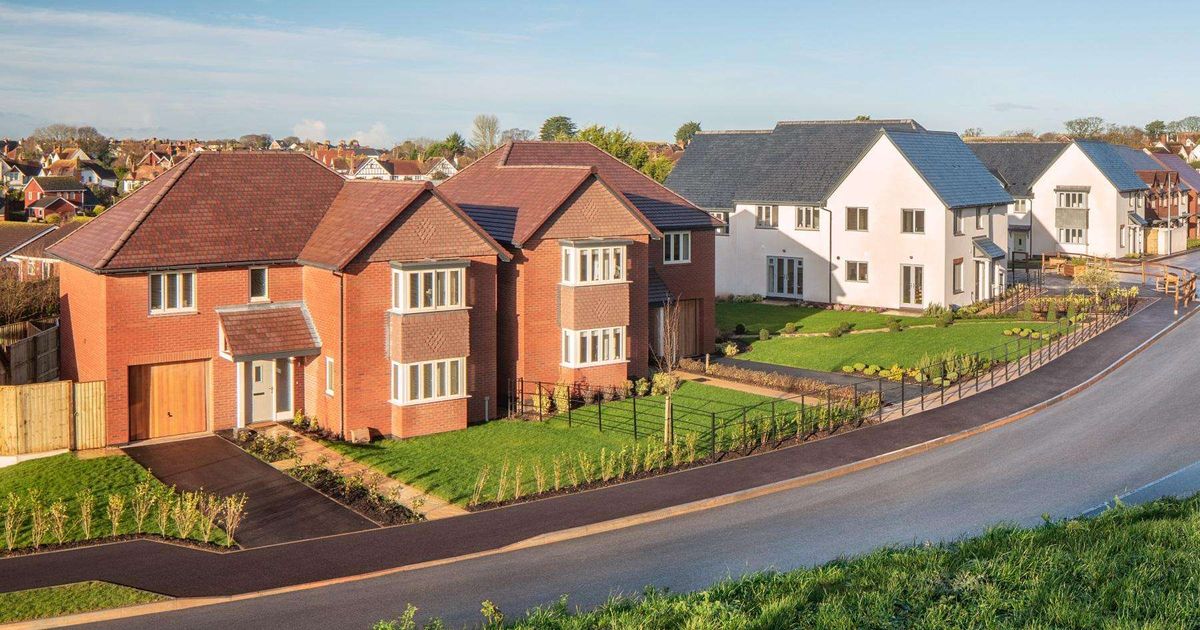
Taylor Wimpey reported FY2025 revenue up 13% to £3.8bn and completions +6%, with adjusted operating profit marginally higher at £420.6m (margin 10.9% vs 12.2% prior). Statutory pre-tax profit plunged to £146.5m from £320.3m after a £225.8m increase in cladding fire-safety provisions and an £18m settlement with the CMA; the group expects 2026 adjusted operating profit around £400m and targets 10,600–11,000 UK completions. Management declared a final dividend of 2.95p (total 7.62p, -19.5%) and announced a £52m buyback to be completed by end-June, while the order book slipped to £2.2bn from £2.3bn.
Market structure: Taylor Wimpey (LSE: TW) is a net loser today as a £225.8m jump in cladding provisions and an £18m CMA settlement compress near-term earnings and ROE; peers with cleaner balance sheets or less legacy cladding exposure (e.g., BDEV, RDW, BKG) are relative winners and may pick up share in institutional land deals. The slip in margin to 10.9% from 12.2% and guidance to ~£400m adjusted operating profit for 2026 signal weakening pricing power; a slightly smaller £2.2bn order book and back‑loaded completions (40% H1) point to demand uncertainty and potential seasonal inventory pressure. Cross-asset: expect modest widening of subordinated credit spreads for UK housebuilders, slightly higher implied vol on TW options, mild GBP sensitivity to surprise housing weakness, and muted near-term commodity demand for timber/steel in UK residential new-builds.
Risk assessment: tail risks include escalation of remediation liabilities beyond £300–400m, adverse CMA/antitrust rulings affecting industry commercial practices, or a mortgage market shock that reduces demand >10%; each could cut EPS by 20–40% versus consensus. In the next 0–90 days, price reaction will be driven by Q1 trading and any CMA detail release; over 6–18 months, land valuation resets and interest-rate path drive fundamentals. Hidden dependencies include JV remediation exposure, warranty/insurer recoveries, and timing of cash outflows for remediation versus accounting provisions. Key catalysts: Budget measures (next Autumn Budget follow-ups), Bank of England rate moves, and the company’s Q1 trading update (next 30–60 days).
Trade implications: establish a tactical 3% short position in TW (current 105p) targeting ~80p (≈24% downside) with a stop at 115p and 3–6 month horizon to capture remediation/earnings disappointment. Implement a 1.5% long in Barratt (BDEV) or Redrow (RDW) financed by the TW short as a pair trade to express quality differential; consider buying a 6–9 month TW put spread (buy Jan 2027 95p, sell 70p) to limit capital at risk. Reduce aggregate UK housebuilder exposure by 3–5% and redeploy into UK residential REITs or large-cap construction suppliers with limited cladding exposure; increase bond-duration hedges for potential credit spread widening.
Contrarian angles: the market may be over-penalising TW for largely non-cash, timing-driven provisions—buyback (£52m) and dividend continuation (7.62p) show board intent to defend value—so consider a tactical, size-limited long if TW falls below 80p or market cap declines >25%, with a 12–24 month hold. Historical precedent (post‑cladding sector repricing cycles) shows names recover once remediation funding paths are clarified; downside risk is industry cost-sharing or government intervention that reallocates liabilities. Watch for unintended consequences: aggressive shorts could trigger buyback-fueled squeezes or force competitors into distressed asset buys at fire‑sale prices.
AI-powered research, real-time alerts, and portfolio analytics for institutional investors.
Request TrialOverall Sentiment
moderately negative
Sentiment Score
-0.35
