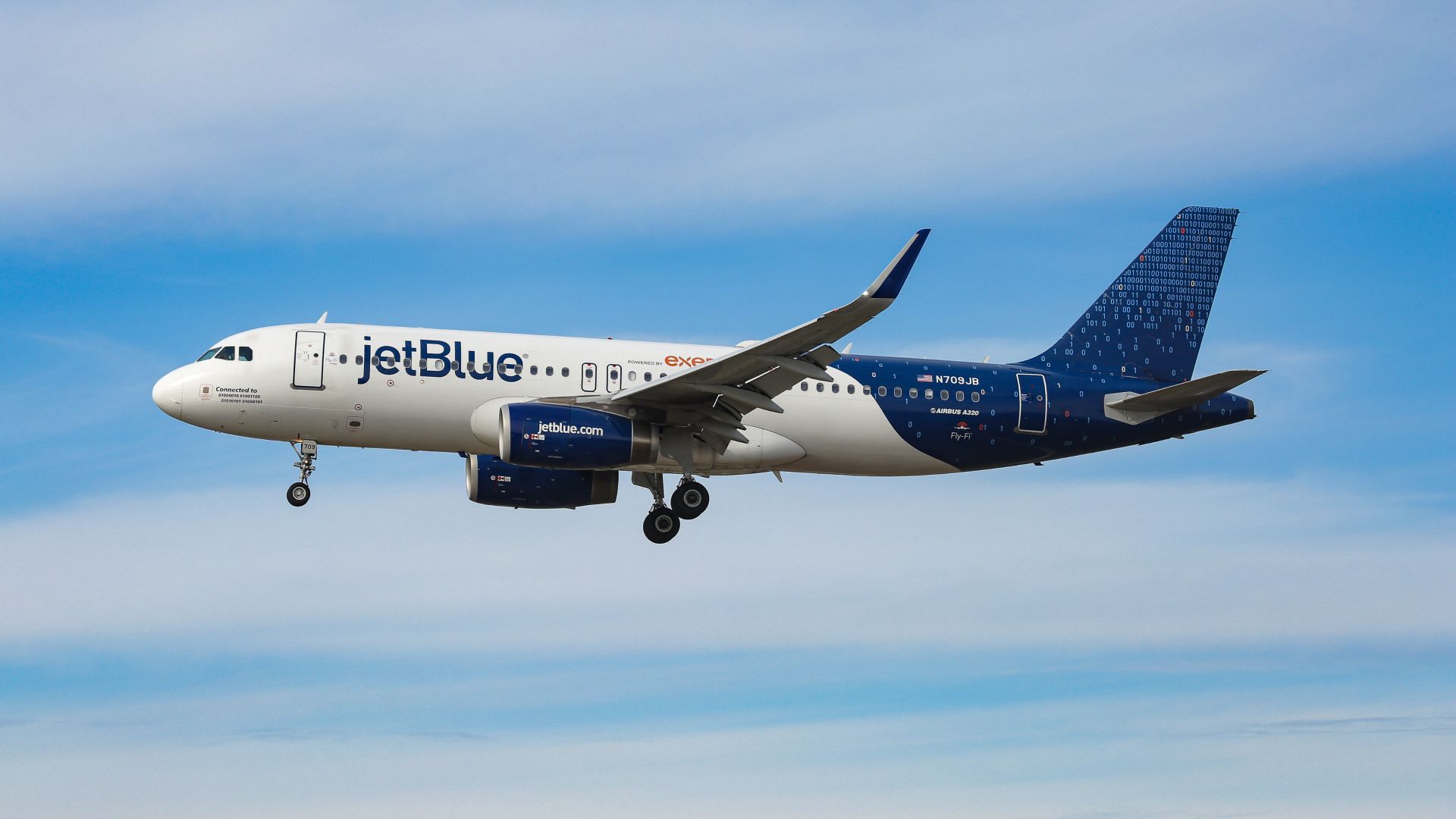
On Oct. 30 a JetBlue Airbus A320 flying from Cancun to Newark suddenly lost altitude over Florida, injuring at least 15 passengers and forcing an emergency landing in Tampa; Airbus has linked the event to corrupted flight-control data and has grounded some 6,000 A320s to roll out a software fix. Space-weather expert Clive Dyer counters that solar activity on the day was unremarkable and suggests a cosmic-ray induced single-event upset may have flipped bits in onboard electronics, underscoring latent risks to avionics from high-energy particles. The incident raises operational and safety risks for airlines and suppliers, and could prompt further software and hardware hardening measures from manufacturers and regulators, with potential near-term implications for Airbus operations and airline schedules.
Market structure: immediate winners are avionics/software/retrofit providers and systems integrators (primes such as RTX, HON, GRMN) who gain pricing power from a forced A320 software roll-out (Airbus ~6,000 A320s). Direct losers are affected airlines (JBLU, regional fleets) and Airbus (AIR.PA / EADSY) reputationally; insurers and spare-part-lessors face short-duration claims. Conservatively, a $10k–$50k retrofit per airframe on 6,000 jets implies $60M–$300M addressable near-term service revenue concentrated in suppliers.
Risk assessment: tail risks include regulator-mandated groundings or ADs (FAA/EASA) affecting >1% of global narrowbody capacity for weeks, class-action litigation with aggregate exposure >$100M, or cascading supply-chain delays for new aircraft deliveries over 3–12 months. Timing: equity volatility spikes in days; supplier revenue realization in weeks–months; real design changes and rad-hardening investment over 1–3 years. Hidden dependencies: avionics firmware certification lead times, reliance on COTS semiconductors, and insurer reserve announcements that could shift carrier credit spreads.
Trade implications: tactical: establish 2–3% long positions in RTX and 1–2% in HON (industrial suppliers) to capture retrofit and testing revenue, time horizon 6–12 months; hedge with a small short position in AIR.PA/EADSY or 3–6 month put spread to offset OEM reputational risk. Short 0.5–1% JBLU via equity or 3-month put spread sized to limit loss (expect 10–30% downside if passenger confidence falls), and buy 6–9 month call spreads on RTX/HON sized to 1–2% for convex upside. Rotate capital from travel/discretionary into industrials and defense over 1–3 months.
Contrarian perspective: consensus panic on “systemic” solar risk is overdone — cosmic-ray single-event upsets are rare and usually solvable by firmware/hardening; a >15% sustained sell-off in major carriers would likely be an overshoot and create a 6–12 month buy opportunity. Historical analogue: Qantas 2008 produced short-term operational chaos but long-term supplier revenue and airline recovery; the real long-term structural trade is increased demand for rad-hard components and certification services, not permanent airline demand destruction.
AI-powered research, real-time alerts, and portfolio analytics for institutional investors.
Request DemoOverall Sentiment
mildly negative
Sentiment Score
-0.30
