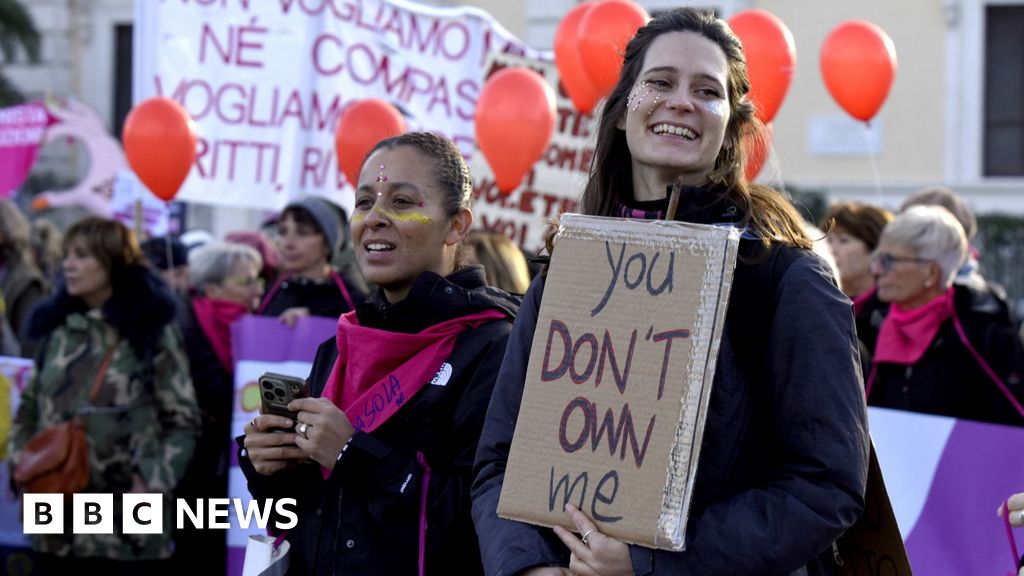
Italy's parliament unanimously (237 deputies) approved a law creating a distinct criminal category of femicide with an automatic life sentence, a bill introduced by Prime Minister Giorgia Meloni and backed across the political spectrum. The law mandates that gender-motivated murders be recorded separately—Italian police recorded 116 women killed last year, 106 of which were deemed gender-motivated—and places Italy alongside a few EU states with a legal femicide definition, though critics warn the definition may be vague and enforcement could be challenging, implying political and social ramifications rather than direct economic impact.
Market structure: The new femicide law is largely symbolic but reallocates political attention to social services, legal enforcement and education; expect modest budget reallocation to victim support, hotlines and school programs (order of tens-to-low hundreds of €m annually over 1–3 years). Direct beneficiaries: NGOs, domestic violence support providers, legal-services firms and vendors for public-safety tech; losers are minimal corporates but possible near-term pressure on discretionary social spending elsewhere. Competitive dynamics: private training/education providers and ESG-branded consumer firms that can credibly demonstrate gender-equality credentials may win incremental market share in procurement and brand preference over 12–36 months.
Risk assessment: Tail risks include domestic backlash/protests or a spike in judicial appeals that raises legal costs and political polarization, which could widen Italy’s 10y BTP-Bund spread by >50bps in a stress scenario (weeks–months). Hidden dependencies: enforcement capacity, vagueness of the statute and data-classification changes may temporarily inflate reported femicide rates, complicating political response. Catalysts to monitor: EU/Italy budget reallocations (next quarterly budget cycle), high-profile cases, and election polls over 6–12 months.
Trade implications: Favor a small ESG/gender-diversity tilt and selective Italian exposure: cheap asymmetric option plays on Italy equities and targeted longs in listed Italian security/defense and education-adjacent names over 3–18 months. Manage risk with tight stops and CDS/spread hedges if BTP-Bund spreads widen >30–50bps. Expect low market-impact but persistent thematic re-pricing over 12–36 months.
Contrarian angle: Consensus understates long-term macro upside from higher female labour participation—Italy’s female employment ~50%; a 3–5ppt rise over 5 years could lift GDP and domestic demand noticeably, favoring Italian consumer and financials. Conversely, enforcement without resources risks legal backlogs and litigation costs that could depress small-cap Italian services; position sizes should be modest (sub-2% exposures) until budget clarity emerges.
AI-powered research, real-time alerts, and portfolio analytics for institutional investors.
Request DemoOverall Sentiment
neutral
Sentiment Score
0.00
