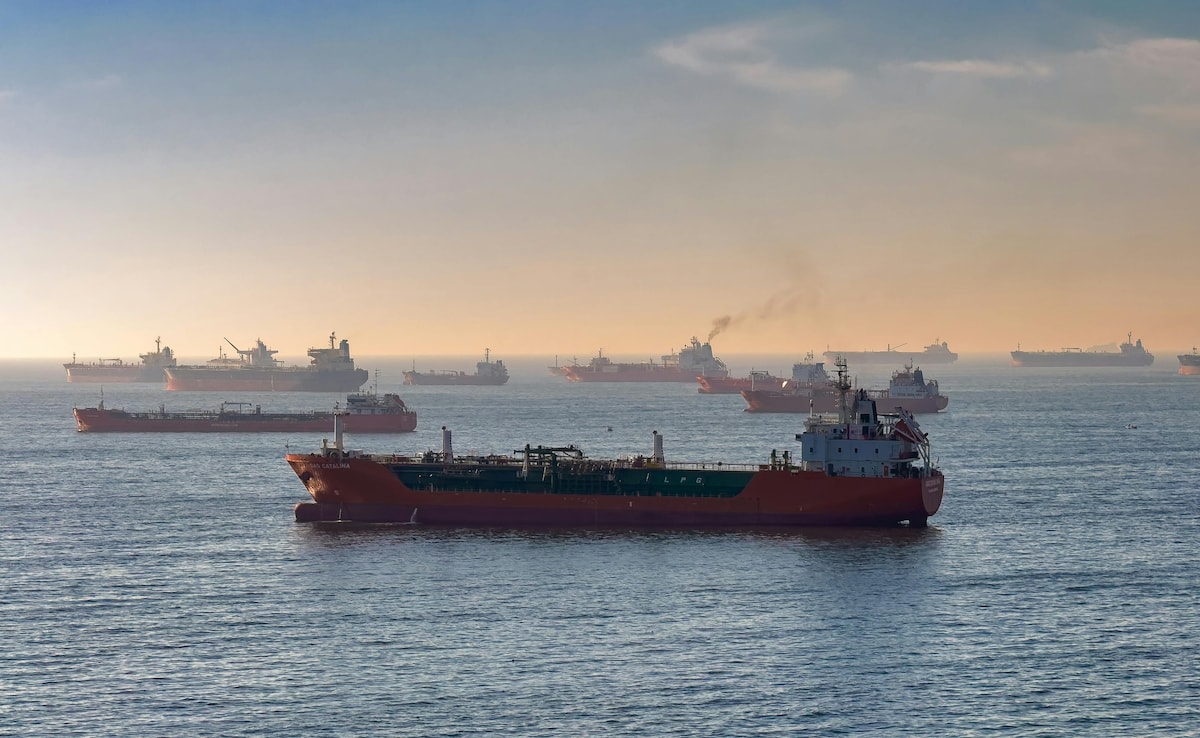
Only 10-15 ships per day are being allowed through the Strait of Hormuz versus ~135 pre-conflict, with 300-400 tankers waiting and seaborne crude flows (~38% share) severely restricted. Iran is demanding advance approvals and tolls paid in Bitcoin or Chinese yuan (tariffs reported around $1/barrel for laden tankers; supertanker bills could reach millions), disrupting oil, LNG, fertiliser, helium and broader supply chains and driving higher freight insurance and price volatility. The move converts tactical control into a persistent leverage point in ceasefire talks and increases systemic market risk while complicating efforts to clear the vessel backlog within the two-week truce.
The Strait choke creates a persistent, convex premium: a small change in throughput produces outsized moves in freight rates, insurance costs and upstream logistics. With ~300–400 vessels effectively queued and throughput down to ~10–15/day, simple math implies 20–40 days to clear the backlog even if approvals double tomorrow, so elevated freight and bunker demand is not a transitory 48‑hr spike but a multi‑week shock that ripples into refinery run schedules and spot tanker markets.
A formal tolling regime priced in hard yuan or crypto is a structural shock to settlement rails — it lowers the marginal cost of sanctions evasion while raising counterparty, legal and compliance costs for Western banks and traders. Expect accelerated client onboarding by China-linked banks for energy counterparties, a modest but measurable increase in onshore yuan invoicing (macro FX flows) over 3–12 months, and greater willingness by state actors to use non‑sovereign digital assets for cross‑border energy receipts, which in turn increases volatility and tail‑risk for crypto and FX desks.
Second‑order supply frictions will be industry-specific: helium, specialty petrochemicals and fertilizer chains with low buffer stocks will see immediate price and lead‑time impacts, raising input costs for semiconductor fabs and agriculture in the coming quarter. The policy binary (open strait vs Iran control) creates sharp catalysts — military escort guarantees, insurer embargoes, or a negotiated corridor could each unwind parts of the premium quickly, while a prolonged tacit tolling regime embeds higher structural costs for global trade over years.
AI-powered research, real-time alerts, and portfolio analytics for institutional investors.
Request DemoOverall Sentiment
strongly negative
Sentiment Score
-0.60
