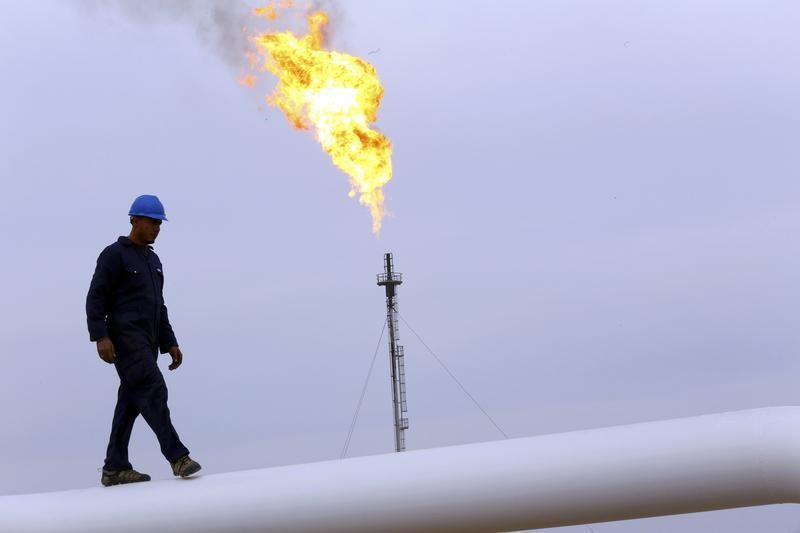
Oil prices have surged over 40% month-to-date after U.S.-Israeli strikes on Iran and Tehran's halt to shipping through the Strait of Hormuz, creating the largest global supply disruption and prompting threats by President Trump to strike Kharg Island. Global supply is estimated to fall ~8 million bpd in March, Middle Eastern producers have cut at least ~10 million bpd, Fujairah (outlet for ~1 million bpd Murban crude, ~1% of world demand) has briefly resumed loading, and the IEA approved a record 400 million-barrel strategic release with Japan starting its release Monday.
A disruption concentrated at a maritime chokepoint cascades through logistics and insurance markets much faster than it compresses upstream production — expect a front-loaded hit to delivered oil costs via longer voyages, higher bunker consumption and sharply elevated war-risk premiums. If voyage times rise 10–25% and insurance/risk premia double-to-quadruple, that mechanically adds several dollars per barrel to delivered crude within weeks, widening refinery cracks for refiners with constrained feedstock flexibility.
Demand for compute-intensive analytics (real‑time routing, ISR imagery, market microstructure models) is an underappreciated transmission channel: energy traders, national agencies and defense primes accelerate procurement and short‑cycle deployments of dense server racks and GPU clusters. That creates a 1–6 month procurement window where suppliers with available assembly capacity and logistics (not just chip supply) capture outsized revenue and margin upside, while OEMs dependent on elongated Asia supply chains lag.
Financials feel a bifurcated impact — trading, FX and commodities desks see a spike in fee and flow activity over days–months, whereas credit exposure to commodity‑linked sovereigns and shipping counterparties deteriorates more slowly over quarters. The single biggest reverser is political/diplomatic intervention or a coordinated release of strategic inventories: those events can deflate risk premia within days, so time‑bound option structures outperform outright directional exposure in the near term.
Watch three short windows as catalysts: 1) insurer/reinsurance statements (days) that set war‑risk availability and premium levels; 2) order/booking announcements from defense and HPC suppliers (2–12 weeks) that reveal durable compute demand; 3) infrastructure damage assessments (weeks–months) that determine whether the shock is transient or structural. Position sizing should favor convex, time‑limited instruments that capture volatility spikes but cap downside when geopolitics reverts quickly.
AI-powered research, real-time alerts, and portfolio analytics for institutional investors.
Request DemoOverall Sentiment
strongly negative
Sentiment Score
-0.80
Ticker Sentiment
